
Last updated September 20, 2026
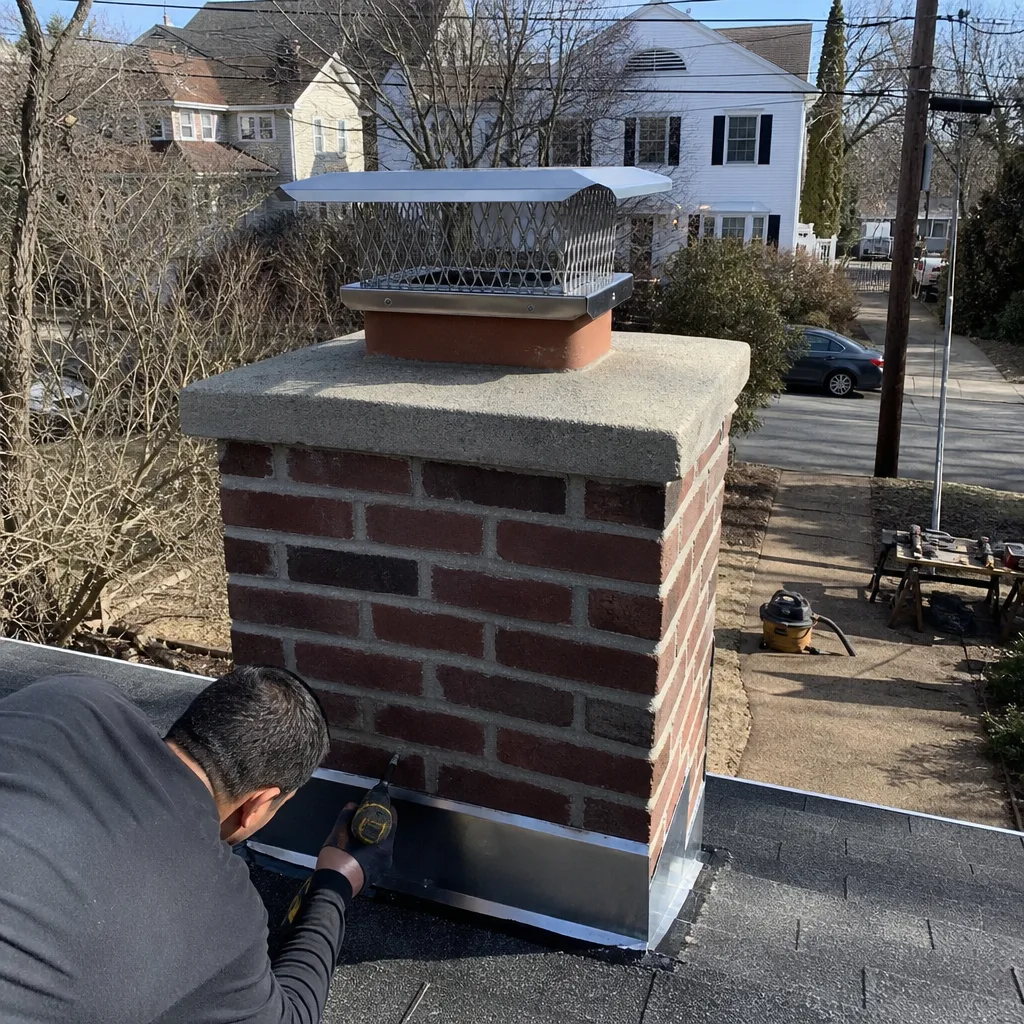
Level 1 sweep and inspection to the NFPA 211 annual standard - flue, crown, cap, and flashing checked and photographed
Chimney sweep logs do not sweep chimneys. They loosen some creosote - which then falls where a brush and vacuum still have to collect it.
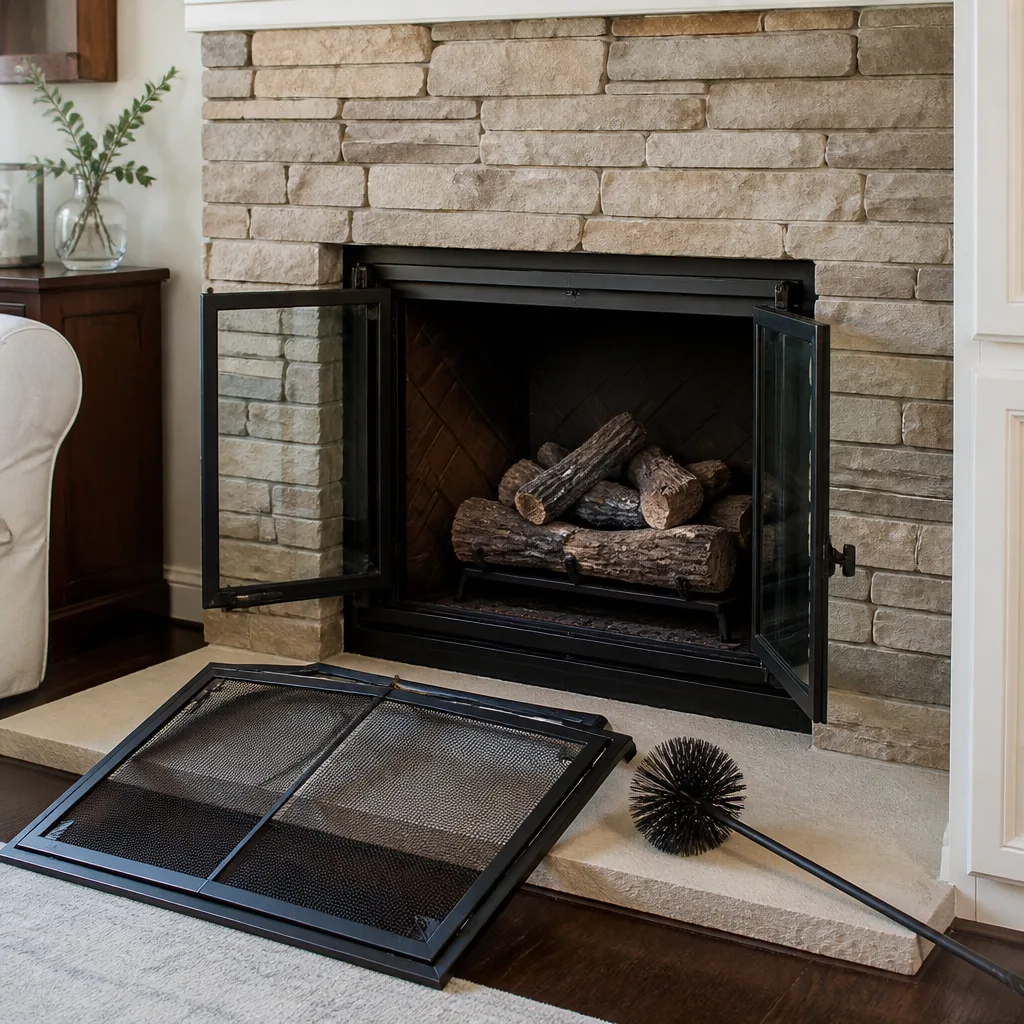
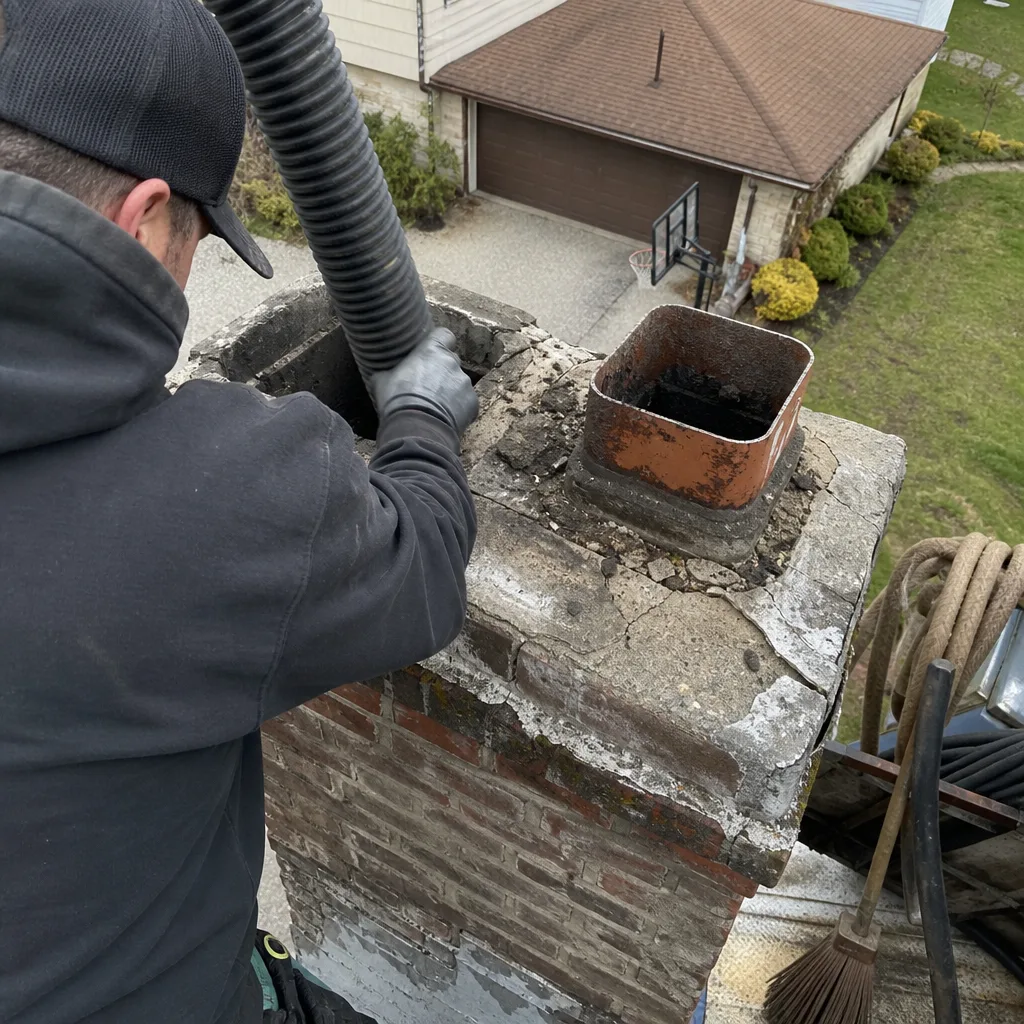 Before
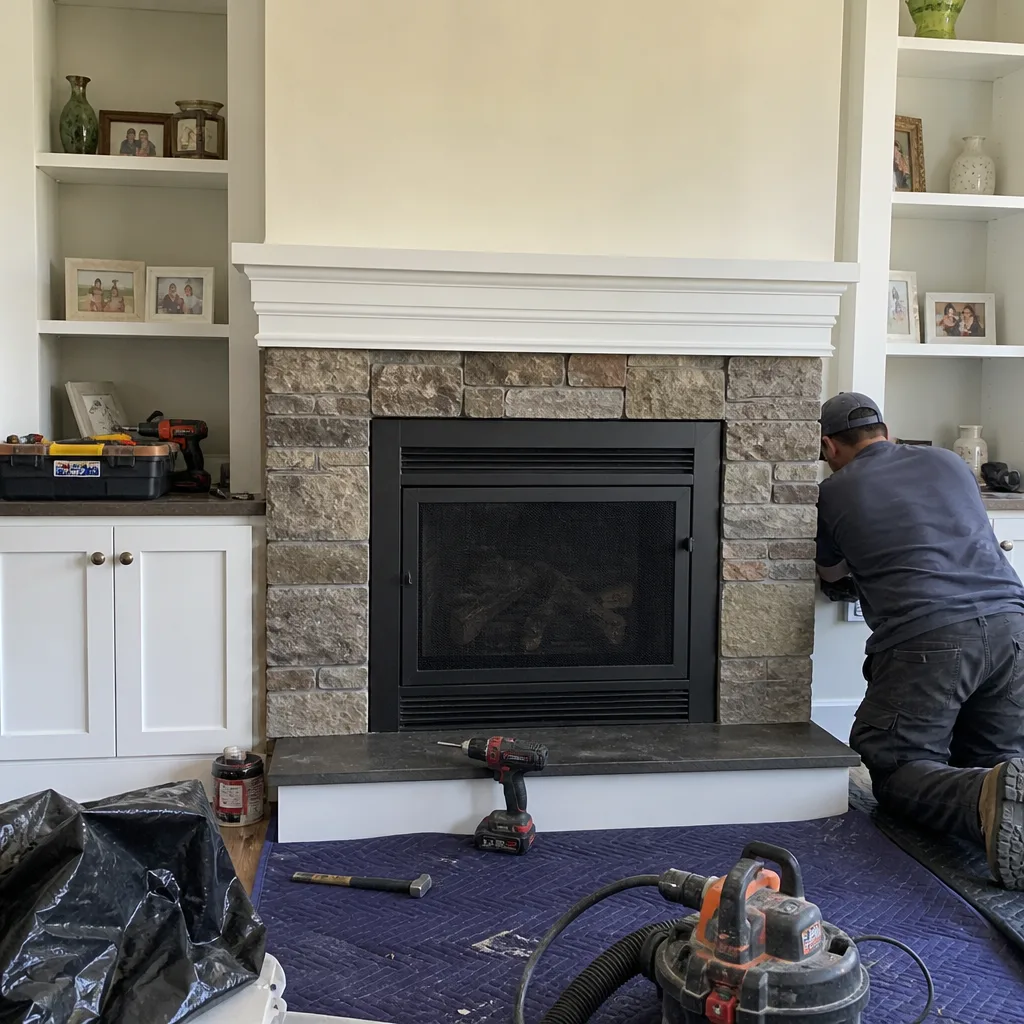 After
After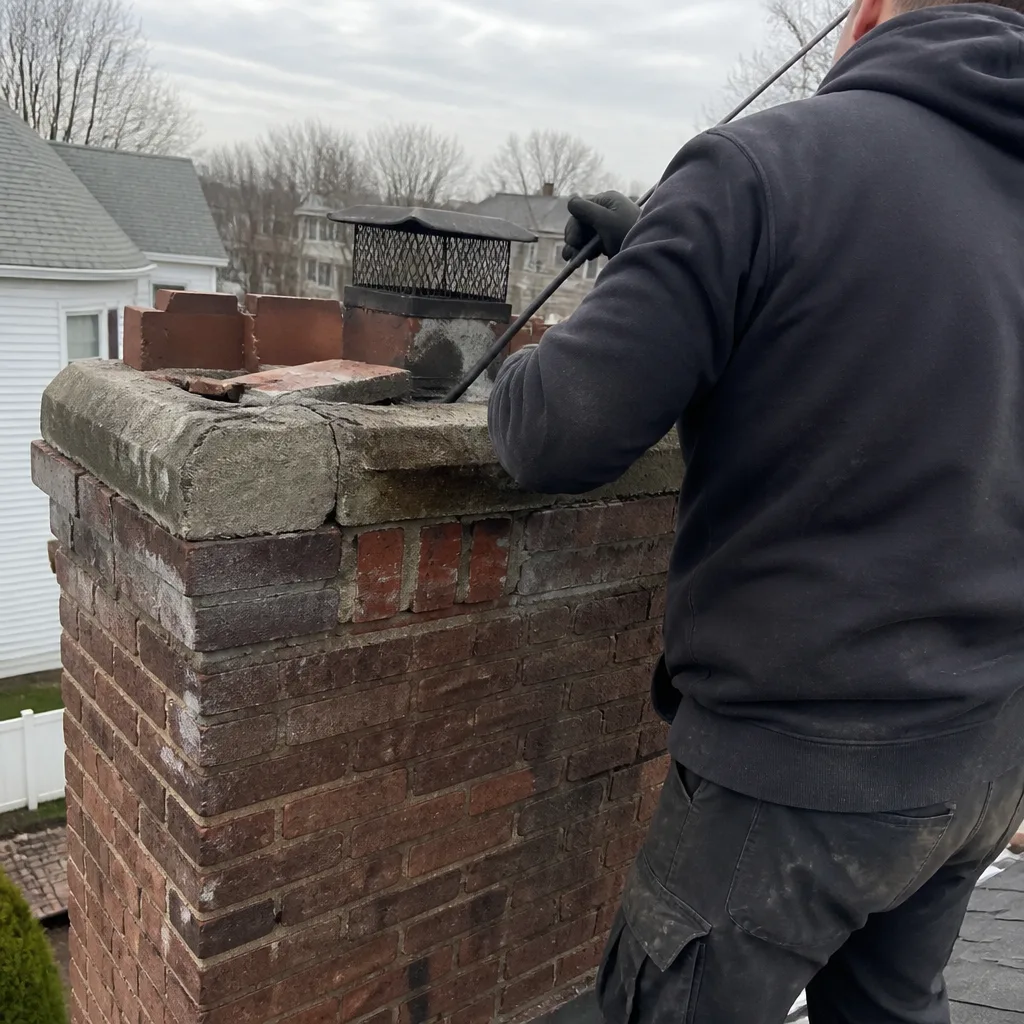 Before
 After
After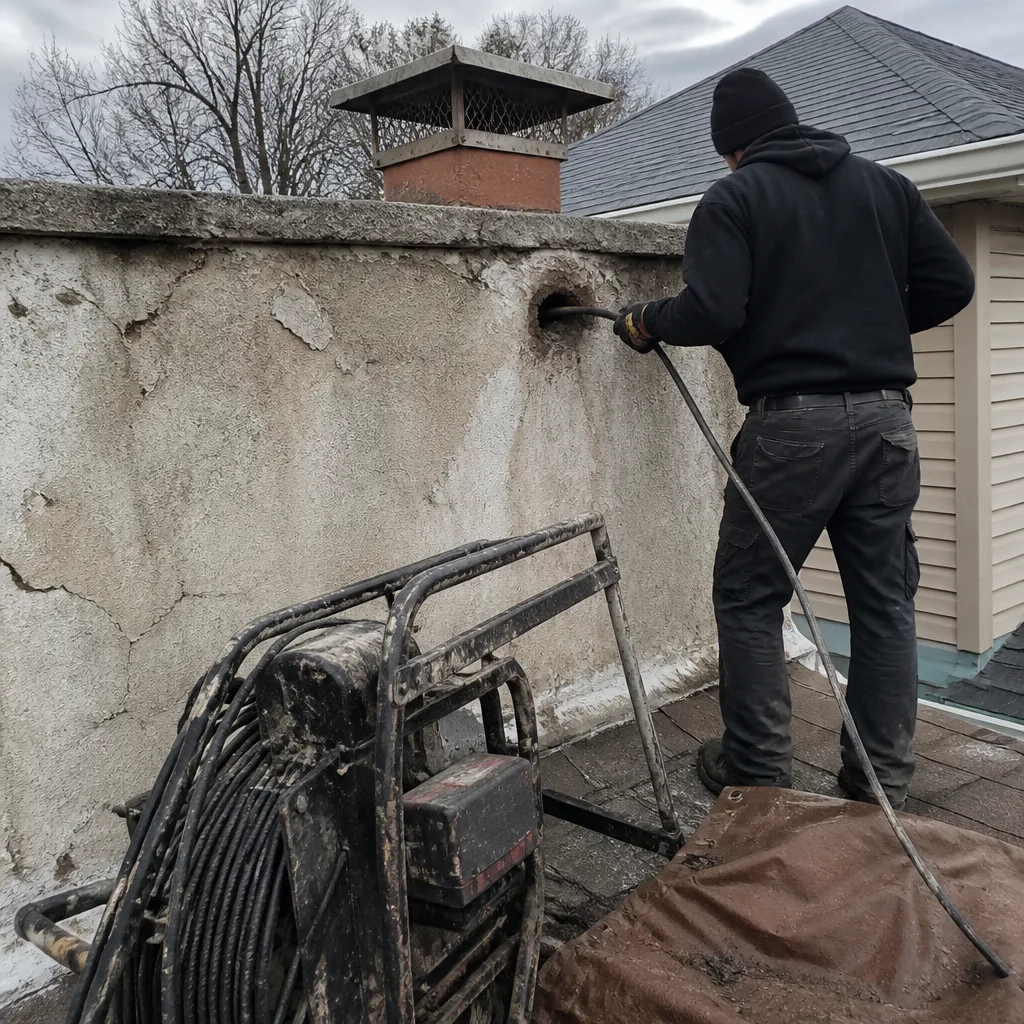 Before
 After
AfterSeasonal Chimney Cleaning Care for Clifton: Year-Round Homeowner’s Guide
Scheduling your chimney cleaning in October feels responsible, but it means any damage from summer heat, humidity, and animal intrusion has been sitting undetected since April. In Clifton’s climate, the post-summer inspection window is just as important as the pre-winter one. This guide walks through what your chimney actually experiences across all four seasons in Clifton, when to clean it, when to inspect it, and how to catch problems before they compound into four-figure repairs. For more guides & resources, explore our blog.
Quick Answer
In Clifton, a chimney should be cleaned and inspected twice a year: once in spring (April-May) to remove hardened creosote and check for frost damage, and once in early fall (September-October) before burning season starts. The fall visit must include a camera inspection before cleaning so damage is documented, not brushed away. This twice-yearly rhythm matches Clifton’s freeze-thaw cycles, humid summers, and pest seasons better than the old “once a year in October” advice.
Table of Contents
- Spring (April-May): The Post-Burn Inspection Window
- Summer (June-August): The Pest and Humidity Window
- Fall (September-October): The Pre-Season Sequence
- Winter (November-March): Mid-Season Monitoring
- Why Clifton’s Climate Hits Chimneys Harder Than Most of NJ
- What Seasonal Chimney Care Costs in Clifton
- Do You Really Need a New Liner? What the Camera Shows
- Common Mistakes to Avoid
- When to Call a Professional
- Frequently Asked Questions
- The Bottom Line
BeforeAfterSpring (April-May): The Post-Burn Inspection Window
Most Clifton homeowners shut the damper in March and don’t think about the chimney again until September. That gap is where the expensive stuff happens. Your chimney spent five months cycling between 400-degree surface temperatures and freezing nights. Masonry expands and contracts with every burn. By April, any mortar joint that was going to crack has cracked. The creosote you made all winter is sitting on your flue walls, and through a humid Clifton summer it will soak up moisture, becoming more acidic and more corrosive to the liner. Testing and removing it in May is cheaper than replacing a liner in October.
Spring is when we do a post-burn inspection. For our Chimney Cleaning & Sweep in Clifton, this visit focuses on three things:
- Creosote measurement before summer heat bakes it on. Creosote has three classes. Class I is a light sooty film you can brush. Class II is flaky, brownish glaze. Class III is a hardened, tar-like coating that shines in the camera light. If you finished winter with Class II buildup, it will not improve by sitting in a hot flue until September. Summer heat and humidity cause expansion within the flue, pressing the creosote into the liner pores. Spring removal is straightforward. Fall removal of the same material, after a Clifton summer, often requires chemical treatment first.
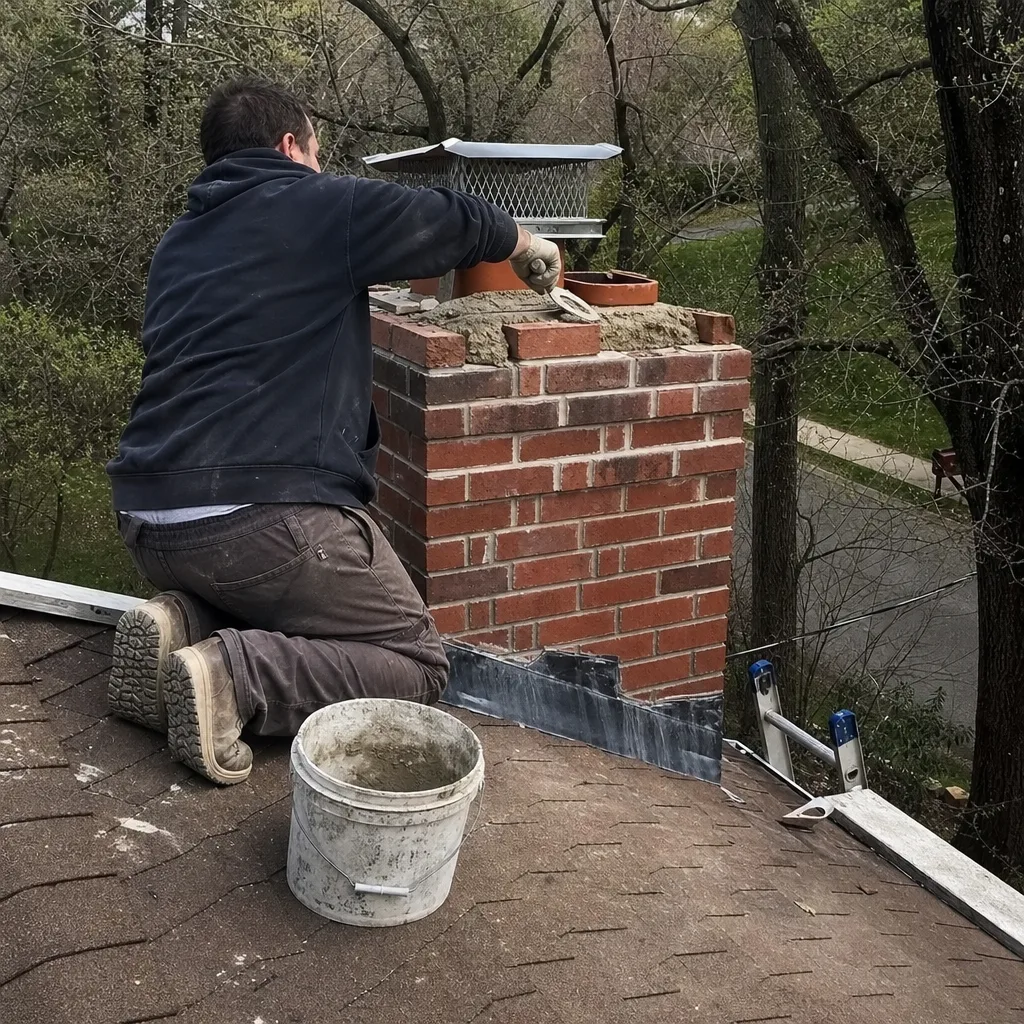
- Frost damage to mortar joints and the crown. Clifton’s freeze-thaw cycles are brutal on brickwork. Water seeps into hairline cracks during a March rain, freezes overnight, expands by roughly 9%, and widens the crack. Repeat that twenty times in April and you have spalled brick faces by June. “Spalling” is the term for brick faces popping off, and it means water has already established a route into the chimney structure. Spring is when we catch the cracks that will become spalling by August. Patching a crown crack in May costs a few hundred dollars. Rebuilding a crown and replacing spalled bricks in fall is a multi-thousand dollar job.
- Documentation for insurance and disclosures. If you had a chimney fire during the winter and didn’t realize it, the camera scan in spring will show it: cracked flue tiles, warped metal, or a glazed-over wall from high heat. We’ve documented conditions for Clifton homeowners who needed that evidence for insurance claims or home sales. The photo record from Clause 4 of the Haven Standard is the reason our inspection archive exists, running continuously since 2009.
What about cleaning? Spring is the best time to remove creosote. Not because the chimney is “dirty” in a threatening way, but because removing Class II and Class III creosote before summer heat and humidity changes it chemically is a much simpler job than removing it in October. One of our sweep calls in May takes less time, uses fewer chemicals, and leaves the flue cleaner than the identical call in late September.
Spring Action List for Clifton Homeowners
- Book a camera inspection and cleaning for April or early May, after the last burn of the season.
- Ask for the creosote class in writing and the flue condition in writing. If a sweep won’t put it in writing, that’s a red flag.
- With the damper closed for summer, seal off the firebox opening with a plastic sheet or a well-fitted glass door to keep humid air from circulating up the flue.
- If mortar cracks or crown hairline fractures were noted, schedule repairs for dry weather, not during a wet week.
Summer (June-August): The Pest and Humidity Window
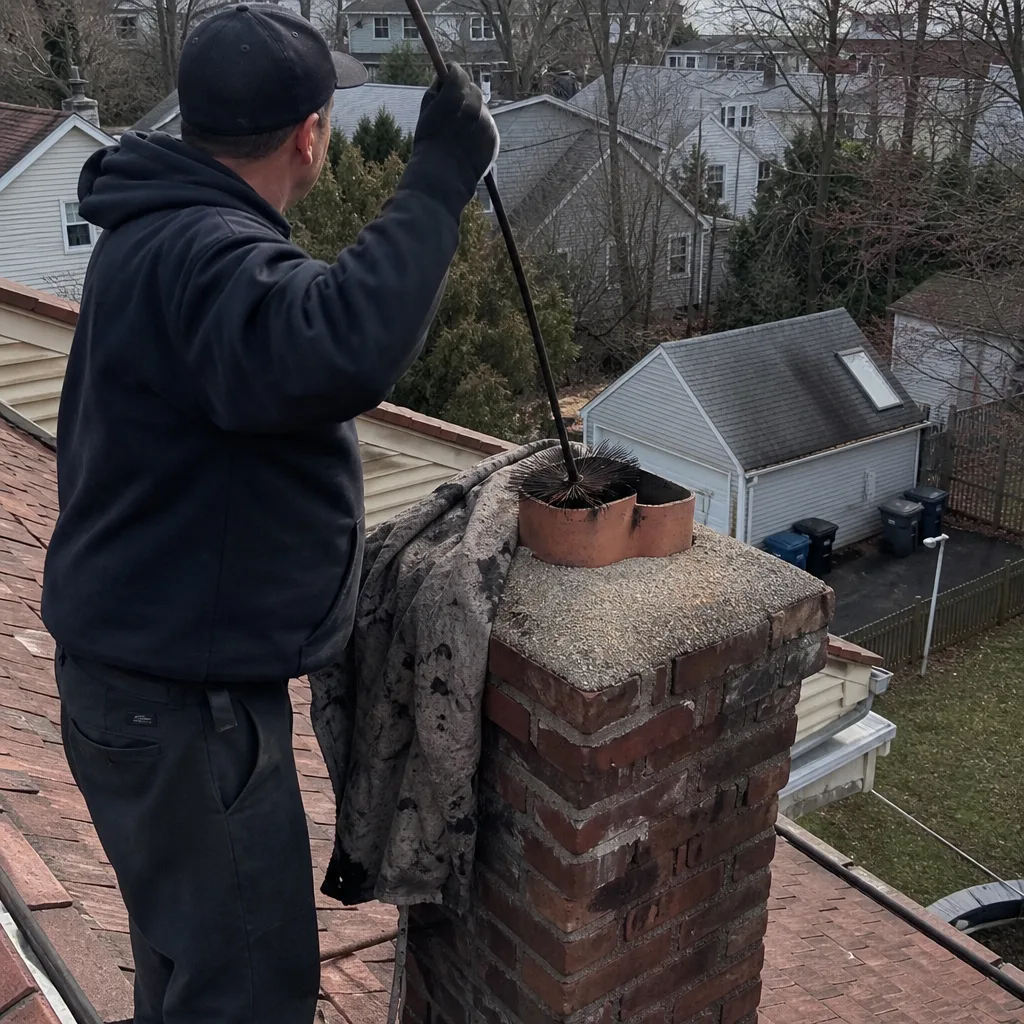
Between June and August, your chimney becomes an apartment listing for Clifton wildlife. The flue is dark, sheltered, and inaccessible, and in a humid Passaic River basin summer, it stays cooler than the outside brick. Every year, we open dampers in late summer and find tenants.
What actually moves in during a Clifton summer:
- Chimney swifts. These small, cigar-shaped birds nest in vertical flues. They are federally protected under the Migratory Bird Treaty Act. If swifts are actively nesting, they cannot be removed mid-nesting, and the nest cannot be disturbed until the birds leave on their own, typically by late August. This isn’t a company policy. It’s federal law. A homeowner who knocks down a swift nest faces fines. If you hear twittering or fluttering in your flue in June, the correct move is to wait, then schedule cleaning in September after the fledglings have flown.
- Raccoon families. A raccoon mother will break through a missing or rusted cap in May and raise kits in the smoke chamber. Raccoon feces in the smoke chamber is a health hazard we do not ask our technicians to remove by hand. A raccoon job in Clifton typically means trapping and exclusion, then cleaning and sanitizing the smoke chamber, then a new cap with mesh. Cost: usually $400-$800 depending on access and the extent of cleaning.
- Wasps and carpenter bees. Wasp colonization in the smoke chamber is common in Clifton, especially along the Passaic River where standing water supports large wasp populations. A nest in the smoke chamber can send wasps into the living space when the fireplace is first lit in fall. Carpenter bees drill into cedar shake and fascia, but also into older mortar joints. We’ve seen Clifton homes where bees hollowed out enough mortar to loosen bricks at the chimney shoulder.
- Squirrels. They enter at the crown and nest in the flue, leaving leaves, twigs, and urine that soaks into brickwork. The fix is always the same: remove, clean, cap. Ongoing prevention is a properly sized stainless cap with mesh small enough to exclude animals but open enough to vent properly.
Humidity is the other summer problem. Clifton sits in the Passaic River basin, where summer relative humidity regularly exceeds 70%. A chimney with cracked mortar or a missing cap becomes a moisture pump. Humid air enters the top, condenses on cool flue walls, and drips down into the firebox. You’ll notice a damp smell in the den in August, or white efflorescence on the brick face outside. Efflorescence is the mineral salt left behind when water evaporates from masonry, and it’s a reliable sign that water is moving through your brick’s interior. Left unaddressed through one summer, it’s cosmetic. Repeated for five summers, it’s structural.
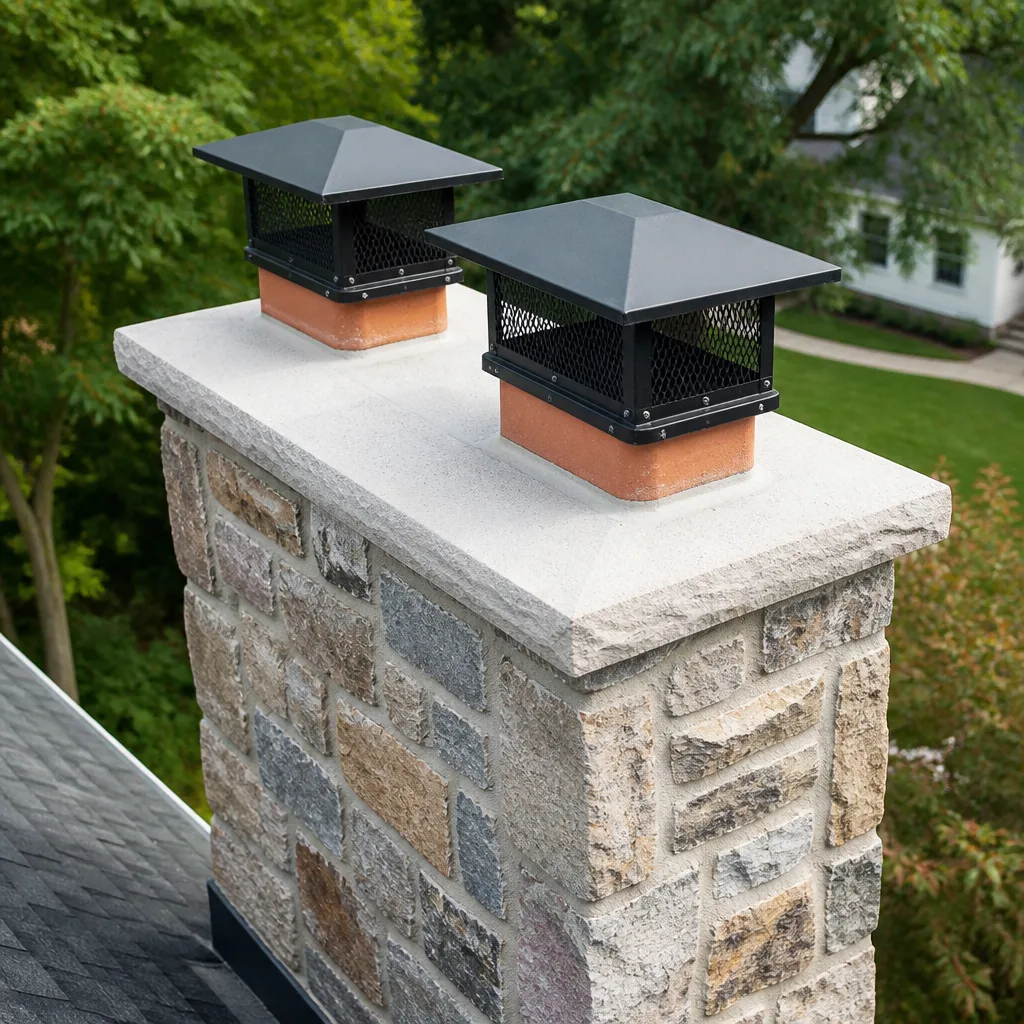
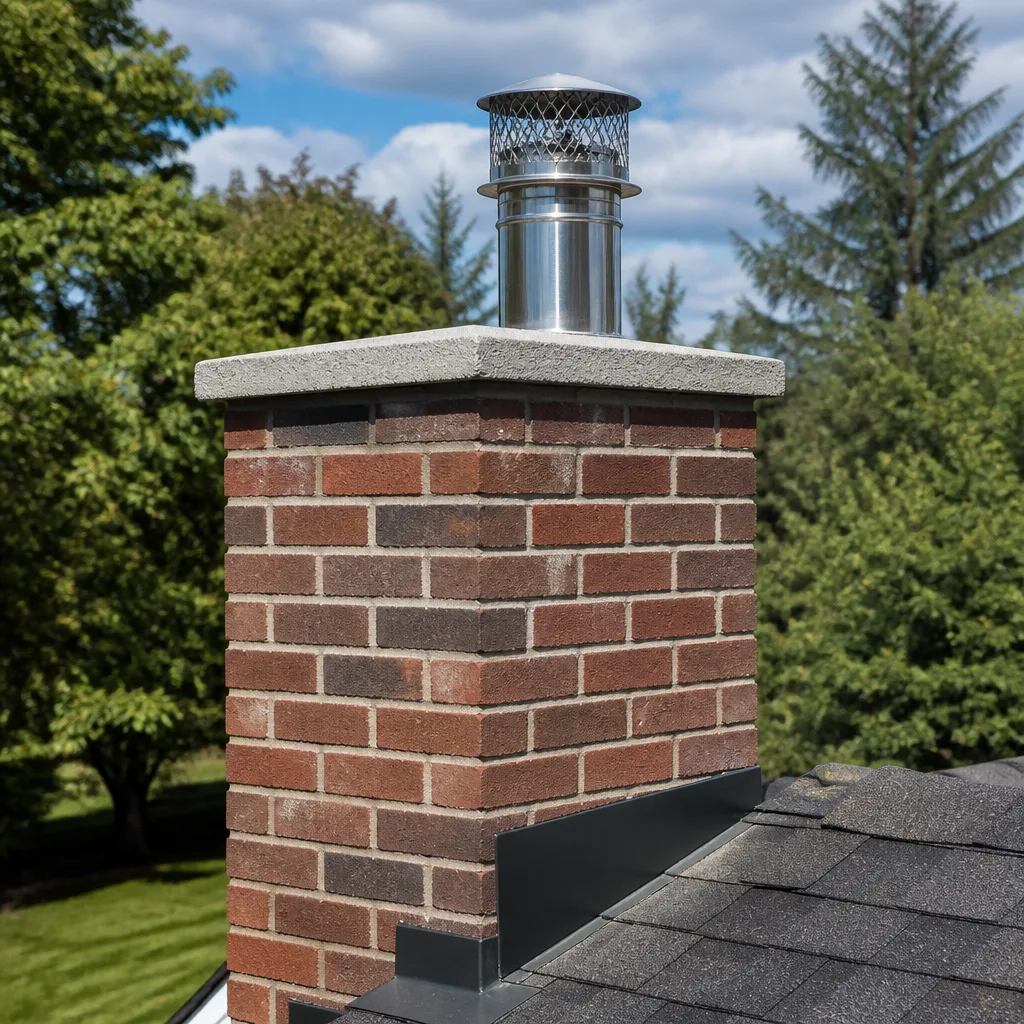
The cheap prevention is a cap. A stainless steel cap from Olympia Chimney or Famco, properly sized and installed, keeps out animals and most wind-driven rain. On Clifton chimneys with clay flue liners, we often pair a cap with a new crown pour because the original crown is the real leak. The cap alone does not fix a crumbling crown.
Fall (September-October): The Pre-Season Sequence
This is the season everyone thinks about, and the order of operations matters more than the timing. The correct pre-season sequence is: inspection before cleaning, not after.
Here’s why. A chimney brush removes creosote, sure, but it also disturbs and removes evidence. If there’s a hairline crack in a flue tile, a steel brush or whip can widen it or obscure the fact that it existed. If there’s a patch of spoiled mortar joint, brushing knocks loose material away and the camera later shows “clean” but missing mortar. The inspection must happen before anything is disturbed, so the camera documents actual conditions. This is why our Chimney Repair in Clifton process always starts with the camera scan, before the brush goes in.
The fall checklist for every Clifton home:
- Camera scan of the full flue, smoke chamber, and firebox. Looking for: cracked or spalled flue tiles, gaps in mortar joints, creosote class, water staining, animal nests or debris, and liner material deterioration.
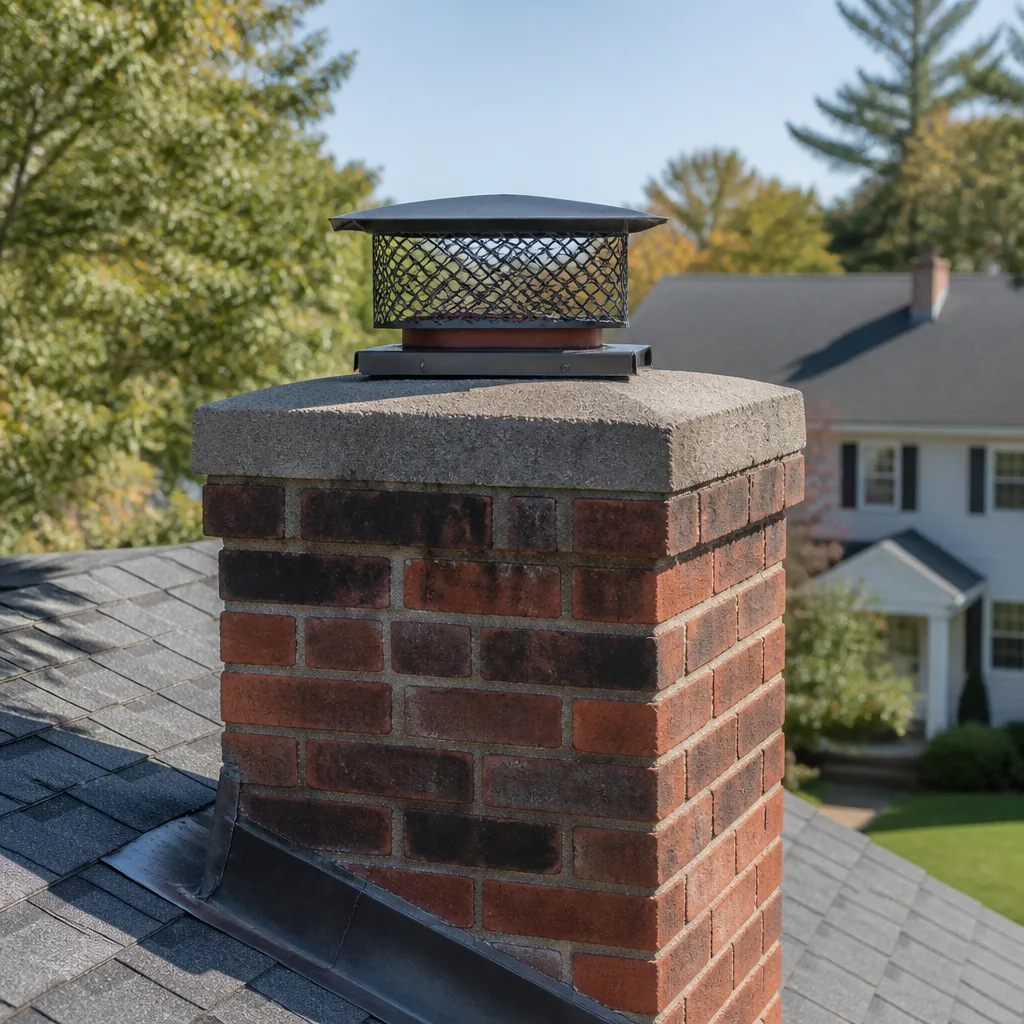
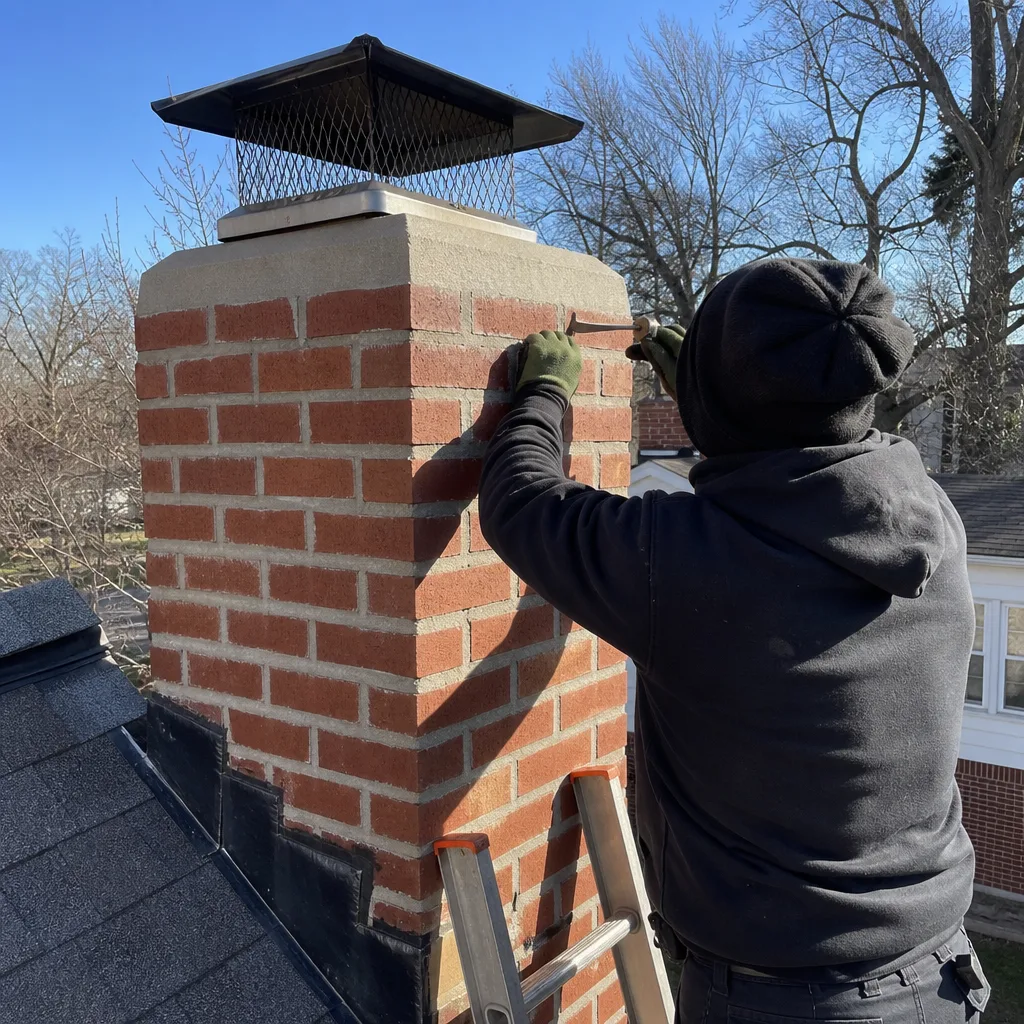
- Crown and cap inspection from the roof. A cracked crown is the most common untreated condition we see in Clifton. The fix from a Fireplace Services in Clifton visit is usually a concrete crown pour with a drip edge, which costs less than the liner replacement that follows a leaking crown.
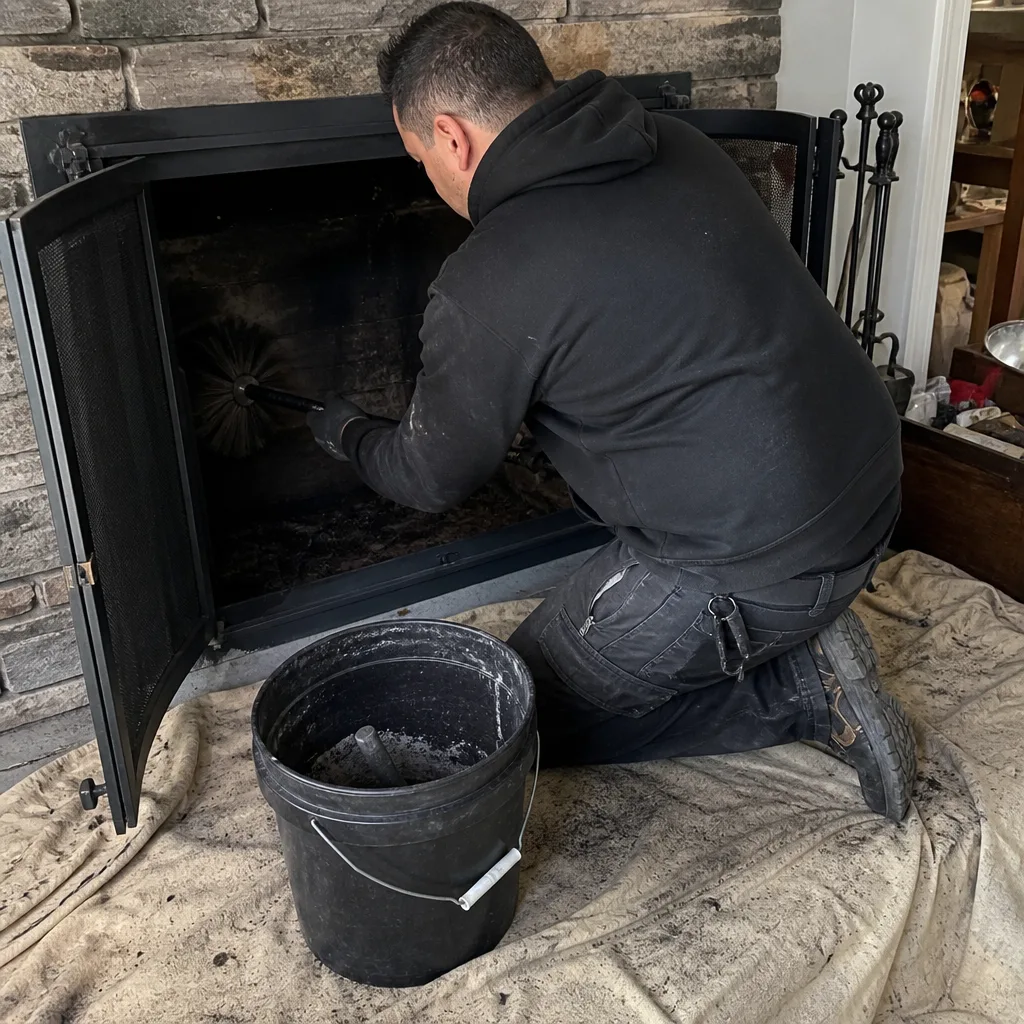
- Creosote removal to Class I or zero. For most Clifton fireplaces burning seasoned hardwood at a reasonable rate, this is a standard sweep. For high-volume burners or those who burn less-seasoned wood, this may involve chemical treatment and rotary cleaning.
- Written report with photos and a written price for any recommended repairs. If the tech sees a crack and recommends a liner, you should be able to look at the photo yourself. If you cannot see it, you should not approve it. Haven Standard Clause 1 requires a written scope and written price before anyone starts work. That’s not a favor. It’s the rule the business has operated under since 2009.
Timing in Clifton: late September is ideal. Before that, chimney swifts may still be present. After that, you’re competing with every other homeowner for an early-October slot. Late September gives you time to schedule repairs in October before serious cold sets in.
Winter (November-March): Mid-Season Monitoring
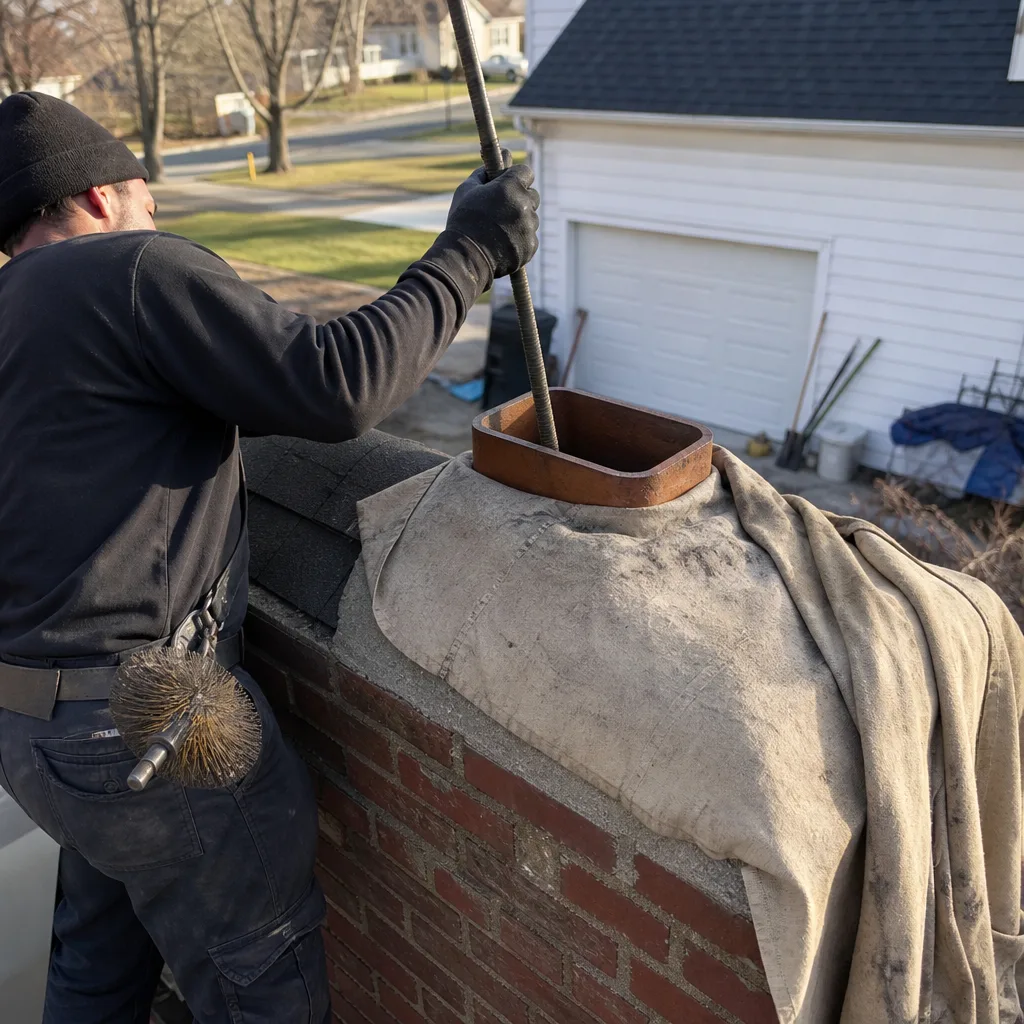
Winter is not a maintenance season. The chimney is working. But it’s the season when symptoms show up, and knowing which symptoms mean a real problem versus normal operation saves money and stress.
Symptoms to watch for in a Clifton heating season:
- Smoke rollout into the living room. If smoke puffs back into the room when you open the fireplace door or start a fire, that’s a draft problem. It’s not “bad technique.” It’s usually one of three things: a flue obstruction (animal nest, creosote blockage), a flue that’s too cold to establish updraft (common in exterior chimneys on old Clifton homes), or a damper not opening fully. If it happens more than once, it’s worth a camera look.
- A sour, smoky smell on damp days. This is moisture hitting creosote, and it means the chimney needs cleaning sooner than planned. The smell won’t go away by itself and burning “hotter fires” will not fix it.
- Ice damming on the crown after snow. If you see icicles forming from the crown rim or water staining inside the flue in February, the crown is not doing its job. Ice forms when snowmelt refreezes on a cold surface. On a properly crowned and capped chimney, melt runs to the drip edge and off. Pooling water on a flat or cracked crown freezes, expands, and widens any crack it can find.
- Black, glossy buildup visible at the firebox top. That’s Class III creosote in the making. It’s shiny like tar, and it is a fuel source. If you can see it, it’s time to shut down fires until the chimney is cleaned.
A note on burning habits that changes how often you need cleaning. We’ve seen Clifton homes that burn 10 fires a winter and need a sweep every 3 years, and homes that burn 60 fires and need one every 18 months. The variable is fuel. Unseasoned wood, or wood that sat uncovered in a wet Passaic River basin summer, creates more creosote per burn. Well-seasoned hardwood, covered and split for at least a year, burns cleaner. The thermometer tells the story: a stovepipe or flue thermometer is a $30 tool that shows when you’re burning too cool, which is the creosote factory setting.
Why Clifton’s Climate Hits Chimneys Harder Than Most of NJ
Clifton sits in a specific microclimate. The Passaic River basin shapes the air. On a July night, relative humidity in Clifton can run 10-15% higher than in Bergen County ridge towns fifteen miles north. Water vapor is heavier than air, so it pools in the basin. Every brick chimney in the city absorbs some of that vapor. When the chimney is hot, the water is driven out. When it’s cool, the water stays. Repeated cycles of wetting and drying, heating and freezing, fatigue masonry fast.
The urban heat island effect adds a second force. Clifton is built-up, with substantial asphalt, brick, and concrete radiating heat back into the air after sunset. The city runs warmer than surrounding suburban areas by 3-5 degrees on average, especially in summer. That heat accelerates the drying side of the moisture cycle. The brick face expands in the afternoon sun and contracts at night. Over a decade, the cumulative movement is measured in millimeters, but the cracking it produces is measured in dollars.
Compare this to a chimney in rural Hunterdon County. Less humidity cycling, less heat island effect, less airborne particulate. Rural chimneys age slowly. A Clifton chimney of the same age with the same original masonry will often show spalling, efflorescence, and crown cracking earlier. That’s not builder error. It’s physics.
What this means practically: Clifton homeowners should not benchmark against national “average chimney lifespan” numbers. A well-built masonry chimney with annual inspections and timely crown repair can last 50-80 years. One that’s ignored can need a partial rebuild in 25. The difference is maintenance, not materials.
What Seasonal Chimney Care Costs in Clifton
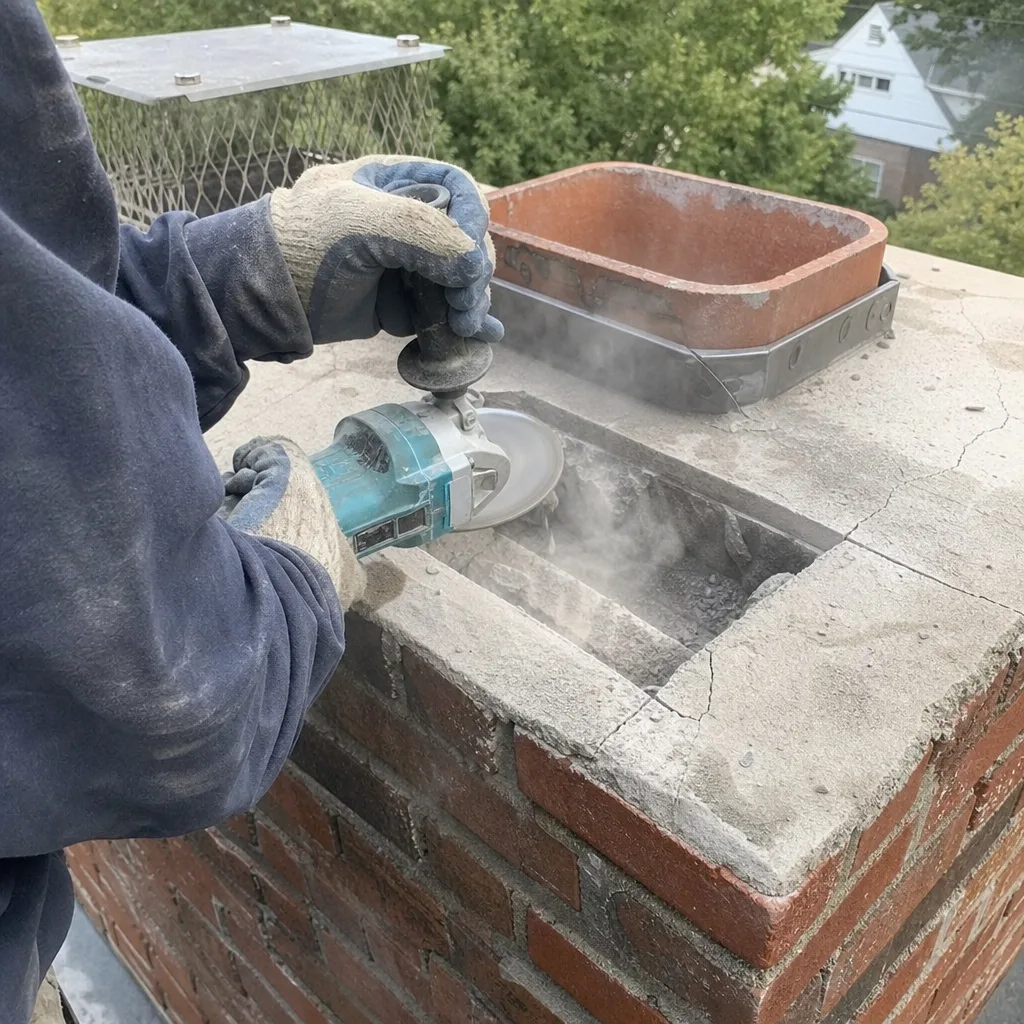
Let’s talk real numbers for Clifton. Prices here run slightly above the national average because of access difficulty, historic home stock, and the cost of doing business in Passaic County. But the range is knowable. See our Chimney Cleaning Cost Breakdown: The Clifton Homeowner’s Reference for 2026 for detailed pricing.
| Service | Typical Clifton Range | What It Includes |
|---|---|---|
| Standard chimney sweep and basic inspection | $190 - $320 | Brush cleaning of the flue, basic visual check, disposal of debris. May not include camera scan. |
| Camera-scan inspection (NFPA 211 Level 2) | $150 - $280 as add-on, or included in full-service sweep | Video documentation of flue lining, smoke chamber, and firebox. Written report with images. |
| Full sweep + camera inspection + written report | $380 - $540 | What we do on every visit. Photo record included, written price for any recommended repairs, creosote class documented. |
| Cap replacement (stainless steel) | $175 - $450 installed | Material and labor. Varies by flue size and roof access. |
| Crown repair or recast | $600 - $1,400 | Concrete crown pour with drip edge, typically includes sealing of the top courses. |
| Flue liner replacement (stainless steel, DuraFlex or HeatShield) | $3,200 - $6,800 | Varies by flue height, access, and whether the old liner must be removed. Not always necessary. See next section. |
Every price above is an estimate band, not a binding quote. The point is that you should see numbers like these on a written estimate before anyone starts work. If a company won’t give you a written price before starting, that violates Haven Standard Clause 1 and you should end the conversation. Our Level Two Chimney Clifton home process includes a written price, written scope, and written warranty before work begins, every job, since 2009.
Do You Really Need a New Liner? What the Camera Shows
This is the question Clifton homeowners ask us more than any other. They’re told by another company that the liner is “shot” and replacement is $5,000. They call us for a second opinion. And sometimes the liner is fine.
Here’s the truth: a flue liner needs replacement when it has structural gaps that allow heat or gases to reach combustible material, or when it’s so deteriorated that it cannot perform its function. Cracks smaller than the width of a dime in a terracotta liner are common in older Clifton homes and do not always mean replacement. Spalling, misalignment, open joints between tiles, or a liner that has shifted more than 1/4 inch does mean repair or replacement.
What the camera scan shows, specifically:
- Class A condition: Intact tiles, minimal creosote, tight joints. No action needed, clean and document.
- Class B condition: Hairline cracks, minor spalling, buildup. Monitor annually, repair when cracks reach the point where gas passes through them.
- Class C condition: Open joints, shifted tiles, missing sections, or cracks through the tile wall. Safety issue. Repair now, usually with a stainless liner (DuraFlex) or resurfacing (HeatShield).
We will never tell you to replace a liner without showing you the camera footage. We’ll put it on your phone or your laptop. You’ll see the crack. You’ll see the gap. And if you don’t see what we see, we’ll explain what we’re looking at until you do. That’s not best practice. That’s the minimum under Clause 4 of the Haven Standard, which has required a photo record on every inspection since 2009, years before insurers or regulators asked for the practice.
We’d also rather you get a second opinion if you’re not sure. Bring us a competitor’s written quote and we’ll do a Free Second Opinion on Any Written Estimate. That’s policy. If the work is needed, we’ll price it fairly and in writing. If it isn’t, we’ll tell you and you can stop worrying.
Common Mistakes to Avoid
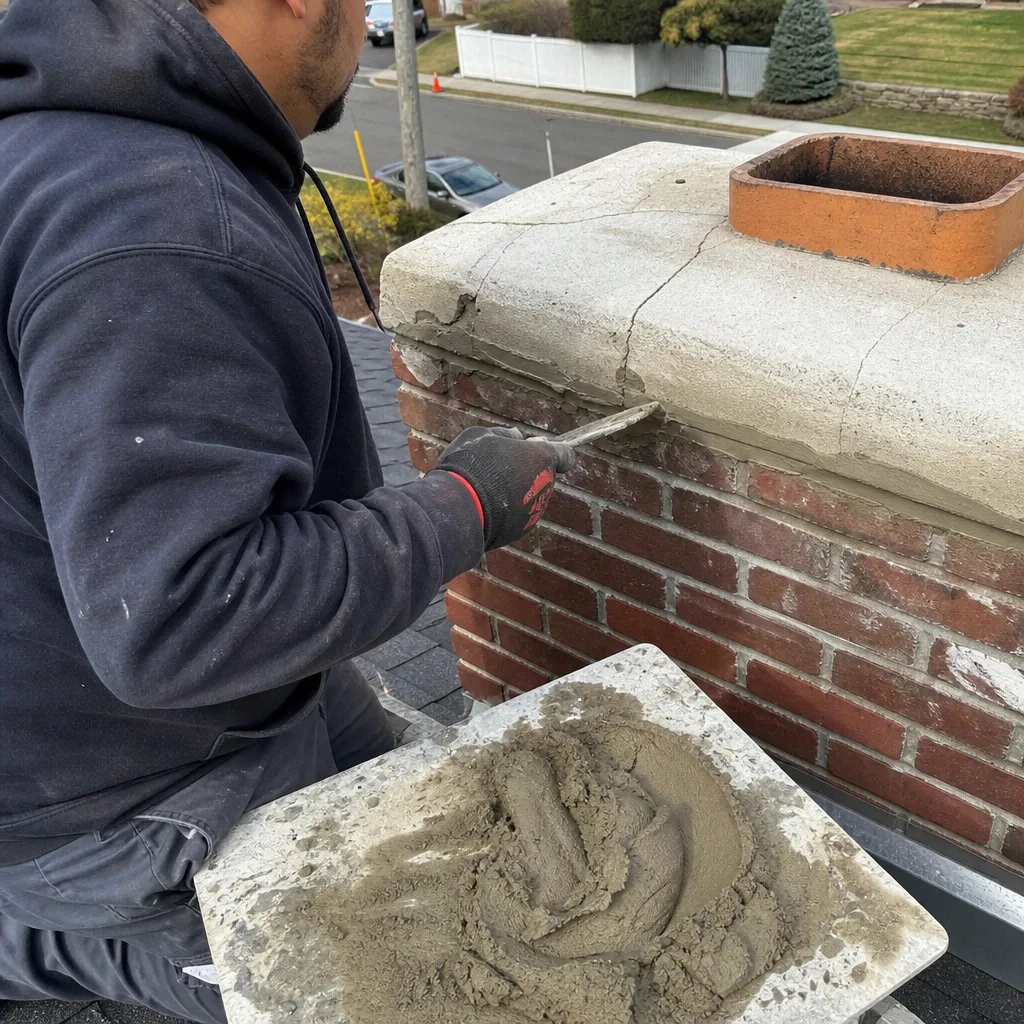
- Cleaning without inspecting first. The camera must document conditions before the brush disturbs them. A sweep that cleans first and “inspects” after is guessing. If your sweeper has never put a camera in the flue, you have no idea what they actually saw.
- Waiting until October to schedule. Clifton’s September and early October calendar fills fast. Book your fall sweep by mid-September and do the spring sweep in April. If you wait until the first cold snap, you’re competing with every other procrastinating chimney in Passaic County.
- Burning unseasoned wood. Fresh-cut oak that’s been sitting in a damp Clifton yard since spring won’t season by November. It’ll smolder, produce low-temperature smoke, and deposit creosote at an aggressive rate. Use wood that’s been split and covered for at least a year.
- Ignoring the cap. A missing or rusted cap is an open invitation to raccoons in June and rain in every month. A new stainless cap is the cheapest chimney repair we perform, and one of the most valuable.
- “It’s just a smell.” That summer damp odor from the fireplace is moisture plus creosote. It’s telling you that water is getting in and creosote is still there. Both problems get more expensive the longer they wait.
- Skipping the spring inspection because “we didn’t use the fireplace much.” You Don’t have to burn many fires for frost to crack a crown or a raccoon to set up a nursery in June. The spring inspection is about the condition of the structure, not the frequency of use.
- Believing that a “cleaning” is an “inspection.” They serve different purposes. A cleaning removes material. An inspection assesses structural condition. You need both, in that order: inspect, then clean.
When to Call a Professional
Call a professional chimney company in Clifton if you see any of these: smoke rollout into the room, a smell of smoke when the fireplace is not in use, visible cracks in the brick face outside, efflorescence (white chalky residue) on the brick, a chimney cap that’s missing or rusted through, or any animal activity around the chimney. If you’ve had a chimney fire, even a small one, do not burn again until the flue has been camera-scanned. Level Two Chimney Clifton offers free estimates in Clifton - call (551) 282-9640. We’ll give you a written price before any work starts, and a camera-scan photo record when the job’s done.
Frequently Asked Questions
Twice a year in Clifton: once in April or May after the burning season ends, and once in September or October before the new season begins. Our Chimney Cleaning & Sweep Maintenance Checklist for Clifton Homeowners covers everything to schedule and verify. The spring visit removes creosote before summer humidity can make it more corrosive, and the fall visit prepares the flue for safe burning. Homes that burn more than 50 fires a season or burn wet wood may need a third cleaning mid-season.
A full sweep with camera inspection and written report in Clifton typically costs between $380 and $540. A basic sweep without a camera scan ranges from $190 to $320. The difference is documentation: a basic sweep tells you the chimney was brushed, while a full sweep tells you what condition the flue is in, with photos. Call (551) 282-9640 for an exact quote - estimates are free.
Not always. Hairline cracks in terracotta flue tiles are common in older Clifton homes and often do not require liner replacement. Replacement is necessary when the liner has open joints, shifted tiles, missing sections, or cracks large enough to allow heat and gases to reach combustible material. Insist that any recommendation to replace the liner is backed by camera footage you can see. If you’re quoted a replacement, get a second opinion with a camera.
Chimney swifts are protected by federal law, and an active nest cannot be removed until the birds leave on their own, typically by late summer in Clifton. There is no legal workaround: the flue must remain undisturbed while the birds are present. After they leave, the nest can be removed and the chimney cleaned. A properly sized stainless cap with mesh prevents swifts from returning next year.
That sour, smoky odor on humid summer days is moisture combining with creosote deposits inside the flue. Clifton’s high summer humidity in the Passaic River basin amplifies the effect. The fix is a thorough cleaning to remove the creosote and a cap or crown repair to stop the moisture entry. The longer it sits, the more acidic the creosote becomes and the more damage it does to the liner.
You can, but you’re leaving money on the table. Creosote removed in May is removed before a humid Clifton summer changes it from flaky Class II into hardened Class III, which is much harder to clean. Spring also catches frost damage to the crown and mortar before summer rains force water into every crack and freeze-thaw cycles widen them. The twice-yearly rhythm costs more per year, but it’s dramatically cheaper than the repair bills it prevents.
The Bottom Line
Clifton’s chimney calendar has four seasons, not two. Spring is the post-burn inspection that catches frost damage and removes creosote before summer humidity changes it. Summer is the pest window and the moisture window, when a missing cap costs more than the cap. Fall is the pre-season sequence, where inspection must precede cleaning so the camera documents reality. Winter is monitoring season, where you watch for the symptoms that mean problems are developing. Clean twice a year, inspect before cleaning, get everything in writing, and demand photos. That’s how you run a safe chimney in Clifton. For the regulatory background, read Chimney Cleaning Permits, Codes & Inspections in NJ: What You Need to Know.
Need a sweep or want a camera-scan inspection this season? Call Level Two Chimney Clifton for a free estimate - (551) 282-9640. We’ll provide a written price before any work starts and a photo record when it’s done.
Written by Corrine Halstead, Owner at Level Two Chimney Clifton, serving Clifton since 2009.