
Last updated September 20, 2026
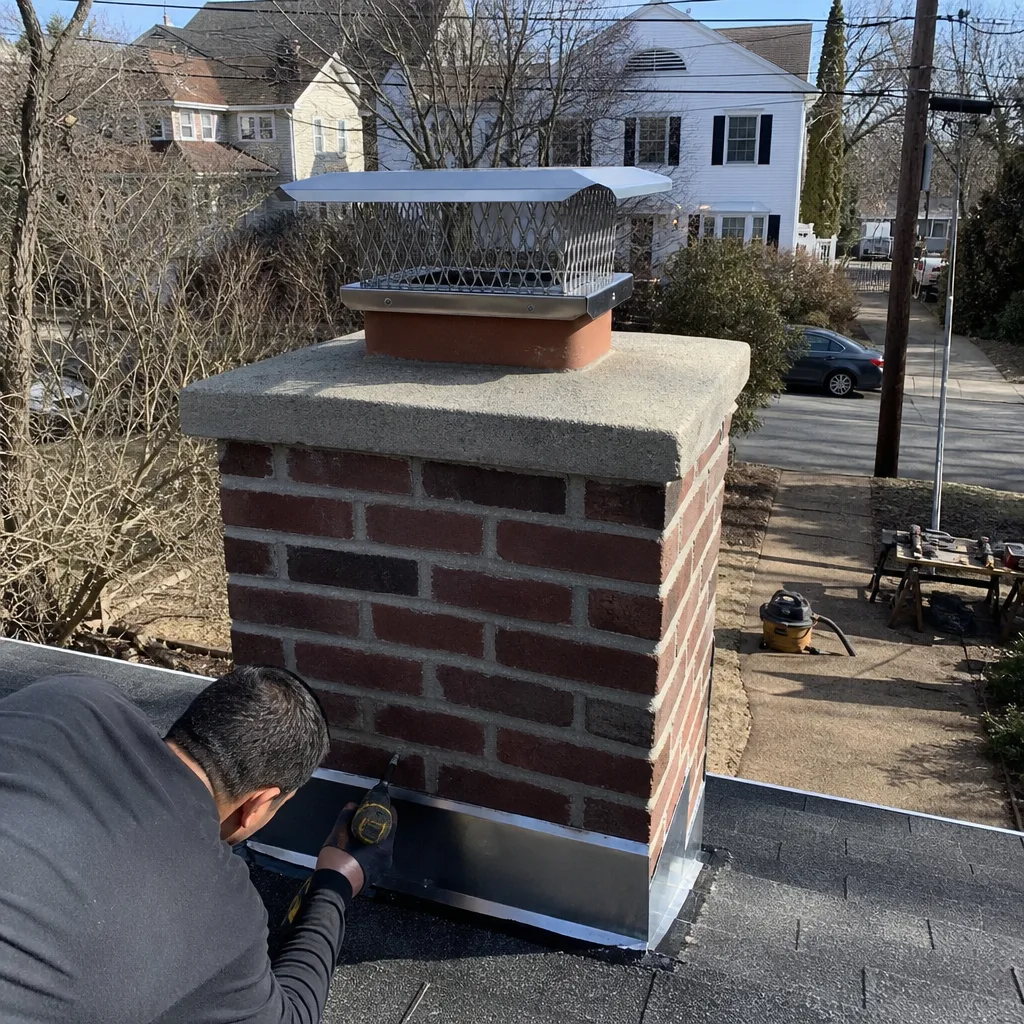
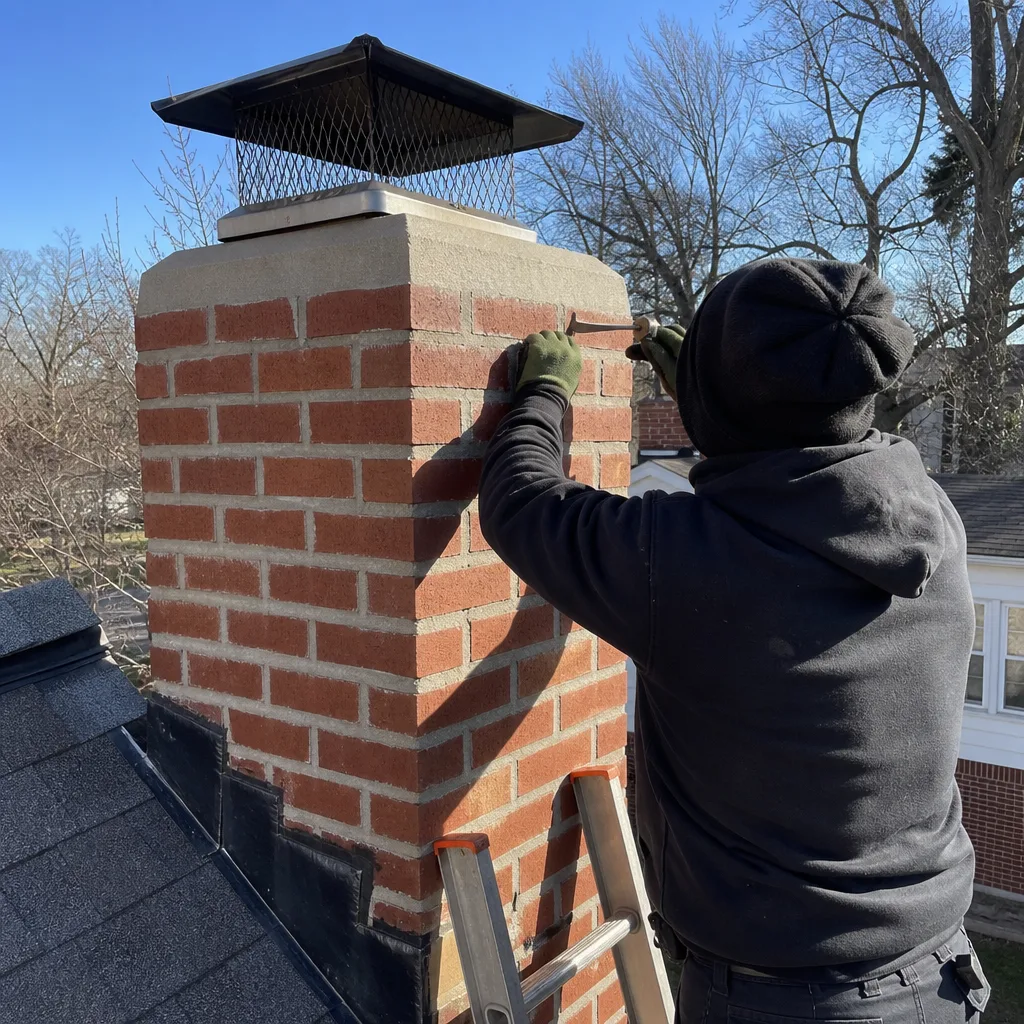
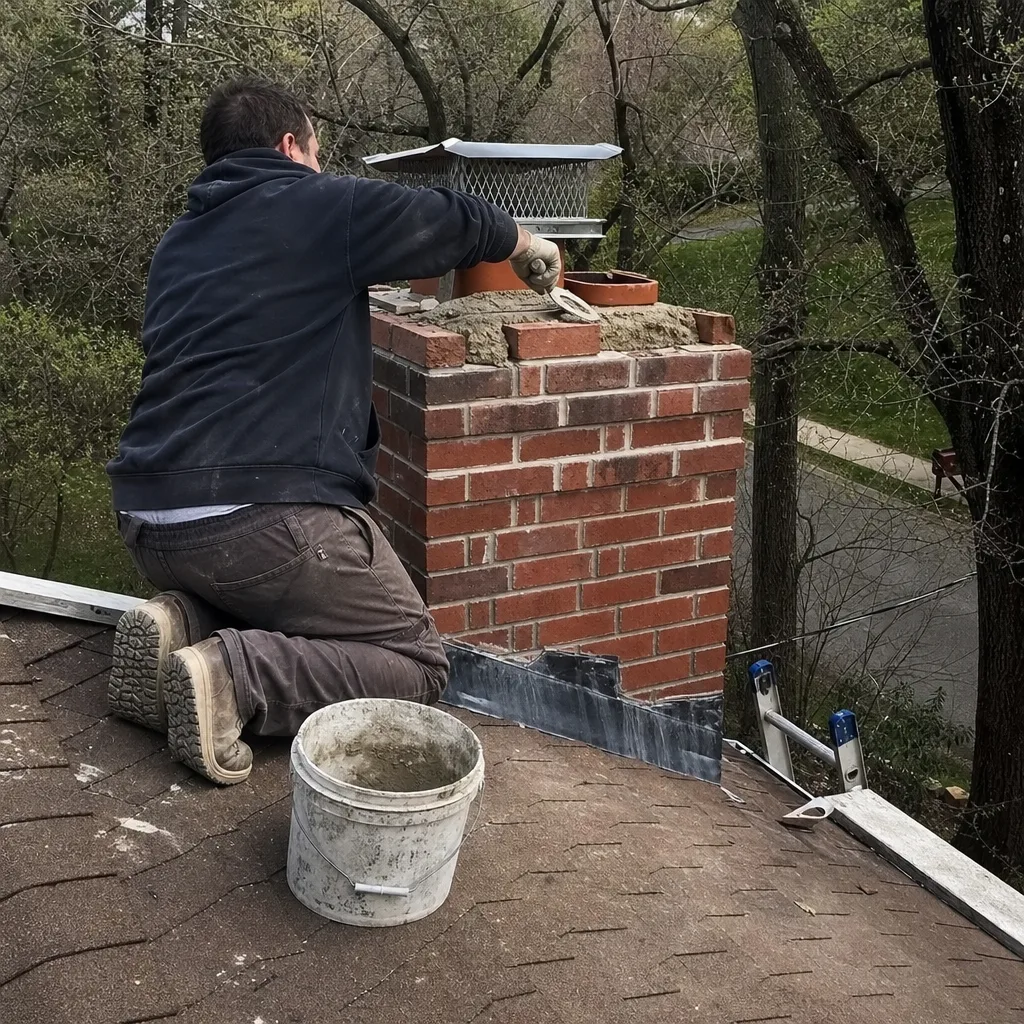
Level 1 sweep and inspection to the NFPA 211 annual standard - flue, crown, cap, and flashing checked and photographed
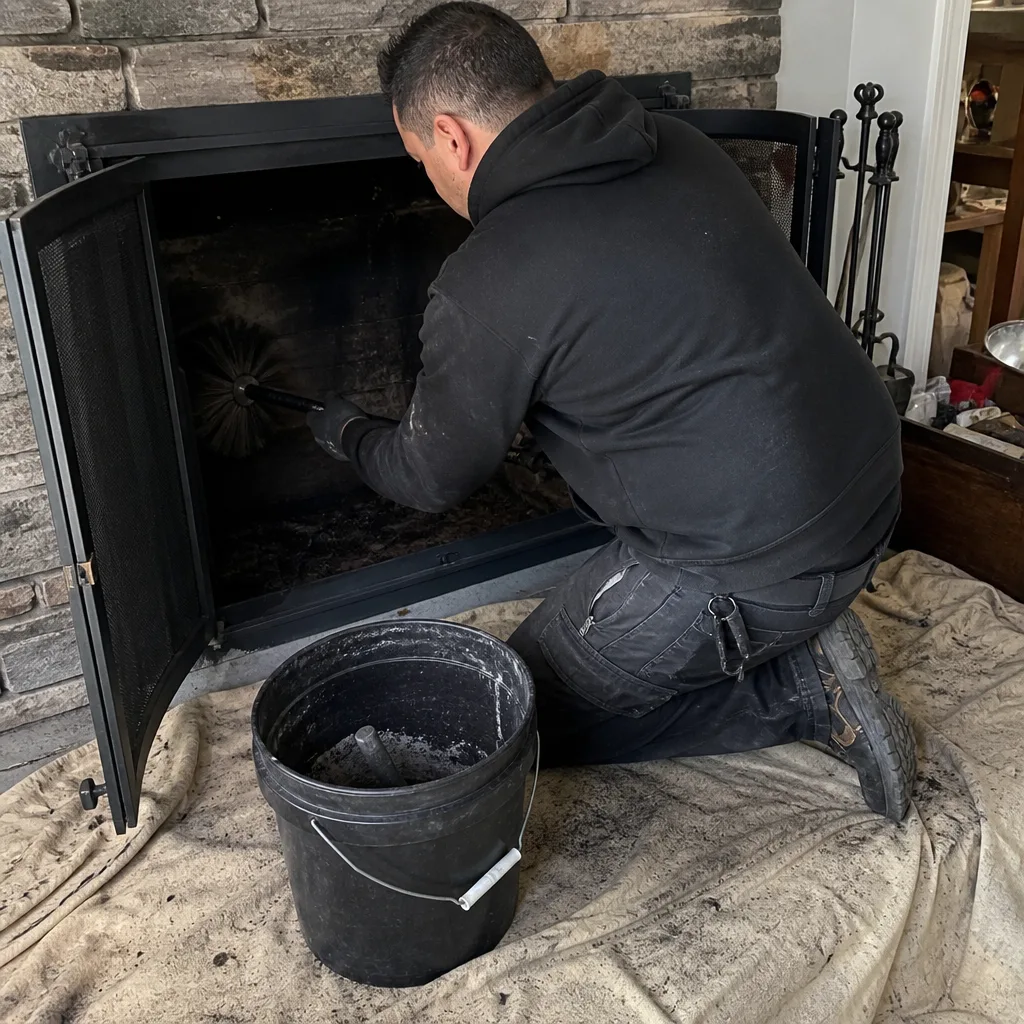
Chimney sweep logs do not sweep chimneys. They loosen some creosote - which then falls where a brush and vacuum still have to collect it.
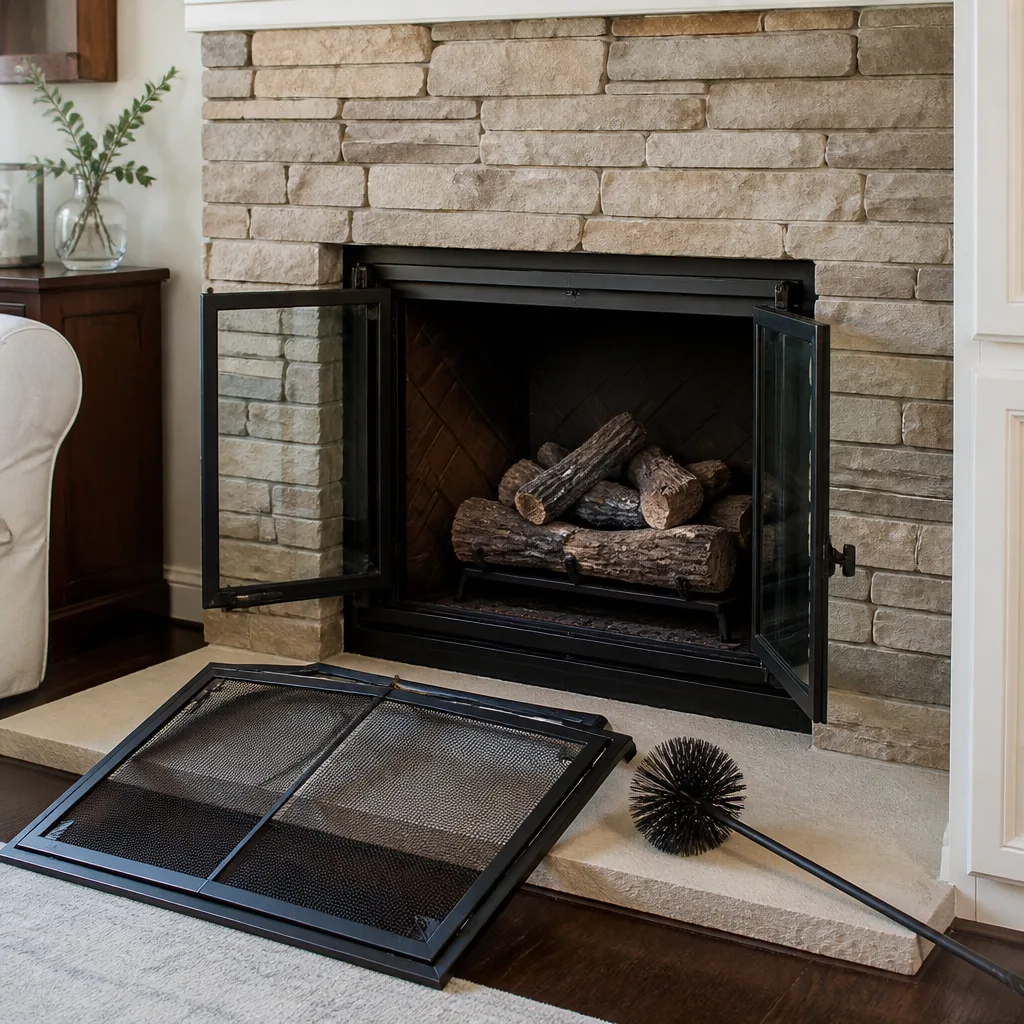
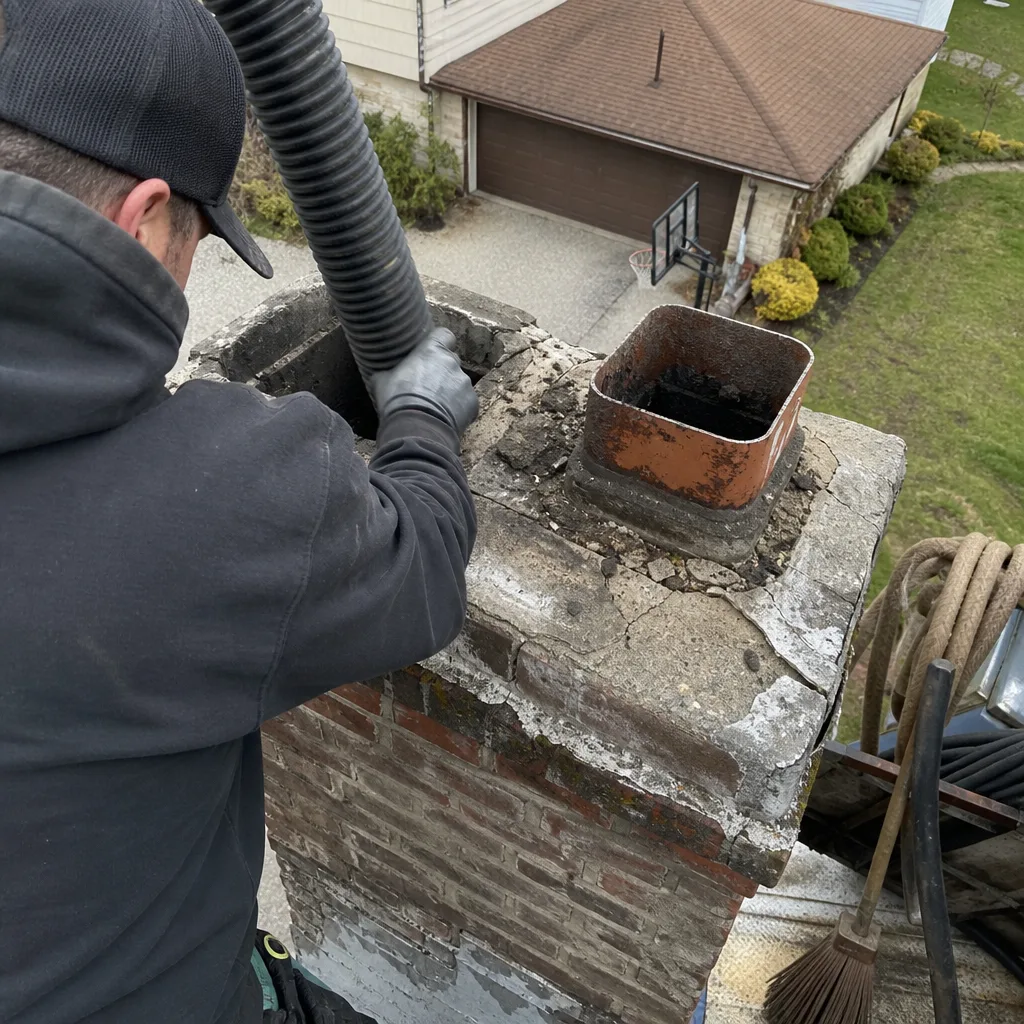 Before
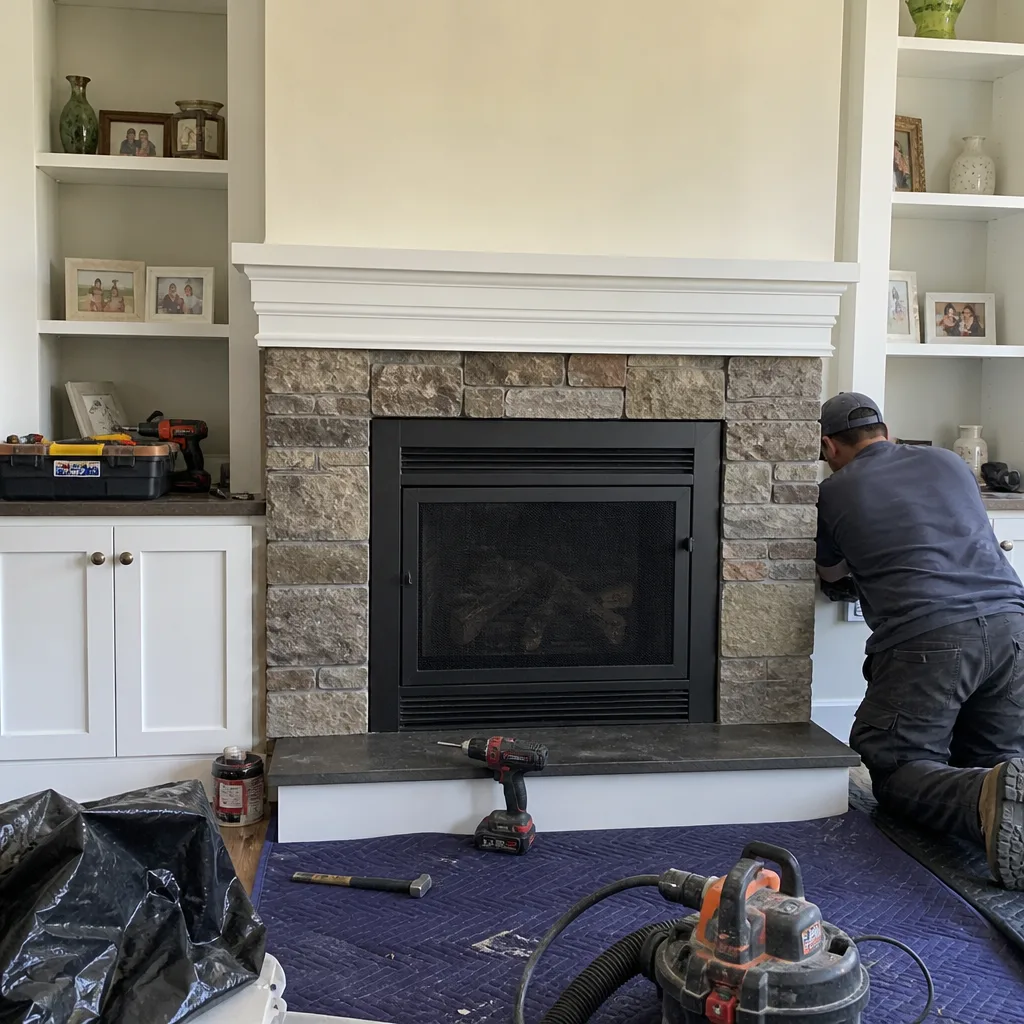 After
After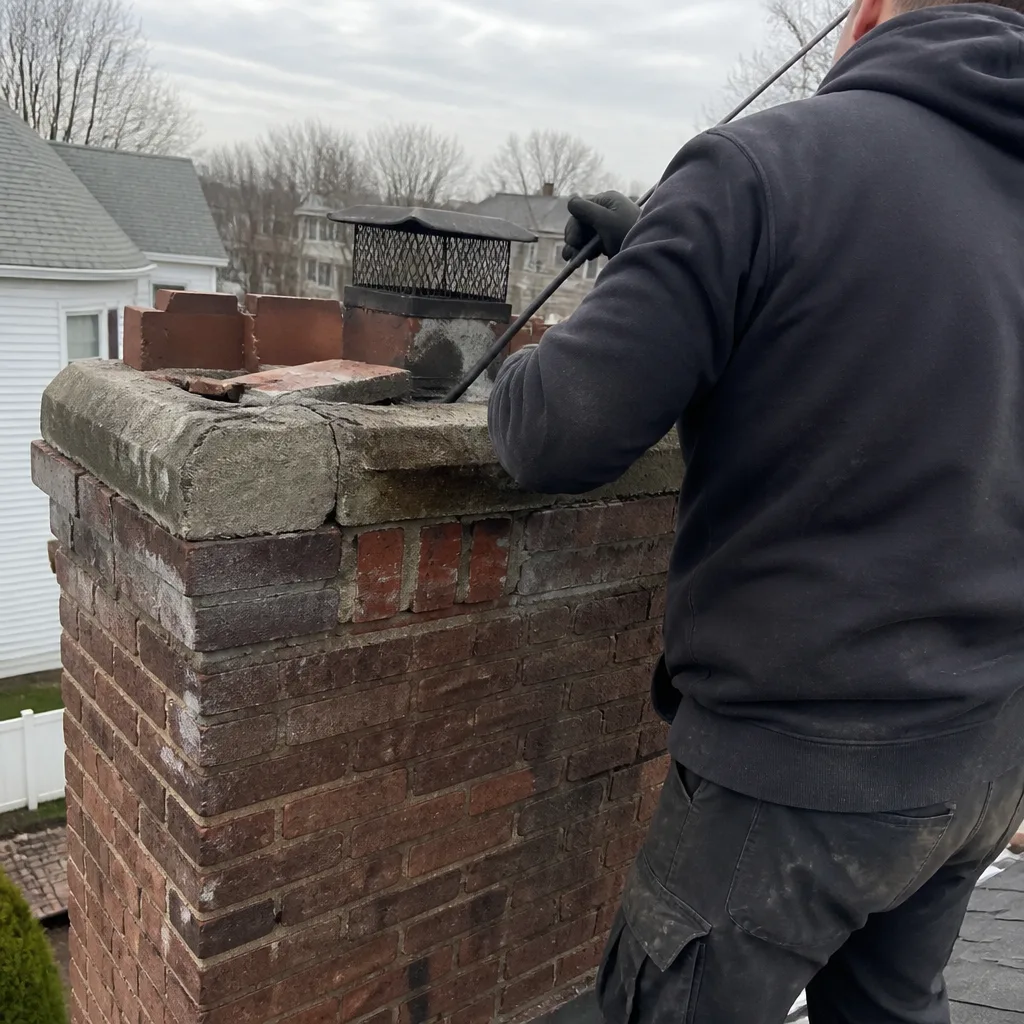 Before
 After
After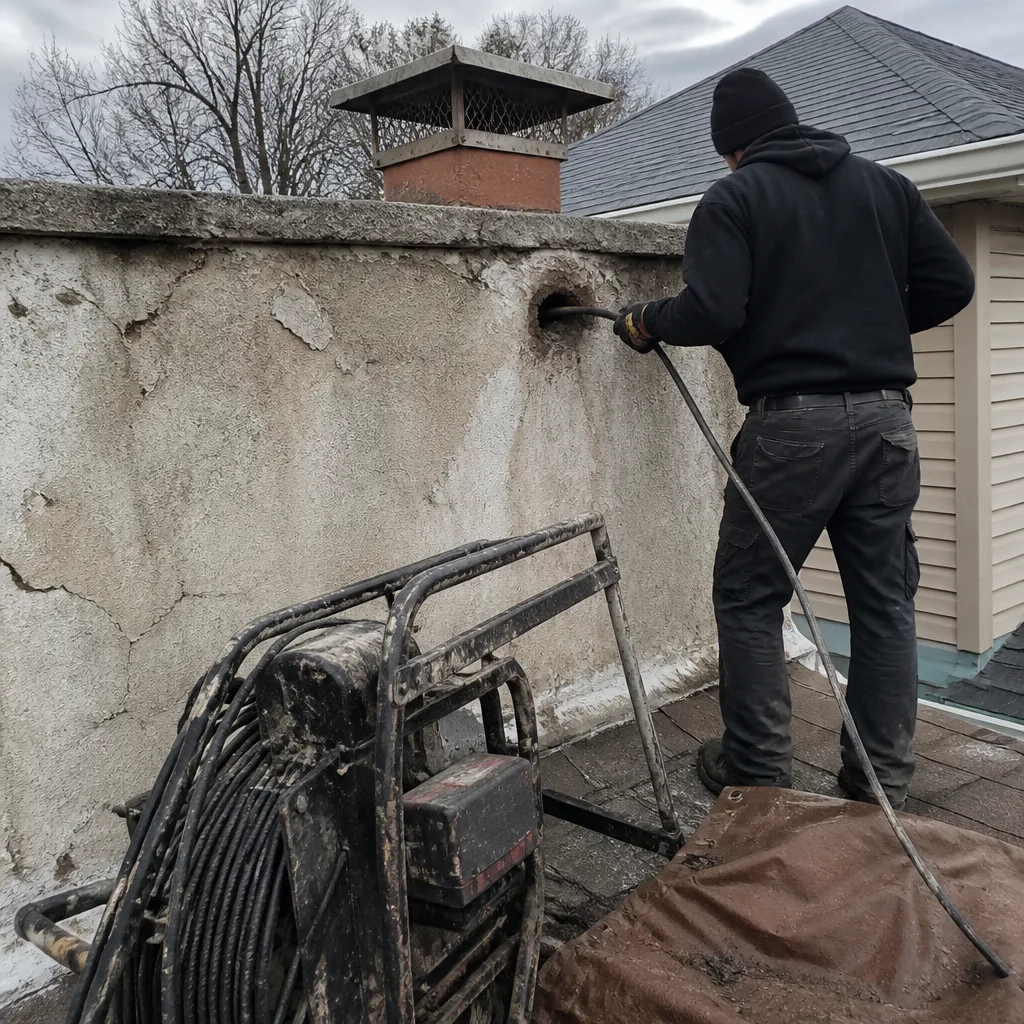 Before
 After
AfterChimney Cleaning & Sweep Maintenance Checklist for Clifton Homeowners
Here’s the problem with most chimney maintenance checklists: they tell you to check things you cannot actually see. The three most common chimney problems we find in Clifton – failed caps, stage-2 creosote buildup, and cracked liner tiles – are all invisible from the firebox opening. You could shine a flashlight up there for ten minutes and walk away convinced everything is fine, when the flue liner has a crack running its full length. This guide splits maintenance into two categories that actually matter: what you can inspect from the ground with your own eyes and a good pair of binoculars, and what requires a camera to assess. By the end, you’ll know exactly what to document between professional visits, when a Clifton home’s burn rate means you need more frequent chimney cleaning & sweep visits, and which findings mean stop burning immediately.
Quick Answer
A Clifton homeowner should perform a visible inspection of the damper, firebox mortar, and cap from the ground at least twice per year, document the last cleaning date and service company on an index card taped inside the firebox door, and schedule a professional camera-scan cleaning once per year if burning wood more than twice a month, or every 18-24 months for gas-only use. For chimney cleaning warning signs: a Clifton homeowner’s reference guide, see our detailed walkthrough. The camera matters because liner cracks, deep creosote, and flue obstructions cannot be seen from the firebox opening regardless of how bright your flashlight is. Stop burning immediately if you see white staining on the exterior brick, smell smoke indoors when the damper is closed, or hear debris falling into the flue.
Table of Contents
- The Owner-Visible Checklist: What You Can Actually Check Yourself
- Camera-Required Items: What You Cannot See From Below
- Season-Triggered vs. Use-Triggered Inspection Intervals
- What to Document Between Professional Visits
- Red-Line Items: Stop Burning Immediately
- How the Clifton Climate Affects Your Chimney
- What a Chimney Cleaning Costs in Clifton
- Common Mistakes to Avoid
- When to Call a Professional
- Frequently Asked Questions
BeforeAfterThe Owner-Visible Checklist: What You Can Actually Check Yourself
These are the four items you can assess from the ground or from inside the firebox without special equipment. Each one has a pass/fail standard. Do not guess. If it fails, document it and call a professional.
- Damper operation. Open the damper fully and close it completely three times. Pass: it moves smoothly through its full range, stays open when set open, and seals with a firm clunk when closed. Fail: it sticks, squeals, won’t stay open, or lets visible light through the seal when closed. A damper that won’t seal is dumping conditioned air up the flue every day of the year, not just when you’re burning.
- Firebox mortar condition. Get a flashlight and run your finger along the mortar joints where the firebrick meets. Pass: joints are flush and solid, no powder comes off on your finger. Fail: mortar crumbles to sand when touched, or you can insert a quarter into any joint. This means water has been working on the masonry, which in Clifton means freeze-thaw cycles have already started doing damage.
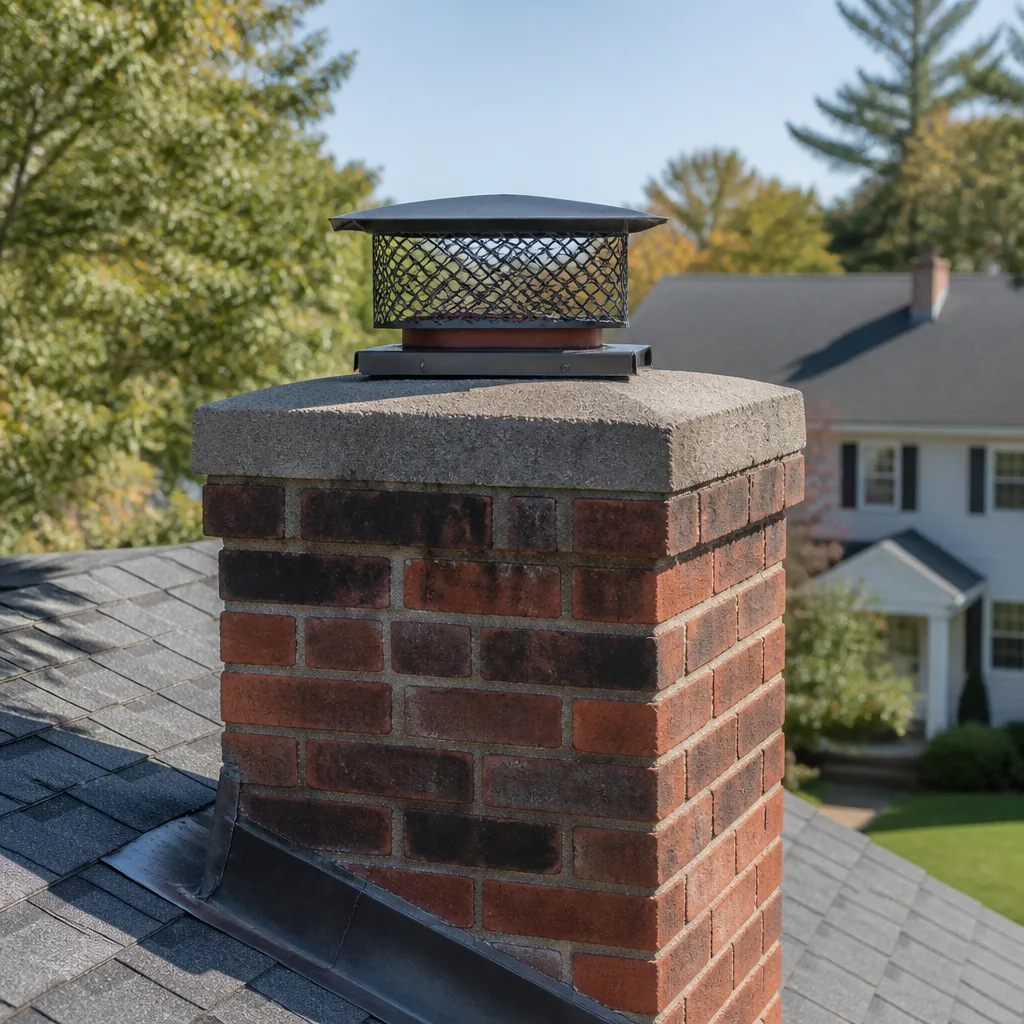
- Cap integrity from ground level. Stand in your yard with binoculars and look at the chimney cap. Pass: cap sits flush on the flue, no visible rust, mesh sides intact, no bird activity. Fail: cap is tilted, missing mesh panels, or you see daylight between the cap and the crown. A failed cap is an open invitation for rain, squirrels, and birds, and it’s the single most common cause of water damage we see in Clifton chimneys.
- Odor at the firebox with the damper closed. This one costs nothing and tells you more than most visual checks. Pass: get your nose close to the firebox opening with the damper closed and smell nothing or only faint, dry ash. Fail: you smell dampness, rot, or a sharp acrid note. Damp odor means water is entering somewhere. Acrid means creosote is building up and the humidity is activating it. Either way, the flue needs a camera look.
That is the entire owner-visible list. Four items. Everything else on a chimney requires professional access, a camera, or both. Any checklist that tells you to “inspect the flue liner” from the firebox is asking you to pretend. You cannot see the flue liner from the firebox. You never could.
Camera-Required Items: What You Cannot See From Below
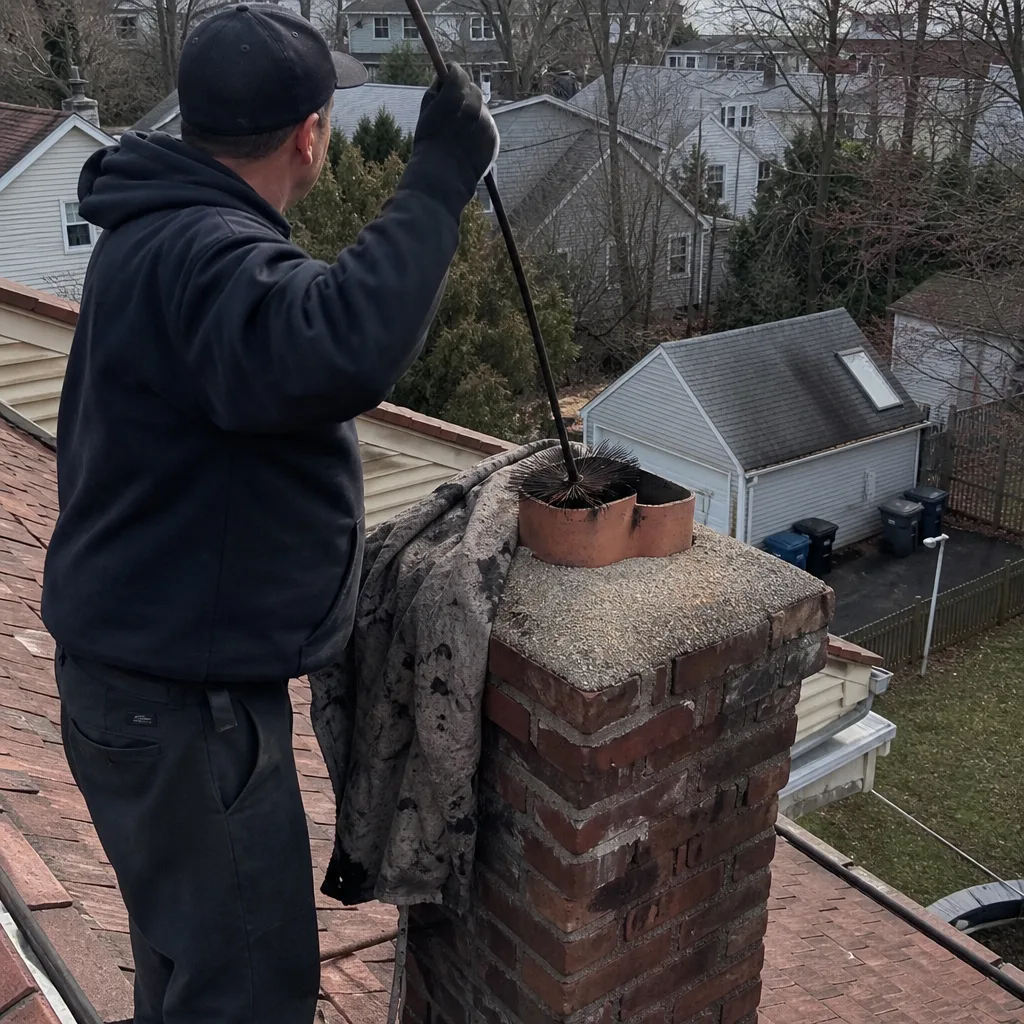
A camera-scan inspection is the difference between knowing and guessing. We’ve pushed a video camera up thousands of Clifton flues since 2009, and the photo record tells a story every time, often one the homeowner couldn’t have known any other way. Here is what the camera documents that no ground-level or firebox-level check can.
- Liner crack location and length. Clay flue liners crack from thermal stress, and Clifton’s freeze-thaw winters accelerate it once water gets into the masonry. The camera records exactly where the crack starts, how far it runs, and whether it penetrates the full thickness of the tile. A full-thickness crack means combustion gases and carbon monoxide can reach the masonry and potentially the house. There is no way to see this from below.
- Flue obstruction depth. The camera finds nests, dead animals, fallen bricks, and years of accumulated debris that block airflow. What matters is not just that something is blocking the flue, but how far up it sits. A nest two feet above the smoke shelf is a different job than collapsed masonry at the 25-foot mark.
- Creosote stage 2 or 3 buildup in the smoke chamber. Creosote is classified in three stages. Stage 1 is dusty soot that brushes off. Stage 2 is a hardened, tar-like glaze that requires mechanical removal. Stage 3 is a thick, shiny deposit that is extremely flammable and requires chemical treatment before mechanical removal. The smoke chamber above the firebox is where stage 2 and 3 collect, and it’s the last place anyone looks from below. The camera shows the smoke chamber clearly.
- Smoke chamber condition and parging. The smoke chamber is the sloped area above the damper that funnels smoke into the flue. It’s often built with corbelled brick and rough mortar joints, and it’s supposed to be parged smooth to prevent creosote accumulation. The camera shows whether the parging is intact or whether gaps are catching creosote every time you burn.
Clause 4 of the Haven Standard requires a photo record on every job. You walk away with the actual images, not a technician’s verbal summary. That’s the practical difference: you can look at the photo yourself and say “yes, I see the crack” or “no, I don’t see what you’re describing.” It’s the same standard we’ve used since 2009, years before insurers or regulators asked for it.
Season-Triggered vs. Use-Triggered Inspection Intervals
Most published checklists give one blanket interval: sweep every year. That’s not wrong as a default, but it ignores how differently Clifton households actually use their fireplaces. The correct schedule depends on what you burn and how often. For deeper background, see the complete guide to chimney cleaning in Clifton.
The heavy wood burner: If your Clifton home burns two or more cords of wood per winter, schedule a professional cleaning and camera inspection every year, before the first fire of the season. At that burn rate, creosote accumulates in the smoke chamber even with properly seasoned wood, and the liner sees thermal cycling that opens hairline cracks over time. This household is the one that most needs the camera record from year to year, because the comparison between scans shows whether a crack is active.
The occasional wood burner: One cord or less per winter, or fires only on weekends and holidays. Schedule a cleaning every 18 months. This household usually has lighter creosote, but water entry is the bigger risk, because a chimney that sits idle through spring, summer, and fall is a chimney that stays damp. A failed cap or crown crack means months of standing water before the next fire.
The gas log set user: Two or three times a month, typically decorative. Schedule a cleaning and inspection every 24 months. Gas flues don’t produce creosote, but they do produce acidic condensation that attacks mortar and liner tiles. The camera also confirms the flue was sized correctly for gas venting, which matters more than most people realize.
The zero-use chimney: Bought the house, never used the fireplace, not planning to. You still need a camera inspection once, ideally in the first year after purchase. The chimney you never use is the one where animals move in, water damage accumulates unnoticed, and the first fire in a decade turns into a house fire. One camera scan tells you whether the chimney can be left alone or whether it needs sealing and a cap before it causes damage to the house.
What to Document Between Professional Visits
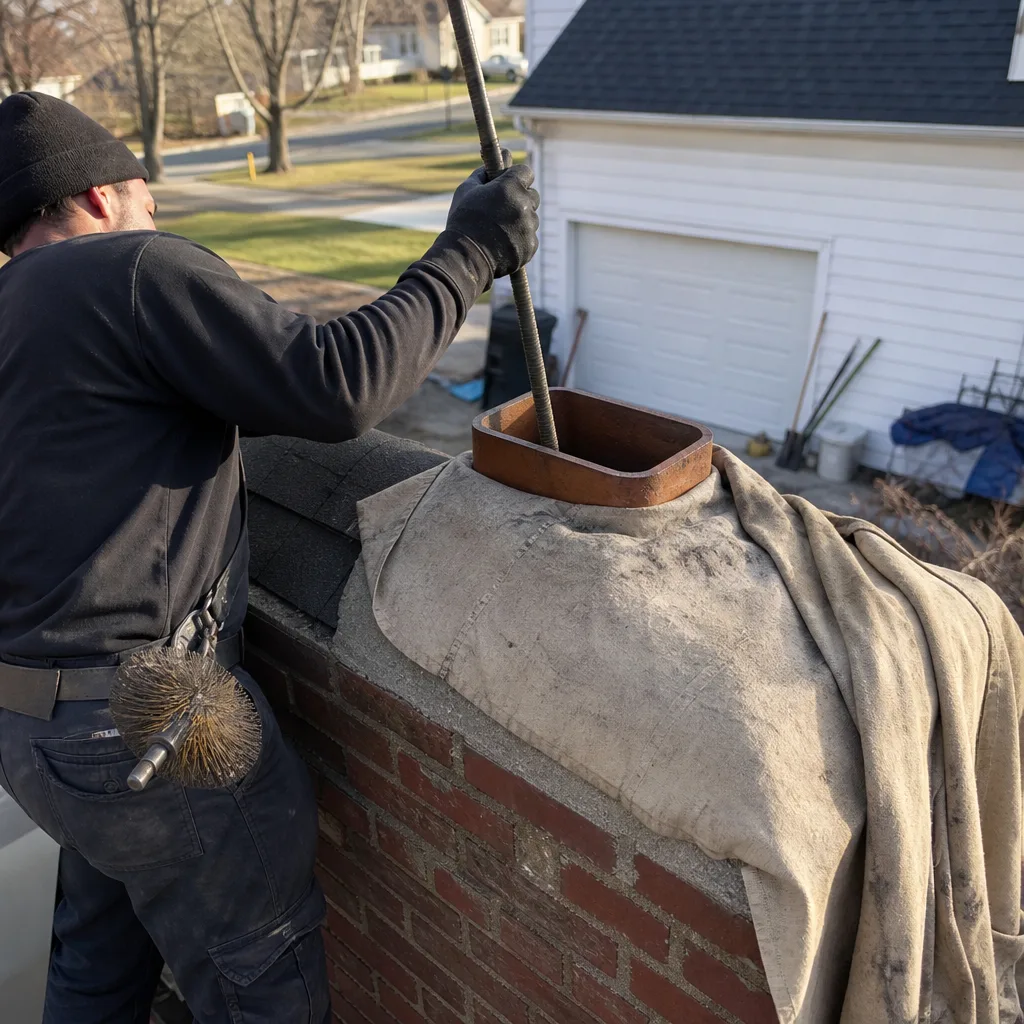
Documentation is the part everyone skips, and it’s the part that protects you as a homeowner. A well-kept record turns a vague memory into a defensible maintenance history. Here’s what to record, and where to keep it. For more guides & resources, visit our blog.
- Date of the last professional cleaning and camera inspection. Write it down. Better, ask the company for a written service record. Under Clause 1 of the Haven Standard, you receive a written scope and written record on every job.
- Service company name and technician name. If you ever need warranty work or a follow-up, knowing who was actually on the roof matters. A named technician assigned to your job is part of the Haven Standard’s verified crews requirement.
- Whether a written report was issued. Not a verbal summary while the tech was packing the van. A written report. If you don’t have one, request it. If the company won’t provide one, find a company that will.
- Photos of the cap condition from the ground. Take two photos per year, one in spring and one in fall, from the same spot in your yard. This creates a visual timeline. A cap that was flush in March and tilted in November tells you exactly when water started getting in.
- Any visible changes to exterior brick or mortar. White staining, also called efflorescence, means water is moving through the masonry and depositing minerals on the surface. Spalling, where brick faces flake off, is the next stage. A photo every six months shows whether a stain is new or has been there for years.
Keep all of this on a single index card taped inside the firebox door, plus digital photos in a folder on your phone. When you sell the house, this record answers the buyer’s inspection questions before they’re asked.
Red-Line Items: Stop Burning Immediately
Some findings mean close the damper and leave it closed until a professional has looked. These are not “schedule something soon” items. These are “the fireplace is offline” items.
- Smoke smell indoors with the damper closed. This means the flue is no longer containing combustion byproducts. It could be a cracked liner, a failed damper seal, or a blockage forcing gases back down. Either way, the system is compromised.
- White staining growing on the exterior chimney brick. This is water actively moving through the masonry. When that water freezes, it fractures brick and mortar from the inside. In Clifton winters, a season of ignoring efflorescence can turn a repointing job into a rebuild.
- Debris falling into the flue between uses. You hear it when you open the damper or when the wind blows: pieces of something hitting metal or brick inside the chimney. That’s failing liner tile, spalled brick, or an animal nest collapsing. None of those get better on their own.
- A strong acrid odor at the firebox in warm weather. Stage 2 and 3 creosote become more pungent as humidity rises. That sharp smell in July means you have enough creosote in the smoke chamber to support a chimney fire the next time you light one.
- Visible cracks in the firebox brick that have widened since last season. Photograph them, compare to your previous photos, and if they’ve moved, the firebox is shifting. This is structural, not cosmetic.
If you hit any of these, call a professional before the next burn. A free estimate in Clifton is a phone call away at (551) 282-9640, and the written price you receive before work starts means you know exactly what you’re facing before you commit.
How the Clifton Climate Affects Your Chimney
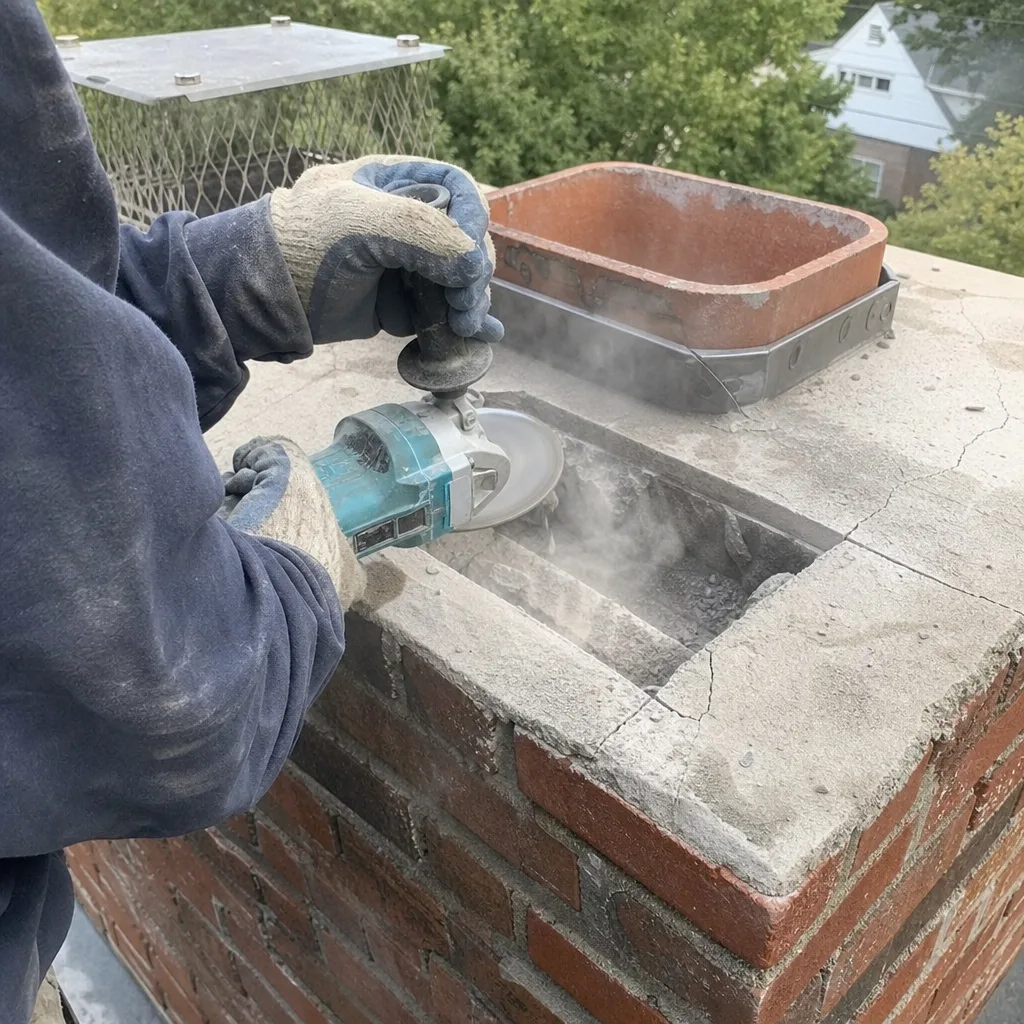
Clifton’s weather does specific things to chimneys, and a maintenance checklist written for a San Diego homeowner misses half of them. Four factors matter here more than anywhere else.
Freeze-thaw cycling. Clifton averages around 60 freeze-thaw days per winter, meaning days where the temperature crosses 32°F. Every crossing is a cycle of expansion and contraction for any water trapped in the masonry. Brick, mortar, and clay liner tiles are all porous. Water seeps in, freezes, expands by roughly 9%, and widens microscopic cracks into visible ones. This is why a cap that fails in March becomes a masonry problem by the following November.
Nor’easter and heavy rain exposure. Clifton sits in the path of Atlantic storm systems that dump concentrated rain on chimneys. A cracked crown or missing cap channels that water directly into the flue, where it mixes with creosote and creates an acidic slurry that eats at mortar and liner. The combination of storm water and creosote causes damage much faster than rain alone.
Humidity in summer. Clifton summers are humid, and humid air rises through chimneys, activating stage 2 creosote and turning it into the acrid odor you smell at the firebox in July and August. If you smell the chimney in summer, you already have a creosote load that needs removal before burning season.
Leaf and debris load from mature trees. Clifton’s older neighborhoods, particularly around Weasel Brook Park and the Allwood section, have mature oaks and maples that drop leaves and twigs onto rooflines. A missing cap or damaged mesh means that debris lands in the flue and becomes a fire hazard. Even with an intact cap, gutters full of leaves mean water backs up and finds its way into the chimney chase.
Your maintenance schedule should account for this climate. A chimney that gets heavy use in a Clifton winter and sits damp through a humid summer needs more attention than a chimney in a dry climate that burns the same amount of wood.
What a Chimney Cleaning Costs in Clifton
Chimney cleaning prices in Clifton range from $180 to $340 for a standard sweep with a camera inspection, depending on creosote stage, flue height, and whether the chimney has been serviced recently. If the liner needs repair, crown work, or a cap replacement, those are separate line items. You should know the price before anyone starts, not after.
| Service | Typical Clifton Price Range | What’s Included |
|---|---|---|
| Standard sweep with Level 2 camera inspection | $180 – $280 | Mechanical cleaning, camera scan, photo record, written report |
| Sweep with stage 2 creosote removal | $260 – $340 | Mechanical removal, chemical treatment if needed, camera verification |
| Cap replacement | $180 – $450 | Cap unit, installation, sealant, photo documentation |
| Crown repair or reseal | $250 – $600 | Crown coat, crack repair, waterproofing |
| Flue liner repair or replacement | $1,800 – $6,500 | Depends on liner type, height, and access; written scope required |
These are honest market ranges for Clifton, not a quote. Any company worth calling will give you a written price before work starts. If they won’t put the number in writing, that’s the end of the conversation. Under Clause 1 of the Haven Standard, a written price, written scope, and written warranty are delivered before anyone starts, not after the tech is already in your home. Materials sourced from Gelco, Olympia Chimney, and Copperfield through Haven’s buying network help keep customer prices honest, because we buy at volume rates and that shows in the quote.
For a full breakdown of Chimney Cleaning & Sweep in Clifton, see our dedicated service page. And if you have a written quote from another company, bring it to us. We’ll provide a free second opinion on any written estimate, which means you can compare scope against scope before you spend a dollar.
Common Mistakes to Avoid
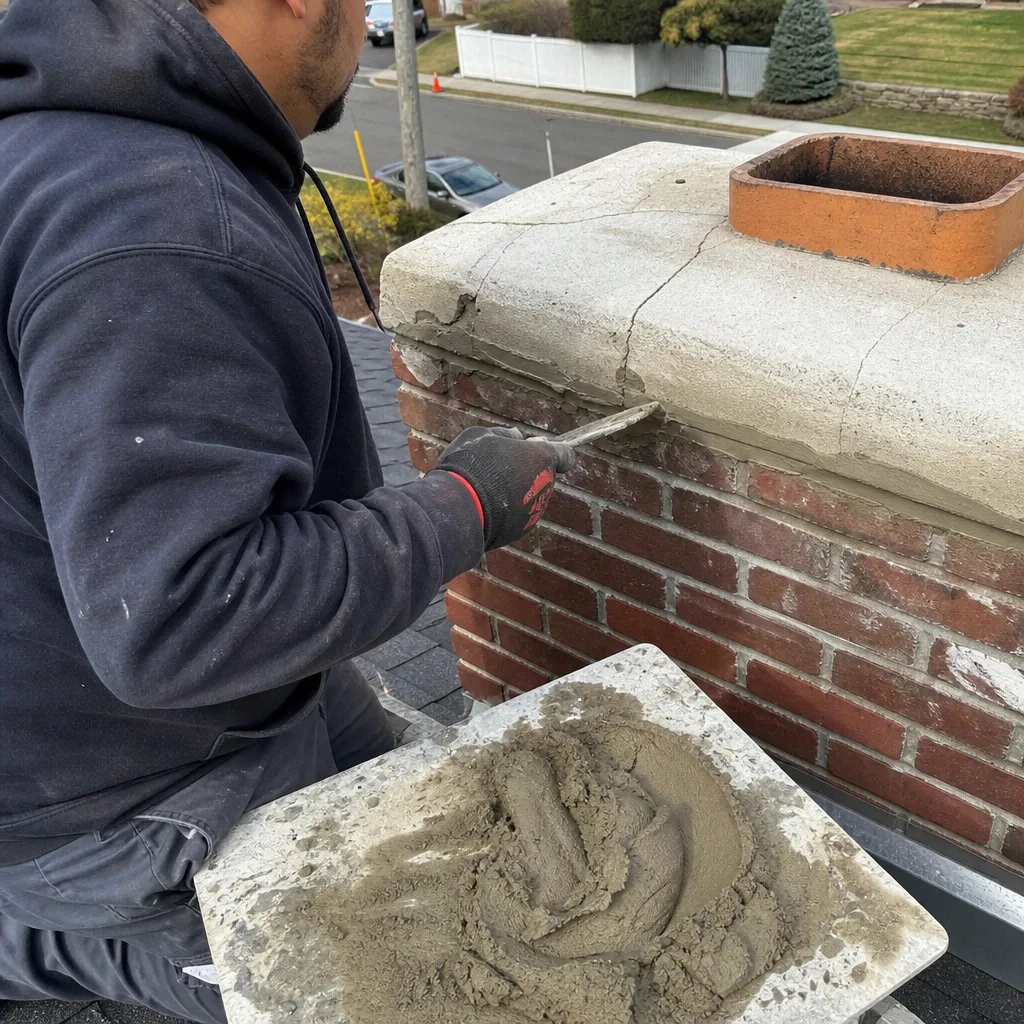
- Trusting a flashlight inspection instead of a camera. A flashlight from the firebox shows you the first two feet of flue. The problems are never in the first two feet. Demand a camera scan and ask for the photos.
- Cleaning without documentation. If the company won’t give you a written record and photos, you have no evidence the work was done, and no baseline for next year. A verbal “it looked fine” is worth nothing when a liner crack gets flagged before closing on a house sale.
- Ignoring a failed cap because the fireplace “still works.” The cap and the fireplace perform different jobs. The fireplace can burn fine while water destroys the liner from above. Fix the cap before the liner, not after.
- Using the firebox to burn non-firewood items. Wrapping paper, pizza boxes, and construction scraps create flash fires that send embers and creosote glazing up the flue. Only seasoned hardwood belongs in a wood-burning fireplace.
- Waiting until fall to schedule a cleaning in Clifton. September and October are the busiest months for chimney work in Passaic County. If you schedule in July or August, you get your choice of dates. If you wait until the first cold snap, you wait weeks or burn with an uninspected flue.
- Skipping the written price conversation. A company that won’t give you a number in writing before work begins is planning to find the number after the work begins. Get it in writing first, every time.
- Assuming gas logs mean zero maintenance. Gas flues still need inspection for liner condition and proper venting. The acid in gas exhaust destroys mortar, and a gas log set in a wood-burning flue is often a venting mismatch that a camera scan catches.
When to Call a Professional
Call a professional when you hit a red-line item, when your owner-visible checklist produces a fail on any of the four items, when you’re past your use-based cleaning interval, or when you simply don’t know the history of the chimney after buying a Clifton home. A chimney is the one part of your house that combines fire, carbon monoxide, and structural water entry in a single system. Guessing is not a maintenance strategy. Level Two Chimney Clifton offers free estimates in Clifton: call (551) 282-9640 and you’ll get a live person, a named technician, a text when they’re on the way, and a written price before any work starts. If you need Chimney Repair in Clifton or Fireplace Services in Clifton, the same process applies: camera scan first, written scope second, work third.
Frequently Asked Questions
A chimney in Clifton should be swept and camera-inspected every 12 months if you burn wood at least twice a month during winter, every 18 months for occasional wood burning, and every 24 months for gas log set use. The interval matters less than the condition found on the last camera scan. Call (551) 282-9640 and we’ll review your burn history for free.
A standard chimney sweep with a Level 2 camera inspection runs $180 to $280 in Clifton, and stage 2 creosote removal adds $260 to $340. The exact price depends on flue height and creosote stage, and you should receive it in writing before any work starts, no exceptions.
You need a new liner if the camera scan shows a full-thickness crack, a spalled tile blocking airflow, or multiple missing mortar joints between tiles. Ask to see the photos. If the company won’t show you the images, get a second opinion. Our free second opinion on any written estimate exists exactly for this question.
Creosote accumulates in stages, and stage 3 creosote is dense enough to fuel a chimney fire hot enough to crack the liner and spread to the house framing. Even without a fire, acidic creosote attacks mortar and liner, and water entry accelerates spalling. Skipping cleaning for three years typically means a more expensive cleaning and possibly liner repair. It never means “everything was fine.” Call for a camera look before you burn again.
You can brush a flue from the roof with consumer equipment, but you cannot see the smoke chamber, you cannot assess liner condition, and you cannot document what you found. The danger isn’t the brushing; it’s the false sense of a completed inspection. A professional camera scan exists because the flue is a system, not a tube.
A chimney inspection is not automatically required by New Jersey law, but most home inspectors in Clifton only do a visual, Level 1 check from the firebox and roof edge. If you’re buying a Clifton home built before 1990, get a Level 2 camera inspection before closing. It costs a few hundred dollars and routinely finds liner issues the general inspection misses. Call (551) 282-9640 to schedule one.
The Bottom Line
A useful chimney maintenance checklist for Clifton homeowners separates what you can see from what requires a camera. You can check the damper, the firebox mortar, the cap from the ground with binoculars, and the odor at the firebox. You cannot check the flue liner, the smoke chamber, or the creosote stage without a camera. Use your burn rate to set the inspection interval, document everything in writing, and treat the red-line items as immediate stop-burning signals. A chimney is a fire containment system attached to the most flammable part of your house, and it also has to manage Clifton’s freeze-thaw cycles and coastal storms. Maintain it accordingly. If you want a documented camera scan and a written price before any work starts, call Level Two Chimney Clifton at (551) 282-9640. For the full overview of what we do, start at the Level Two Chimney Clifton home page.
Written by Corrine Halstead, Owner at Level Two Chimney Clifton, serving Clifton since 2009.