
Last updated September 20, 2026
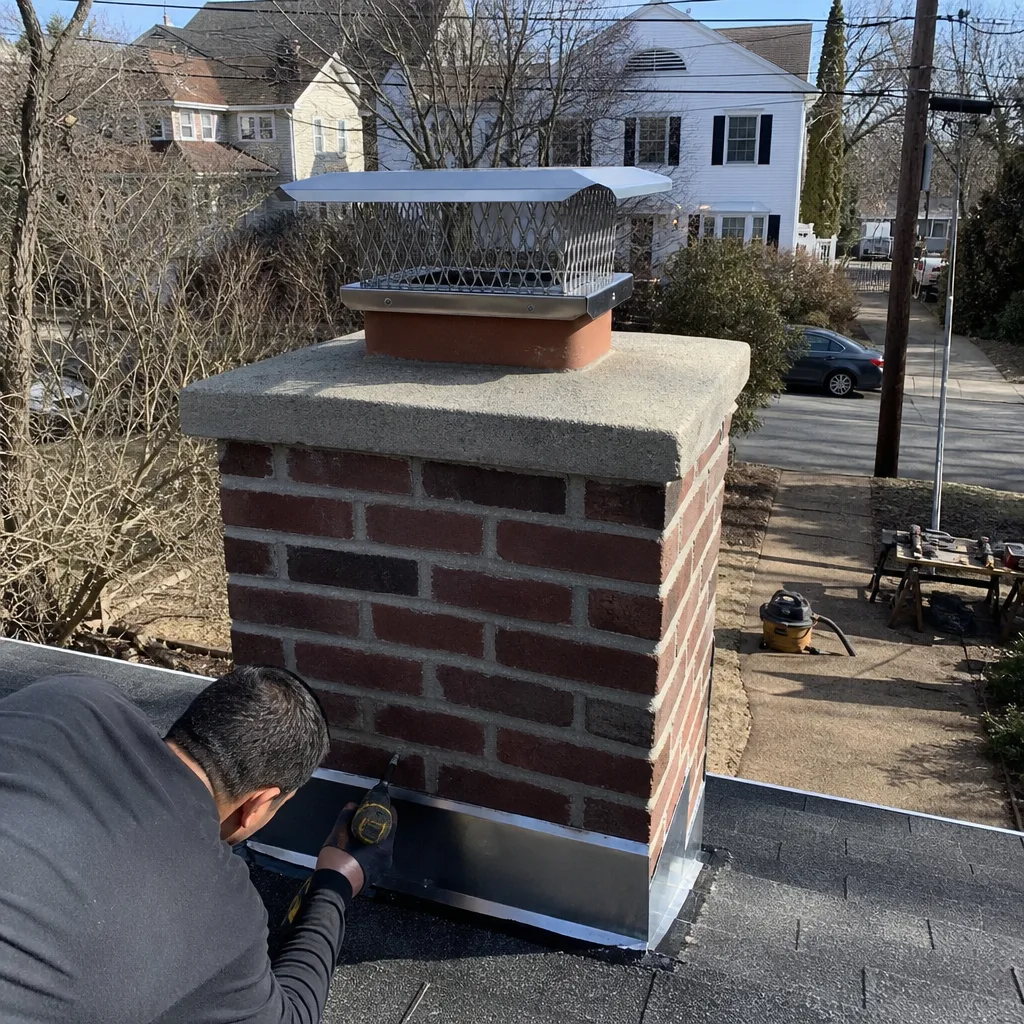
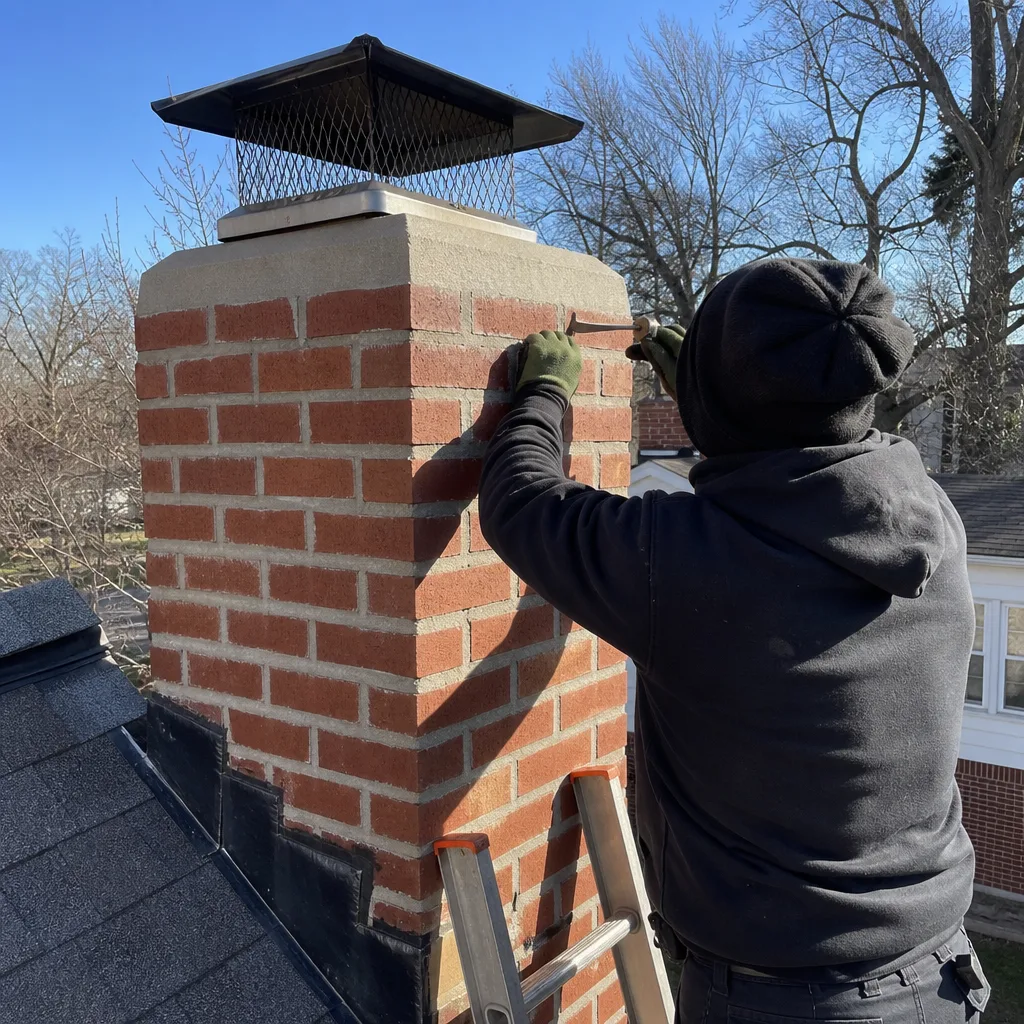
Level 1 sweep and inspection to the NFPA 211 annual standard - flue, crown, cap, and flashing checked and photographed
Chimney sweep logs do not sweep chimneys. They loosen some creosote - which then falls where a brush and vacuum still have to collect it.
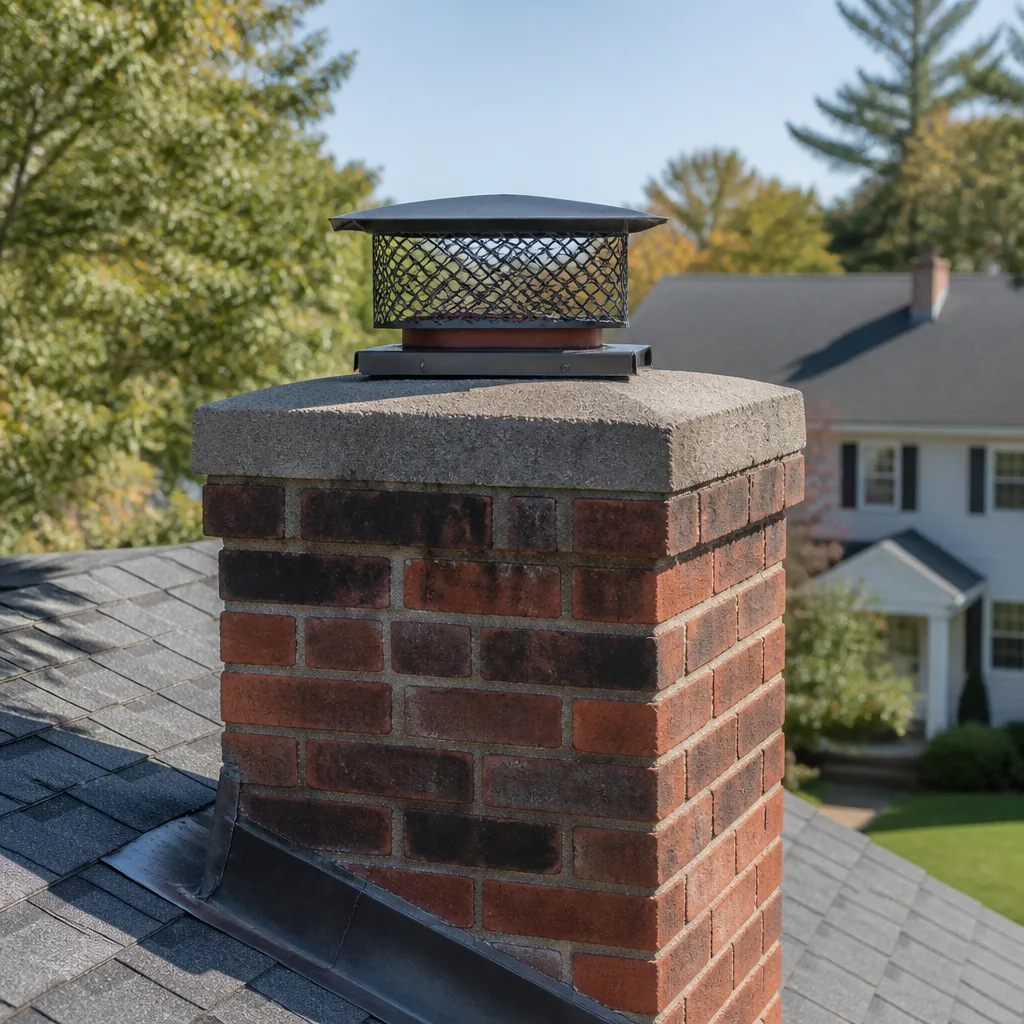
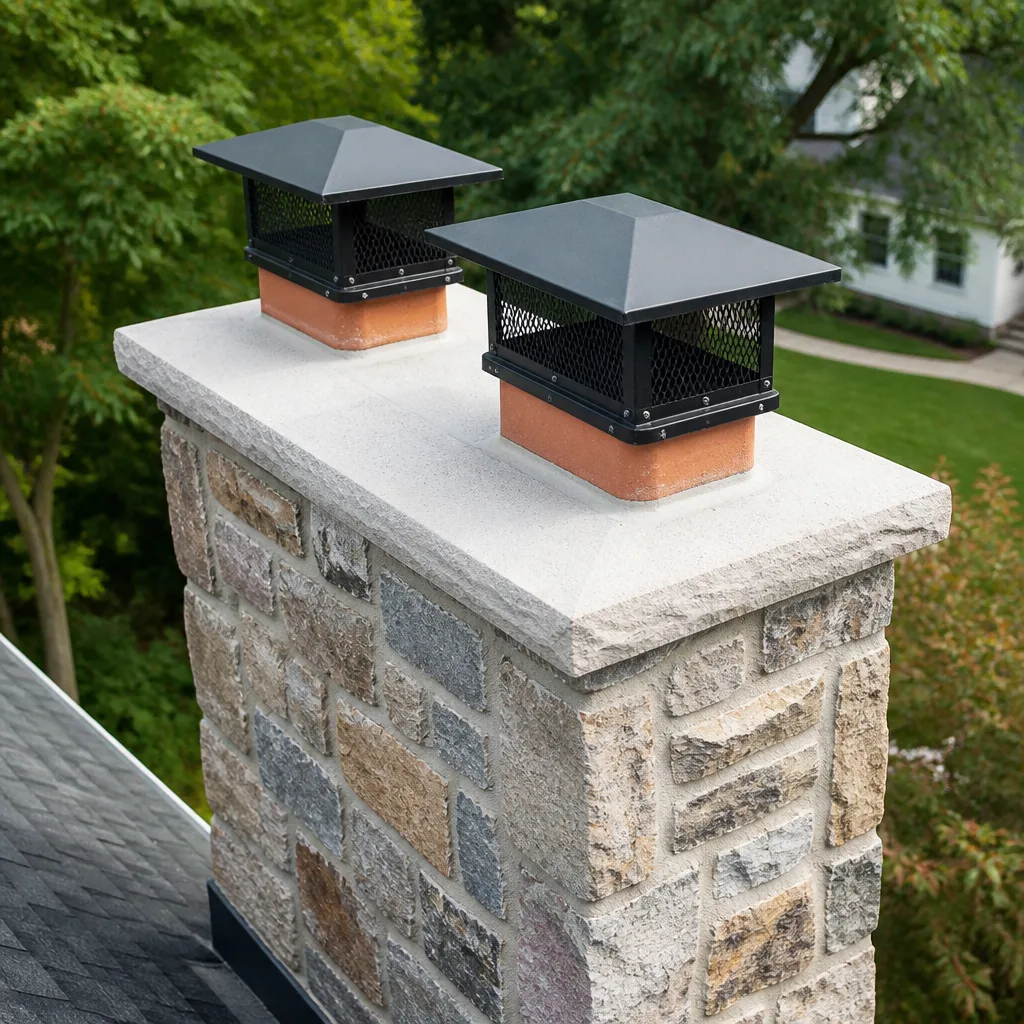
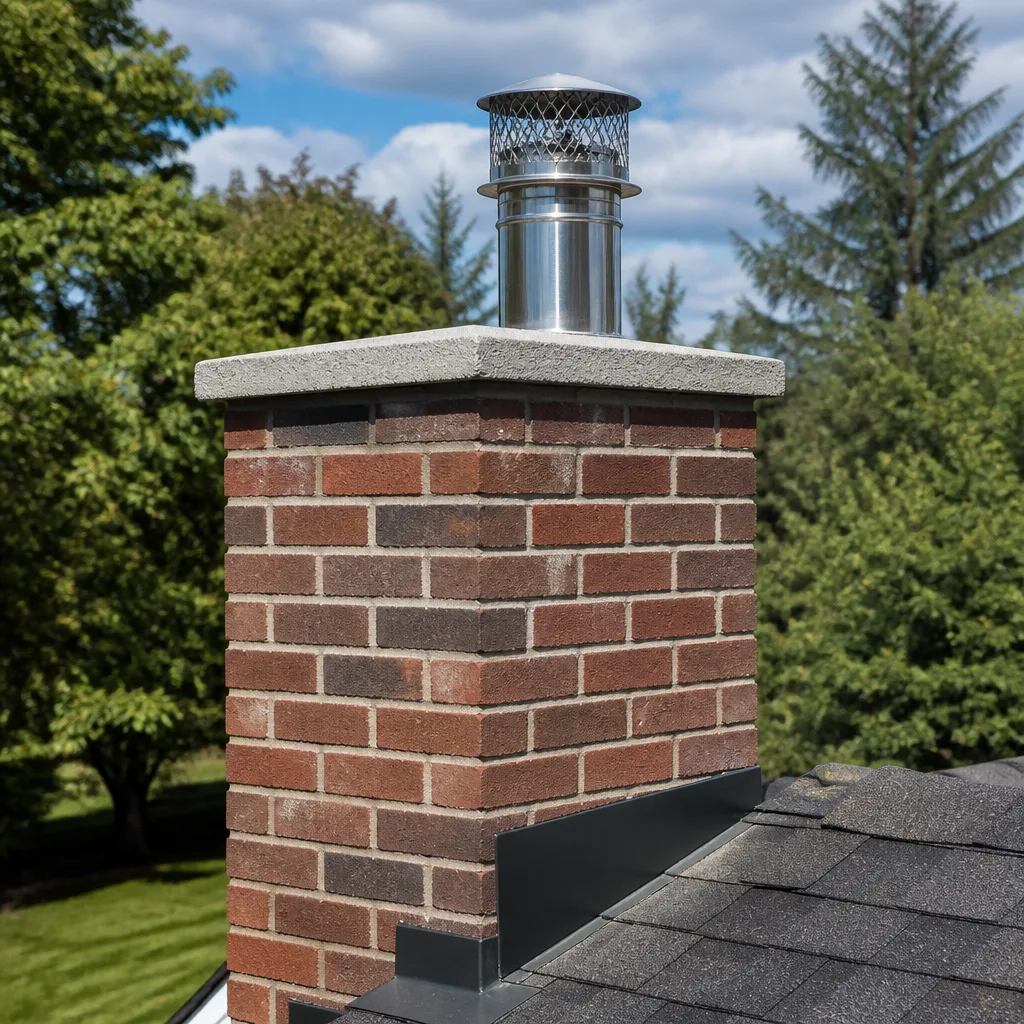
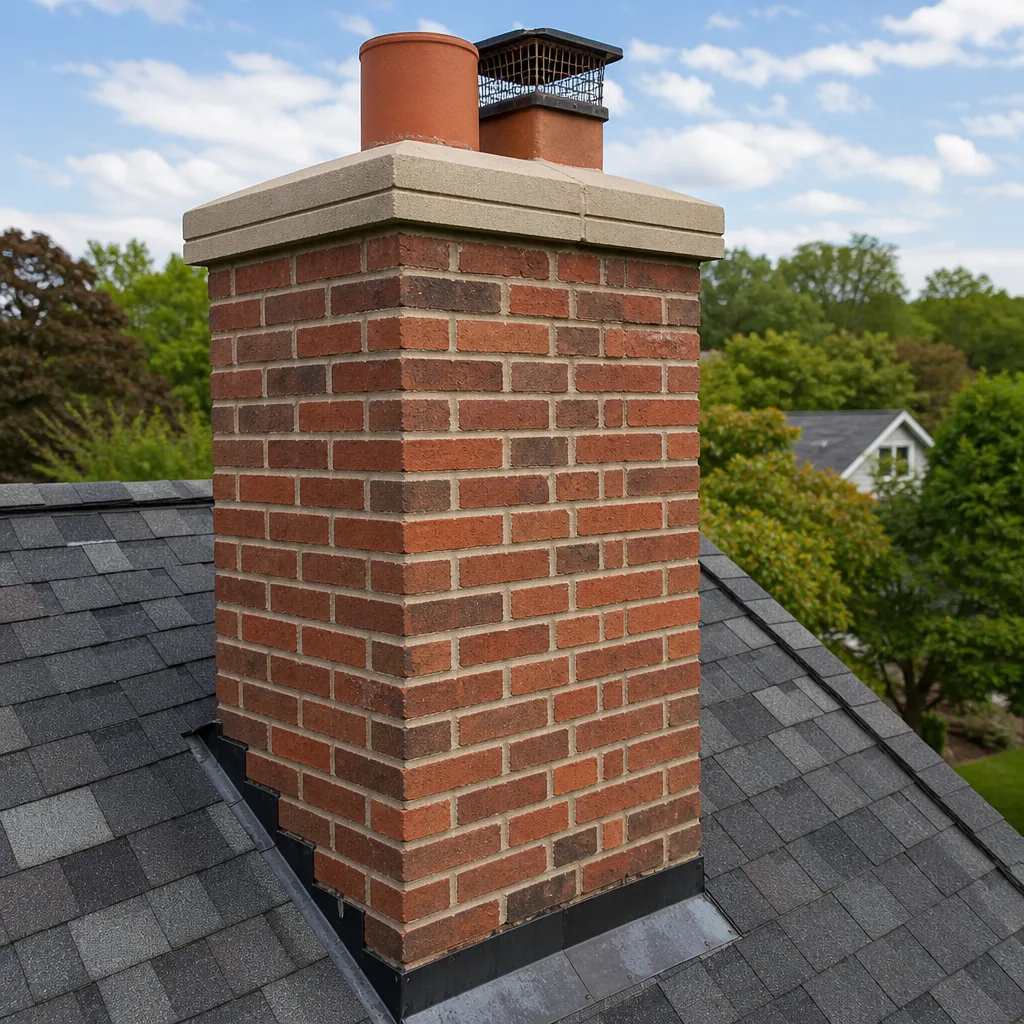
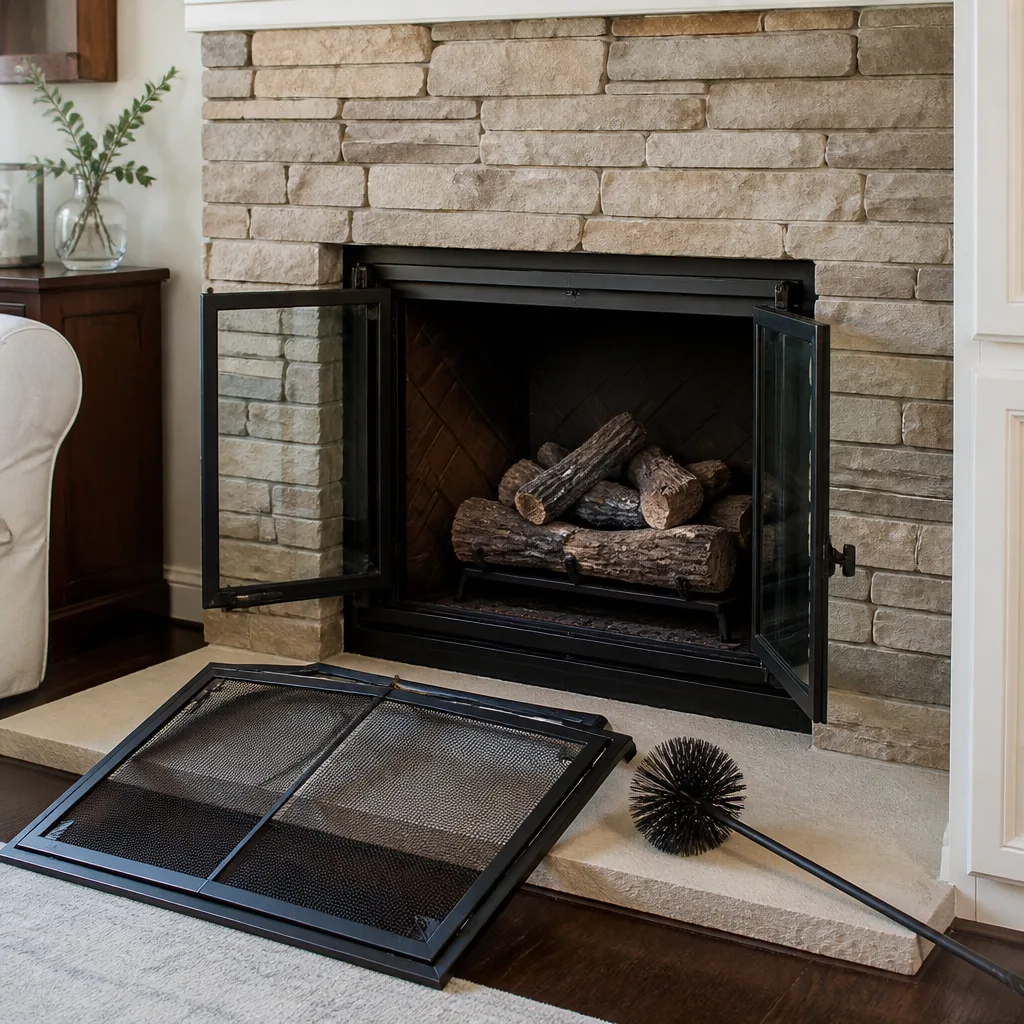
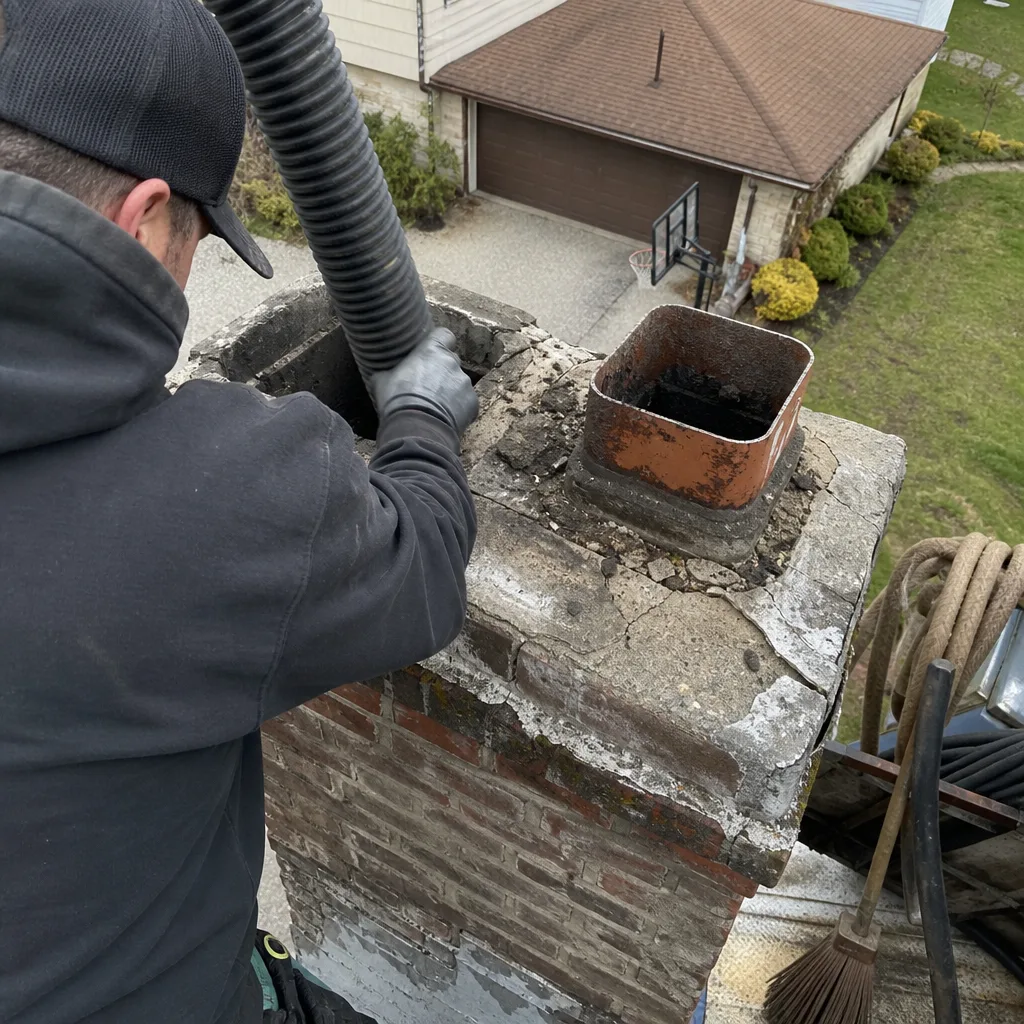 Before
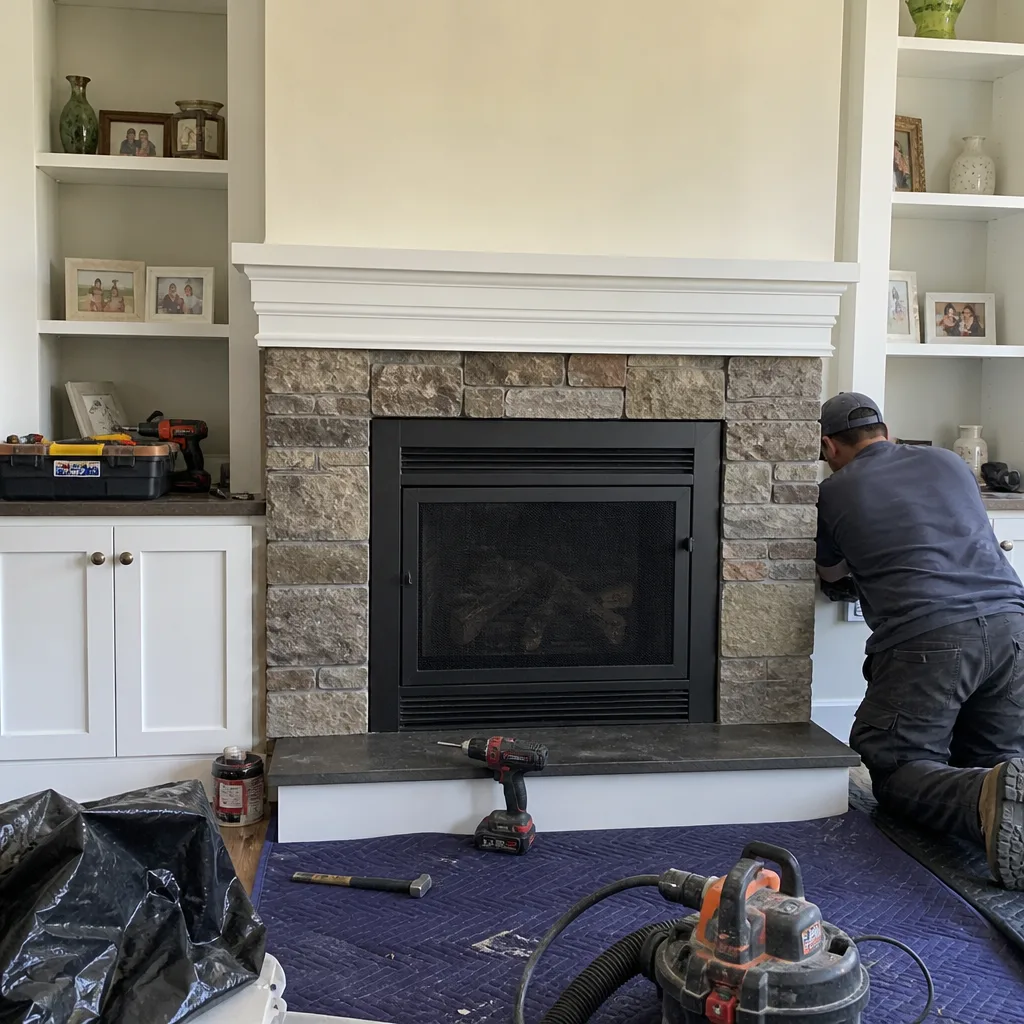 After
After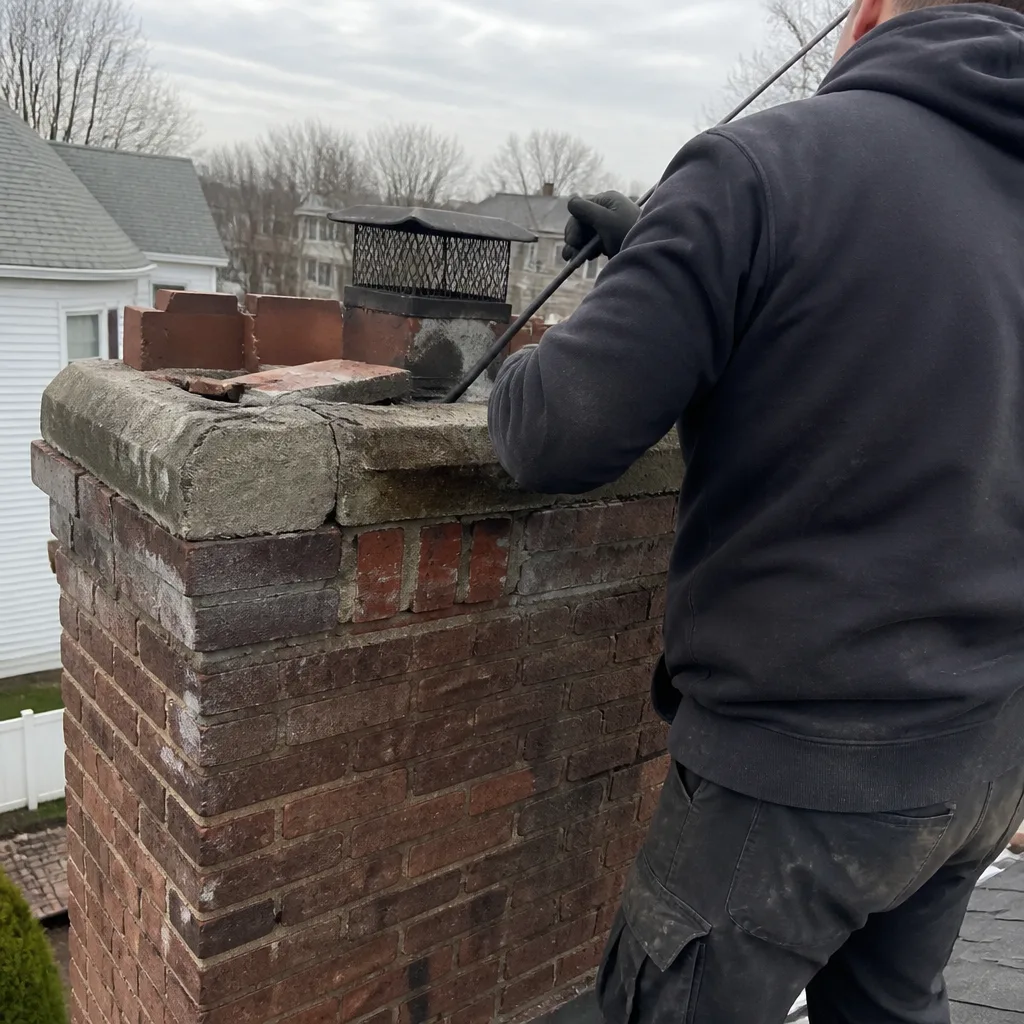 Before
 After
After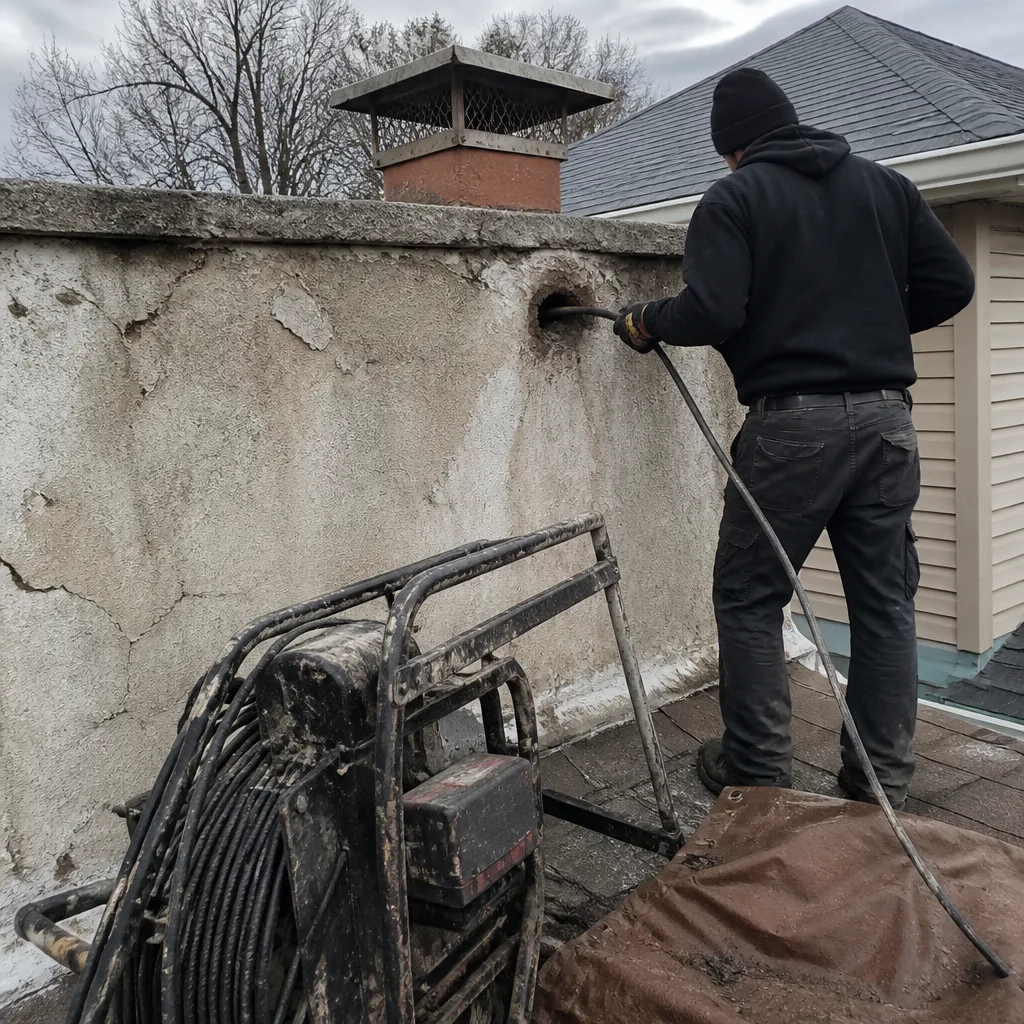 Before
 After
AfterDIY vs Professional Chimney Cleaning: The Clifton Homeowner’s Decision Guide
Most people who decide to clean their own chimney have never seen the inside of their flue. They’ve seen a YouTube video of someone shoving a brush up from the fireplace, and they’ve seen the $189 quote from a sweep company, and they’ve done the math. What they haven’t seen is the hairline crack running twelve feet up their terra cotta liner, or the section of missing mortar in their smoke chamber, or the squirrel nest sitting three feet below the crown. The DIY decision isn’t really about whether you can remove creosote. It’s about whether you know what you’re removing it from. In Clifton, where a large share of the housing stock predates 1965, that distinction is worth somewhere between a Saturday afternoon and a $4,000 liner replacement.
Quick Answer
DIY chimney cleaning is genuinely possible for a straight, lined, accessible flue with only stage-1 creosote buildup, and it costs about $60 to $120 in equipment and three to five hours of your time. But you cannot safely make that call without first knowing the condition of your flue liner, which requires a camera inspection you cannot perform yourself. The correct order in Clifton is inspection first, then decide whether to DIY or hire a professional sweep.
Table of Contents
- What DIY Can Actually Do (And What It Can’t)
- The Inspection First Argument: Why Order Matters
- Clifton Specific DIY Considerations
- What DIY Cannot Do Regardless of Equipment
- The Actual Equipment List and Real Time Cost
- Liability and Insurance: What a Homeowner Fire Loss Claim Looks Like
- Common Mistakes to Avoid
- When to Call a Professional
- Frequently Asked Questions
- The Bottom Line
BeforeAfterWhat DIY Can Actually Do (And What It Can’t)
The honest answer is narrower than the DIY industry would like you to believe. A homeowner with a polypropylene rod kit can remove stage-1 creosote from a straight, lined flue that is accessible from either the roof or the firebox. Stage-1 creosote is the flaky, sooty residue that brushes off with moderate pressure and looks like matte black dust. It has not hardened into the shiny, tar-like substance of stage-2, and it has not become the hard, glassy glaze of stage-3. If that describes your flue, and your liner is intact, and your chimney has no offset bends, a $60 brush kit from a hardware store will do what a professional sweep would do for the cleaning itself.
But that word “if” is carrying the entire argument. The people who sell DIY rod kits are not in a position to tell you which of those conditions apply to your specific chimney, and neither is a YouTube commenter who has never seen your roof. In our experience inspecting chimneys across Clifton, we see a meaningful number of flues each year that look clean from the firebox and are anything but clean at the top, or look fine at the top and have a crack behind the damper. The visual you get from the fireplace is not the visual you need.
Here is the precise boundary. DIY cleaning can:
- Remove loose, stage-1 creosote from straight flue runs using a correctly sized wire or poly brush
- Clear minor soot accumulation from the smoke shelf and above the damper, if you can reach them
- Remove visible debris from the firebox itself using a shop vacuum with a HEPA filter
- Brush a chimney cap that is caked with surface creosote, if you can safely access the roof
- Give you a clearer picture of the lower flue’s condition by feel, though not by sight
DIY cleaning cannot, under any realistic equipment budget, tell you the condition of your flue liner below the surface, evaluate your smoke chamber parging, or identify a blockage below the smoke shelf. Those are camera-and-training problems, and they matter more than the creosote does. A clean chimney with a cracked liner is still a fire hazard. The creosote is what ignites; the compromised liner is what lets that ignition reach the structure of your home.
For a more detailed breakdown of what a professional sweep covers, see our page on Chimney Cleaning & Sweep in Clifton.
The Inspection First Argument: Why Order Matters
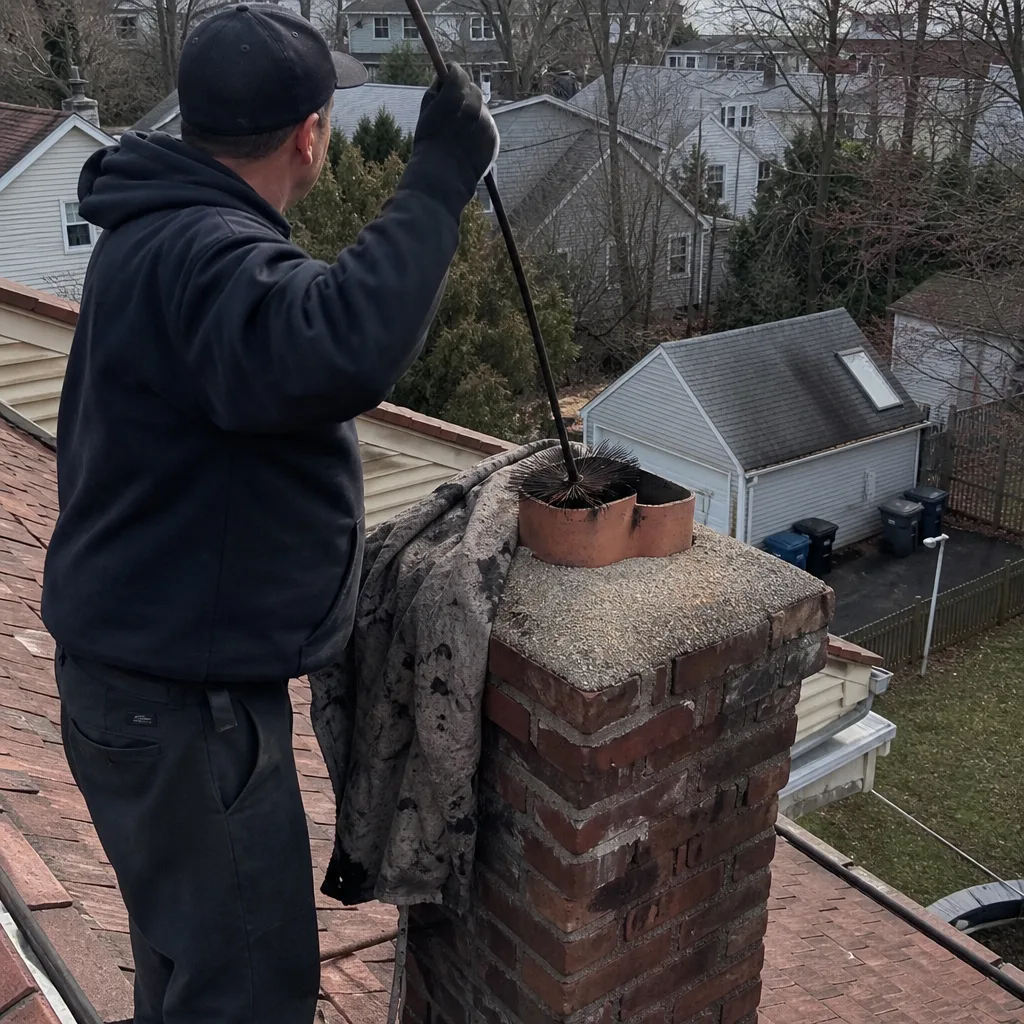
The central failure of most DIY chimney advice is that it starts with cleaning when it should start with looking. You cannot decide whether your chimney is a DIY candidate until you know what a camera sees inside it. That is not a gatekeeping argument from the sweep industry. It is a simple statement about what the job requires, and the requirement is information you do not have until someone puts a camera down your flue.
A professional Level 2 video scan shows you, in real time, the following: whether your liner is clay, stainless steel, or cast-in-place; whether it has cracks, spalling (surface flaking that signals advanced clay liner deterioration), or separated joints; whether your smoke chamber has intact parging (the smooth mortar coating that guides smoke upward); whether anything is blocking the flue below the smoke shelf where you cannot see it from either end; and what class of creosote you are dealing with. That last point determines everything about the DIY question. Stage-1 creosote is a brushing problem. Stage-2 is a chemical and mechanical problem. Stage-3 is a professional-only problem that no homeowner rod kit will touch.
Think of the inspection as a one-time baseline. You pay for it once. If the report says you have a straight, intact, lined flue with stage-1 creosote, you now have a documented basis for doing your own maintenance. If it says you have an offset flue or a compromised liner, you also have your answer, and it just saved you the cost of a rod kit plus a false sense of security. The inspection is the thing that makes DIY safe, or rules it out. In Clifton, where many homes have been heated by fireplaces for fifty to ninety years, the odds that your liner is in pristine condition are not high enough to skip this step.
Level Two Chimney Clifton has made the camera scan standard on every visit since 2009. Clause 4 of the Haven Standard requires a documented photo record on every job, which means you walk away with images of your flue’s actual condition, not a verbal summary. That record becomes your baseline for future decisions, including whether DIY maintenance is appropriate for your specific chimney.
Clifton Specific DIY Considerations
Clifton’s housing stock has a particular shape, and that shape matters for DIY chimney work. The city grew in two major waves: a pre-war and immediate post-war expansion of colonials and capes built between 1920 and 1960, and a later expansion of ranches and split-levels through the 1970s and 1980s. The older homes, especially in neighborhoods like the Lakeview section and the area near Main Memorial Park, frequently have chimneys that were constructed with masonry techniques that do not play well with standard DIY rod kits.
The biggest variable is flue offset. Many 1940s and 1950s Clifton chimneys were built with an offset flue: the firebox sits on one side of the chimney’s footprint, and the flue makes a bend or two as it rises to the crown. This was often done to accommodate a second fireplace on an upper floor, or to route around a structural beam. A standard rod kit from the home center is rigid or semi-rigid polypropylene. It navigates a straight run fine. It does not navigate an offset. When you hit the bend, the rods flex, the brush binds, and you end up either jamming the brush halfway up the flue or scrubbing only the section you can reach from the firebox, leaving the upper run untouched. Neither is a successful cleaning.
A professional sweep uses a flexible system, often a rotary whip or a chain system on a flexible shaft, designed specifically for offset flues. If your Clifton home was built before 1965 and you have not personally verified that your flue is straight, assume it is not until a camera tells you otherwise.
The second Clifton-specific factor is weather. The freeze and thaw cycles of northern New Jersey winters work on masonry chimneys year after year. Water seeps into tiny cracks in the crown or the brick, freezes, expands, and widens those cracks. A chimney that was structurally sound five years ago may have developed crown fractures or spalled brick by now. That does not make DIY cleaning more dangerous, exactly, but it does change the stakes: cleaning a chimney with a cracked crown or loose brick can dislodge material you would rather leave in place until it is repaired. A pre-cleaning inspection catches this.
If your chimney needs more than a cleaning, our Chimney Repair in Clifton page covers what a full repair scope looks like.
What DIY Cannot Do Regardless of Equipment
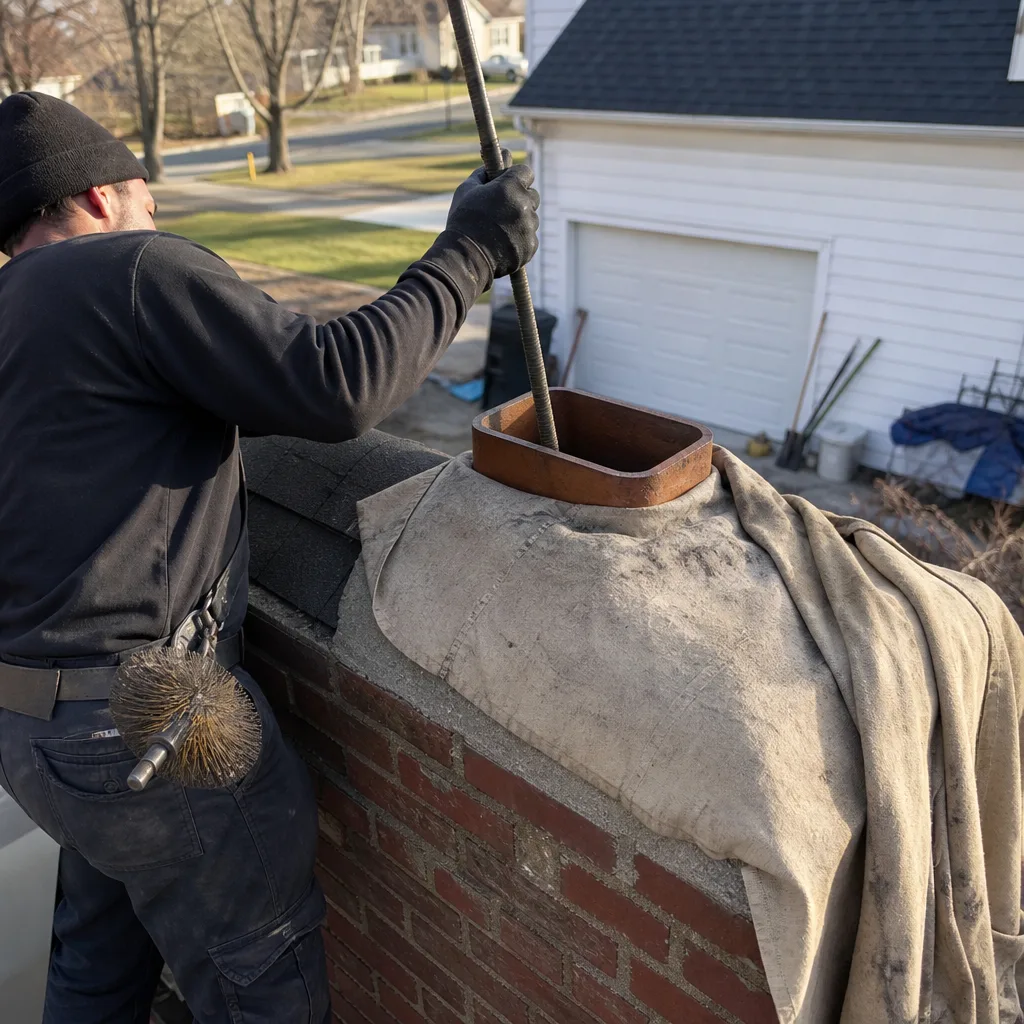
There are three failure modes in a chimney that no homeowner rod kit will find, and each of them matters more than creosote stage.
First: liner crack location and severity. A cracked clay tile is a fire pathway. When creosote ignites, it burns at temperatures approaching 2,000 degrees Fahrenheit. An intact liner contains that heat and directs it upward. A cracked liner lets it reach the surrounding masonry and, in older Clifton homes, the wood framing that the masonry is built against. You cannot see a liner crack from the firebox, and you cannot feel it with a brush. You need a camera, and you need someone who knows what a structural crack looks like versus a cosmetic hairline. The severity matters, too: a small crack near the top may be repairable with a resurfacing product from HeatShield. A long crack running multiple flue tiles is a liner replacement, not a repair. The difference in your budget is several thousand dollars.
Second: smoke chamber parging condition. The smoke chamber is the transition zone between your firebox and your flue. It is supposed to be coated in a smooth, heat-resistant mortar called parging. When that parging deteriorates or falls away, the chamber’s corbeled brick is exposed, creating ledges where creosote and soot collect, and creating turbulence that reduces draft. A DIY rod kit reaches the bottom of the flue, but it does not evaluate the smoke chamber. In our inspection work, we find parging failures in Clifton homes more often than most homeowners would guess, especially in chimneys that have seen decades of use without a documented maintenance history.
Third: obstruction below the smoke shelf. The smoke shelf sits just above the damper, and it is the place where animal nests, dead birds, and accumulated debris tend to collect. From the firebox, you cannot see it. From the roof, you cannot see it. A standard rod brush will push some of that material around, but it will not remove a compacted nest, and it will not tell you what is down there. A camera does. In Clifton, with its mature tree canopy and active squirrel population, we pull a surprising number of nests out of smoke shelves every fall.
If your fireplace itself is part of the question, our Fireplace Services in Clifton page walks through the full service scope.
The Actual Equipment List and Real Time Cost
If your chimney passes inspection and is genuinely a straight, lined, stage-1 flue, here is what a real DIY cleaning actually requires.
What you need:
- A correctly sized chimney brush. This means measuring your flue’s inner diameter and buying a brush that matches it. Too small and it doesn’t scrub the walls. Too large and it jams. For a typical 8×8 clay flue in a Clifton colonial, that is approximately an 8-inch brush. $25 to $45.
- Rod sections. Six to eight 4-foot fiberglass rod sections, enough to reach the full flue height. $40 to $80 for a kit, or $6 to $10 per section individually.
- A drop cloth and plastic sheeting to seal the firebox opening. $10.
- A shop vacuum with a HEPA filter, not a standard filter. Creosote dust is fine and you do not want it circulating through your home. If you have a standard shop vac, a HEPA filter is $20 to $40. Do not use a household vacuum.
- Safety glasses, an N95 or P100 mask, and gloves you are willing to throw away. $20 total.
- A ladder that reaches your roof safely, if you clean from the top. You likely already own one or can borrow one.
The time cost: for a first-timer on a typical Clifton cape with a 20-foot flue, budget four to six hours. That includes setup, sealing the firebox, climbing to the roof, running the brush in sections, feeling for resistance, retrieving the brush, vacuuming, cleaning up, and discovering at least one thing that does not go as smoothly as the video suggested. On a two-story colonial with a 30-foot flue and a steep roof pitch, add an hour and a half and be honest with yourself about whether you are comfortable on that roof with a rod kit in your hands.
Compare that to a professional sweep, which on a straightforward Clifton chimney takes about 45 to 90 minutes and includes a camera scan and photo record. The $189 to $289 range that most Clifton homeowners pay for a professional cleaning is not just the brushing. It is the inspection, the documentation, the disposal of the creosote, and the trained eye that sees the thing you would not know to look for. If you already have the rod kit and the ladder and the HEPA filter, DIY makes sense. If you are buying all of it from scratch, the savings on a first cleaning is somewhere around $100 to $150, and that money does not buy you any of the diagnostic information.
Liability and Insurance: What a Homeowner Fire Loss Claim Looks Like
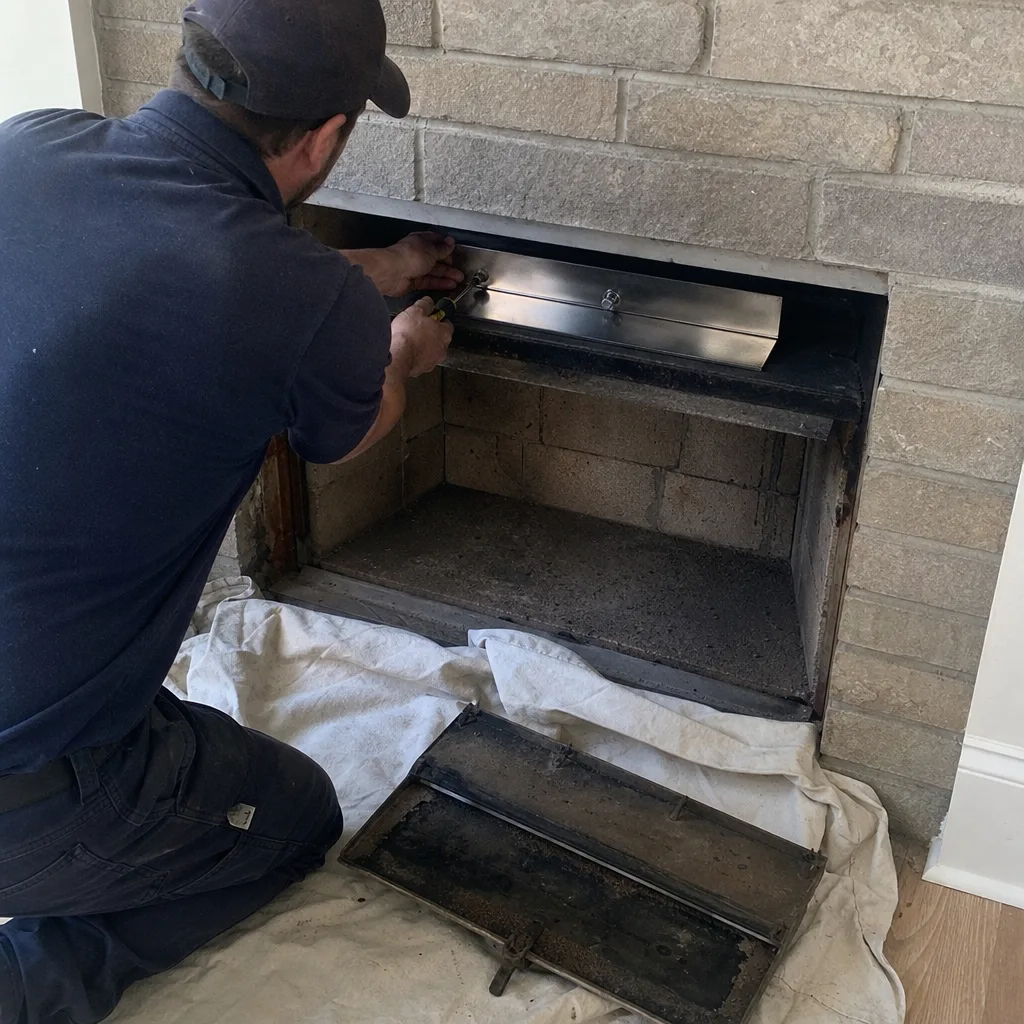
This is the part the DIY tutorials do not mention, and for Clifton homeowners it is the part that matters most in the worst-case scenario. If you have a chimney fire and you file a homeowner’s insurance claim, the insurer’s adjuster will ask a series of questions. One of them, in our experience with the fire investigation process, is whether you can document that the chimney was maintained by a professional, and when. If you cleaned it yourself, the answer to that question is, essentially, “I did it myself with a rod kit.” That is not automatically a claim denial. But it is not the same as producing a dated service record with a photo log of the flue’s condition before and after the cleaning, and it does place the burden of proof on you to demonstrate that you performed the work adequately.
Insurers are not in the business of punishing homeowners for DIY maintenance. They are in the business of assessing whether a loss resulted from negligence, which they define, in part, as failure to maintain the property to a reasonable standard. A homeowner who can produce a professional inspection report and a cleaning record is in a fundamentally different evidentiary position than a homeowner who says, “I brushed it out last fall.” If the fire investigation points to a creosote ignition, the question of who cleaned the chimney last, and how well, becomes central to the claim.
There is also the question of what the DIY cleaner may have missed. If you brushed a straight run but missed a stage-2 creosote section behind an offset that you did not know existed, and that section ignites, the claim gets complicated fast. The insurer’s causation investigation will look at whether a professional would reasonably have found and addressed the condition. This is not a hypothetical scenario. It is a standard part of how fire-loss subrogation works.
The one-time camera inspection we described earlier has a second function here: it creates a documented baseline that you can reference in exactly this scenario. Even if you then choose to do your own maintenance, that inspection record shows you took a reasonable, verifiable step to understand your chimney’s condition before deciding to clean it yourself. That is the kind of evidence that keeps a DIY-friendly insurer on your side and gives a skeptical adjuster less room to work.
Common Mistakes to Avoid
- Brushing blind. The most common and most costly mistake is cleaning a flue you have never seen. If your liner has a crack, the brushing is beside the point. Inspection first, always.
- Buying the wrong brush size. A brush that is too small polishes the creosote instead of removing it. A brush that is too large jams halfway up and turns a three-hour job into a rescue mission. Measure the flue before you buy.
- Using a standard shop vac filter. Creosote dust is fine enough to pass through a standard filter and into your living space. You will find a fine black film on everything in the room. HEPA filter, no exceptions.
- Ignoring the roof reality on Clifton’s older homes. A 1940s cape with a steep pitch and a chimney near the ridge is not a beginner roof. If you are not already comfortable working at height, the savings is not worth the fall risk.
- Skipping the cap and crown check. Many DIY cleaners focus on the flue and forget the top of the chimney, where water entry begins. A cracked crown or missing cap undermines everything else.
- Cleaning from the firebox and calling it done. From below, you reach maybe the lower third of the flue. On a straight run with a 6-foot rod set, you are not getting the upper section. That is the section where creosote is thickest.
- Disposing of creosote in regular household trash. Creosote is a combustible material. Most municipalities in Passaic County recommend treating it as hazardous waste. Bag it separately and check Clifton’s disposal guidance.
When to Call a Professional
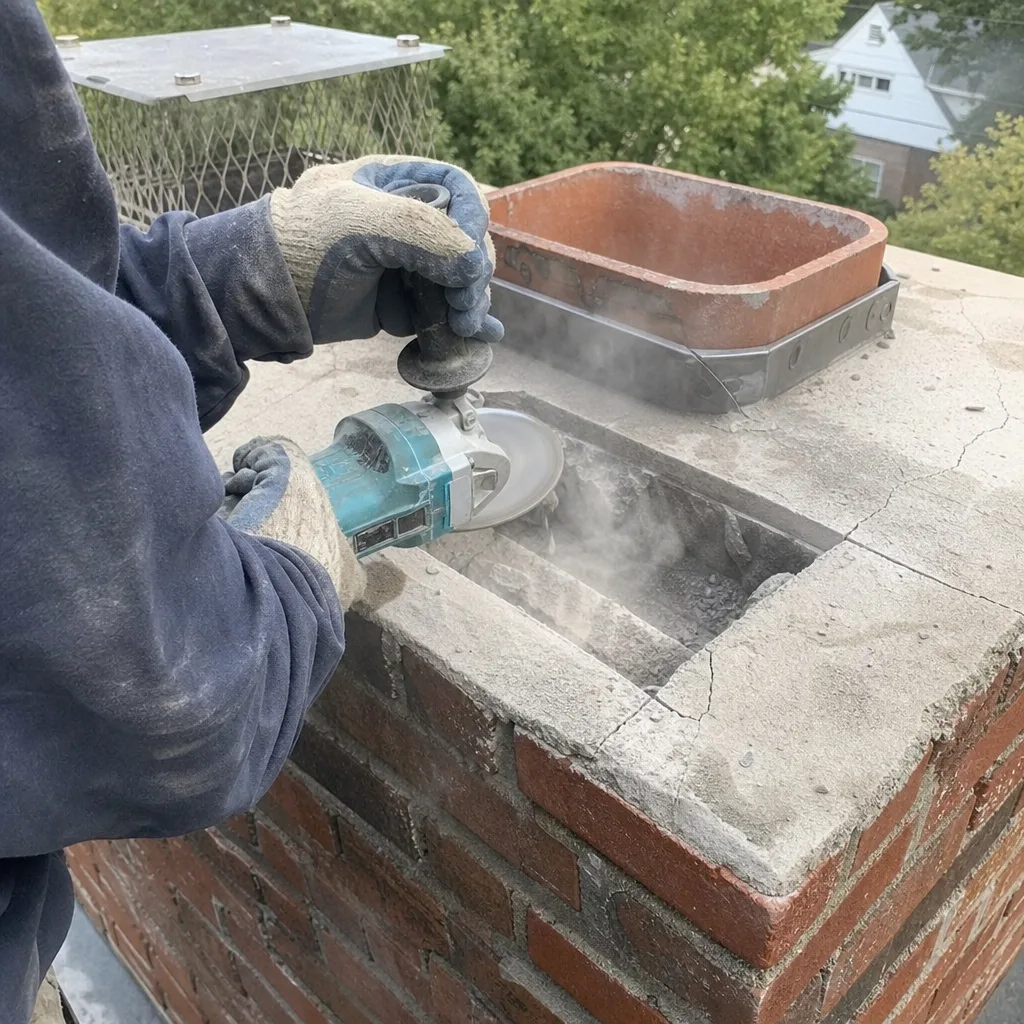
Call a professional if your chimney has not been inspected in the last two years, if your home was built before 1965 and you cannot confirm the flue is straight, if you see visible cracking in the firebox or the exterior brick, if you smell smoke or mustiness from the fireplace when it is not in use, if you have burned a lot of unseasoned wood and suspect stage-2 or stage-3 creosote, or if you simply do not want to spend a Saturday on your roof with a rod kit and a shop vac. None of those conditions is a moral failure. They are all legitimate reasons to hire a sweep. Level Two Chimney Clifton offers free estimates in Clifton, and every job includes a written price before work starts, a camera-scan inspection, and a documented photo record. Call (551) 282-9640 and we will look at what you have before anyone suggests what it needs.
Frequently Asked Questions
A professional chimney cleaning in Clifton typically runs between $189 and $289 for a straightforward single-flue chimney, with the price depending on flue height, roof access, and creosote stage-see our Chimney Cleaning Cost Breakdown: The Clifton Homeowner’s Reference for 2026 for full details. That price should include a camera inspection and written documentation. If a company charges less than $100, ask what they are actually doing, because a proper inspection takes longer than that price would suggest. For an exact quote on your chimney, call (551) 282-9640 and we will give you a written price before any work starts.
You need the camera inspection specifically because it is the only way to know whether DIY cleaning is safe for your particular flue. The inspection tells you whether your liner is intact, whether your flue is straight or offset, and what stage of creosote you are dealing with. Without that information, you are cleaning blind. A one-time inspection costs less than the liner repair you might be deferring by skipping it.
The National Fire Protection Association standard, NFPA 211, recommends a chimney be inspected at least once a year and cleaned whenever creosote buildup reaches 1/8 inch or more. For most Clifton homeowners who burn a cord or two of seasoned hardwood each winter, that works out to a cleaning every one to two years. If you burn softer woods or unseasoned wood, you will need it more often.
If you skip regular cleaning, creosote accumulates in layers, and each fire bakes the lower layers into progressively harder forms. Stage-1 flaky creosote becomes stage-2 tar-like creosote, which becomes stage-3 glazed creosote. Stage-3 is a hard glaze that resists brushing and requires chemical or rotary removal. The layers also reduce draft, which pushes smoke back into your living space and accelerates further buildup. In the worst case, the accumulated creosote ignites, burning at up to 2,000 degrees, and a chimney fire is underway. That is the specific risk you are managing, not a theoretical one. If you are overdue, call (551) 282-9640 and we will assess it honestly.
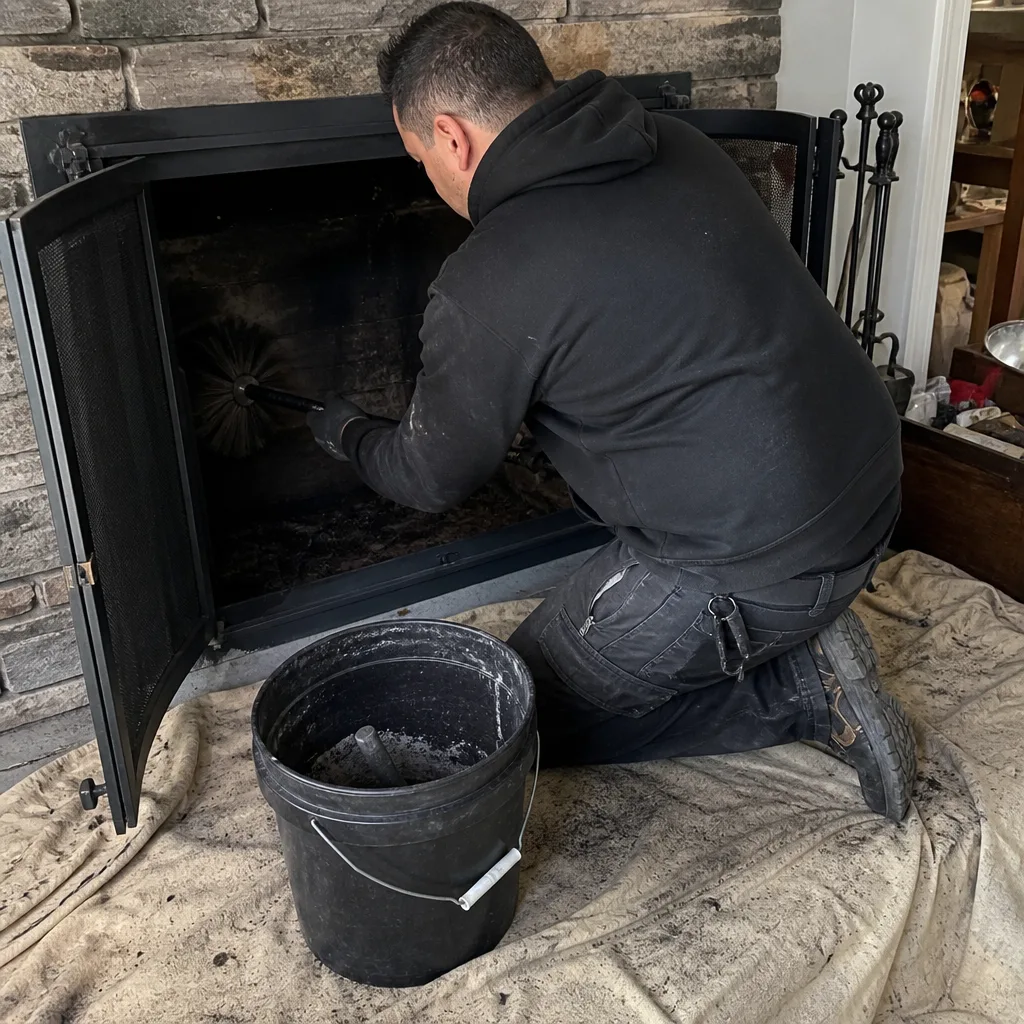
You can clean from the firebox using a rod kit pushed upward, and for a straight, short flue it is a workable method. But you cannot clean the upper third of the flue this way, you cannot see what you are doing, and you will make a significant mess even with plastic sheeting. For most Clifton homes with a 20-foot or taller flue, roof access is the only way to do a thorough job from above. If roof work is not something you are comfortable with, that is a legitimate reason to hire a professional sweep.
Your insurer will care if there is a fire and the investigation asks for maintenance records. A professional service record with a photo log is strong evidence of reasonable maintenance. A verbal statement that you brushed it yourself is weaker, not automatically disqualifying, but weaker. The one-time camera inspection is the middle path: it gives you a documented baseline that supports responsible maintenance decisions either way. Call (551) 282-9640 and we will provide that baseline, with photos in hand when we are done.
The Bottom Line
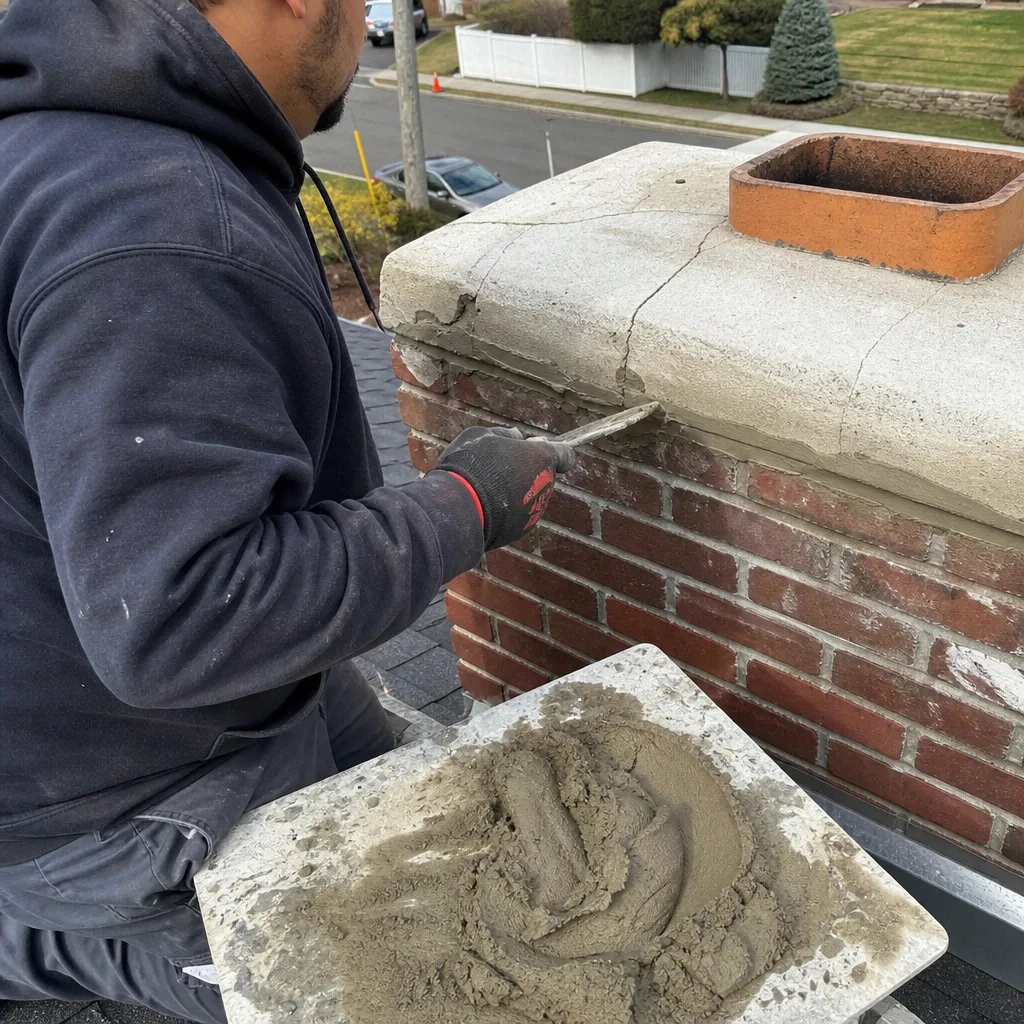
The DIY versus professional question is not a question of ability. Most able-bodied homeowners in Clifton can run a brush down a straight flue. The question is whether you know enough about your specific chimney to make that choice safely, and you cannot know enough without a camera inspection. Get the inspection once. If it shows a straight, intact, stage-1 flue, buy the rod kit and do the maintenance yourself with confidence. If it shows an offset, a cracked liner, or advanced creosote, you just saved yourself the cost of a false start and possibly a much larger repair. Either way, the inspection is the thing to do first.
If you are in Clifton and want to know what your chimney actually looks like inside, call (551) 282-9640. We will put a camera down it, show you the photos, and give you a written price before anyone touches anything. See our Level Two Chimney Clifton home page for the full range of what we do, or call us directly to schedule.
Written by Corrine Halstead, Owner at Level Two Chimney Clifton, serving Clifton since 2009.