
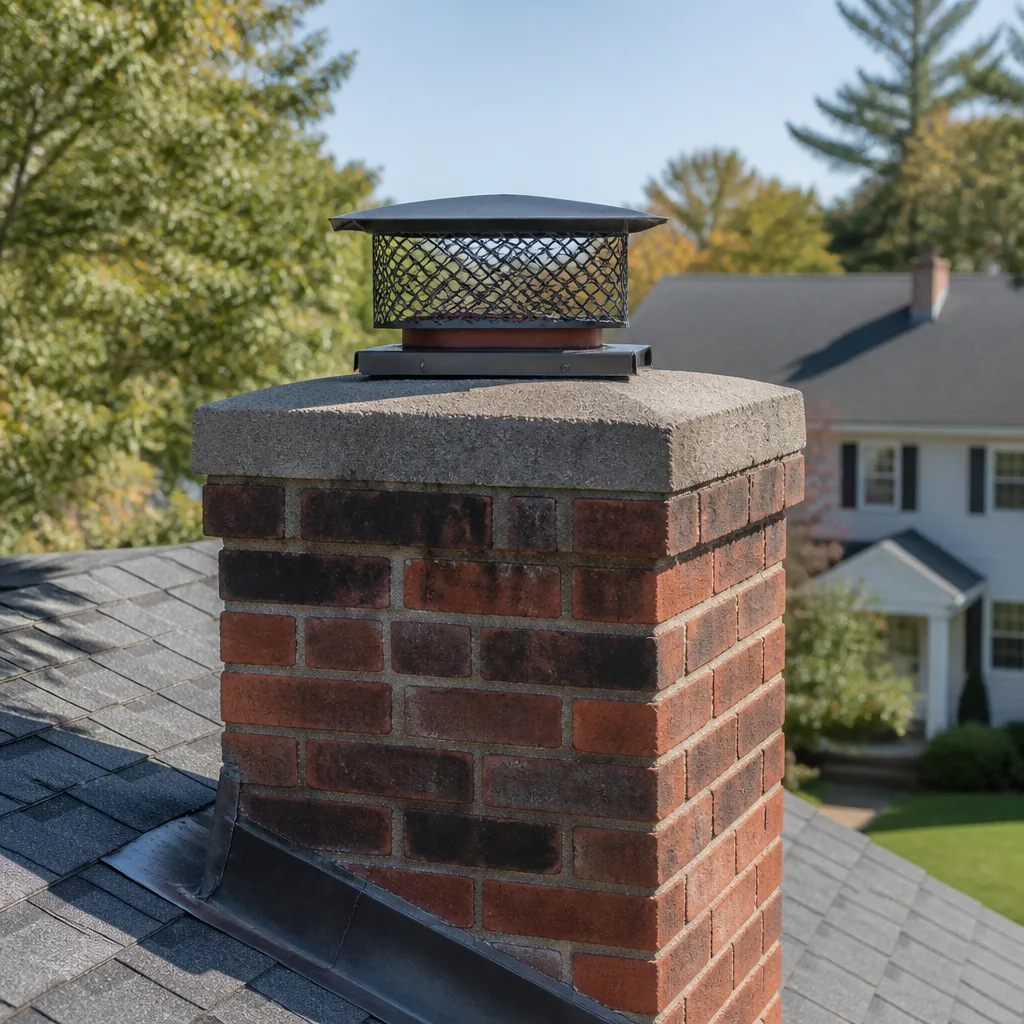
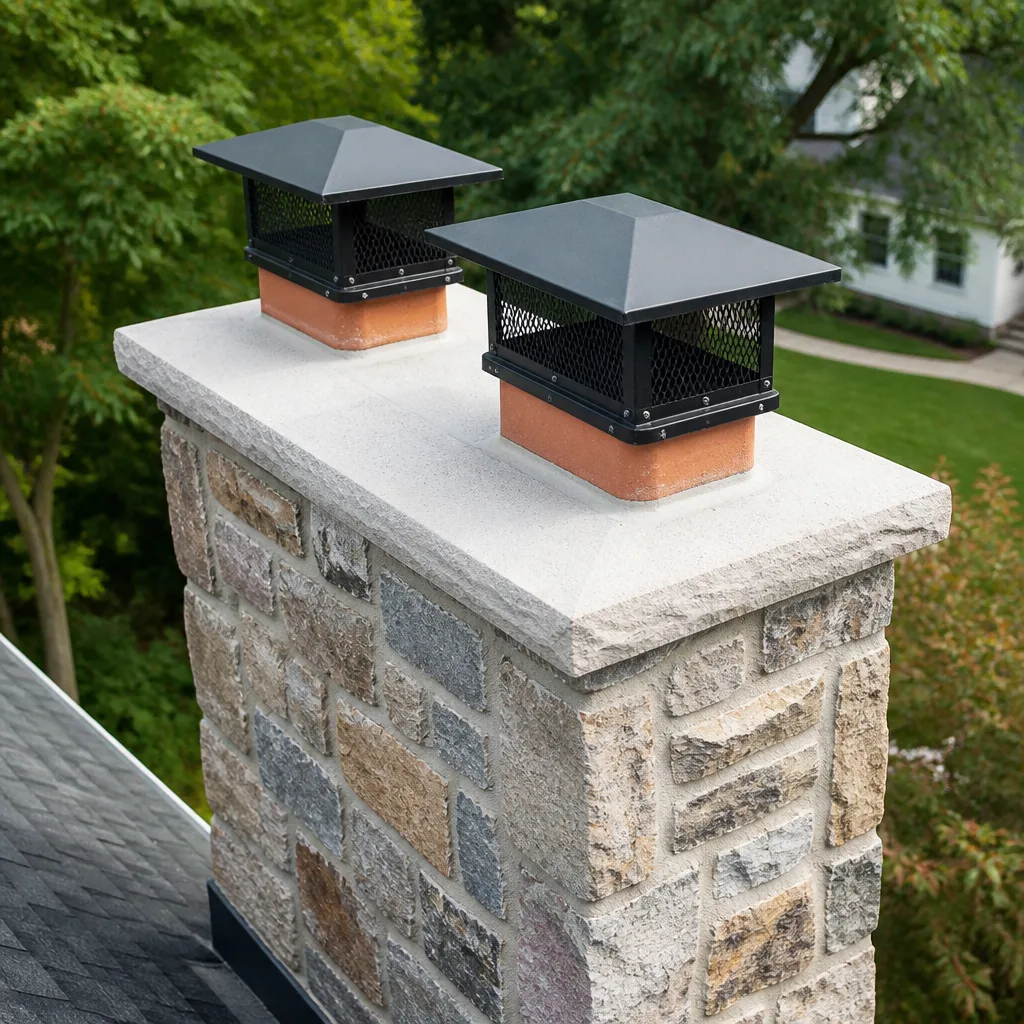
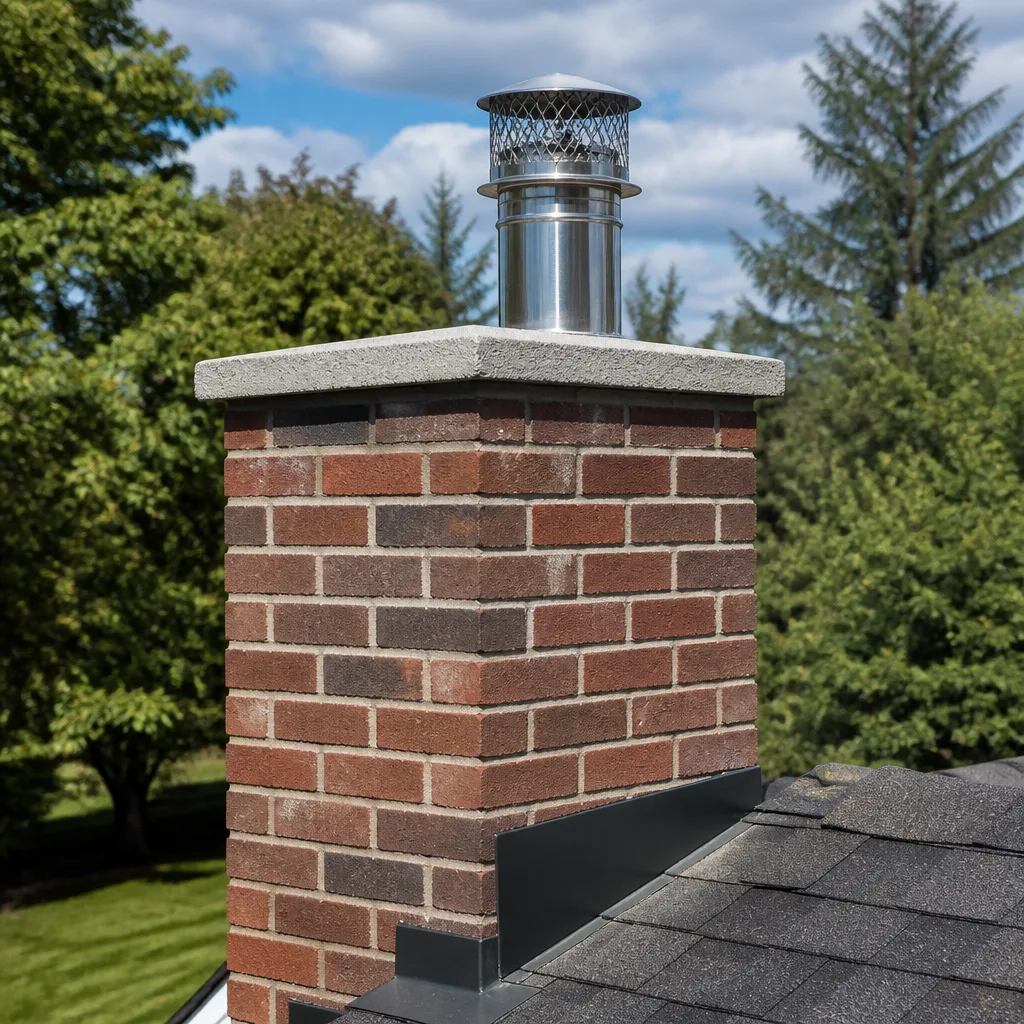
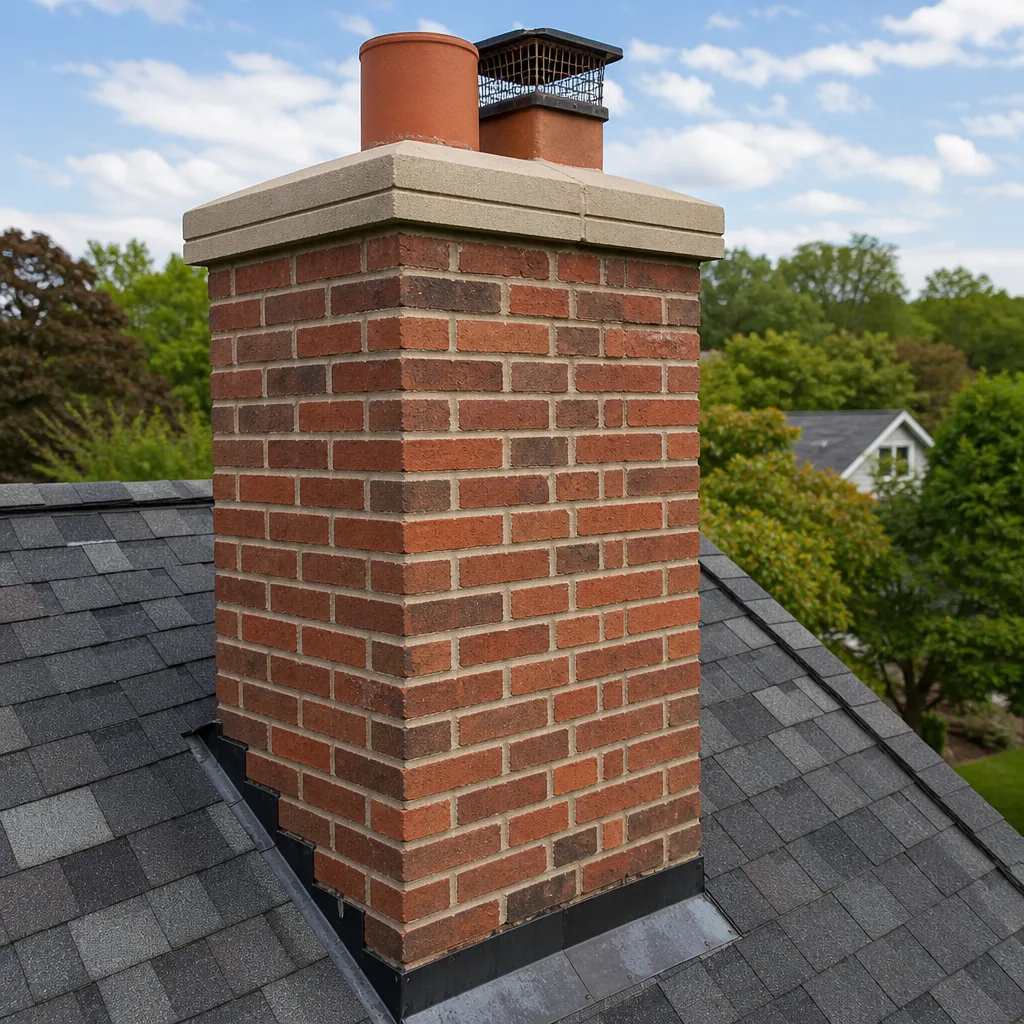
Level 1 sweep and inspection to the NFPA 211 annual standard - flue, crown, cap, and flashing checked and photographed
Chimney sweep logs do not sweep chimneys. They loosen some creosote - which then falls where a brush and vacuum still have to collect it.
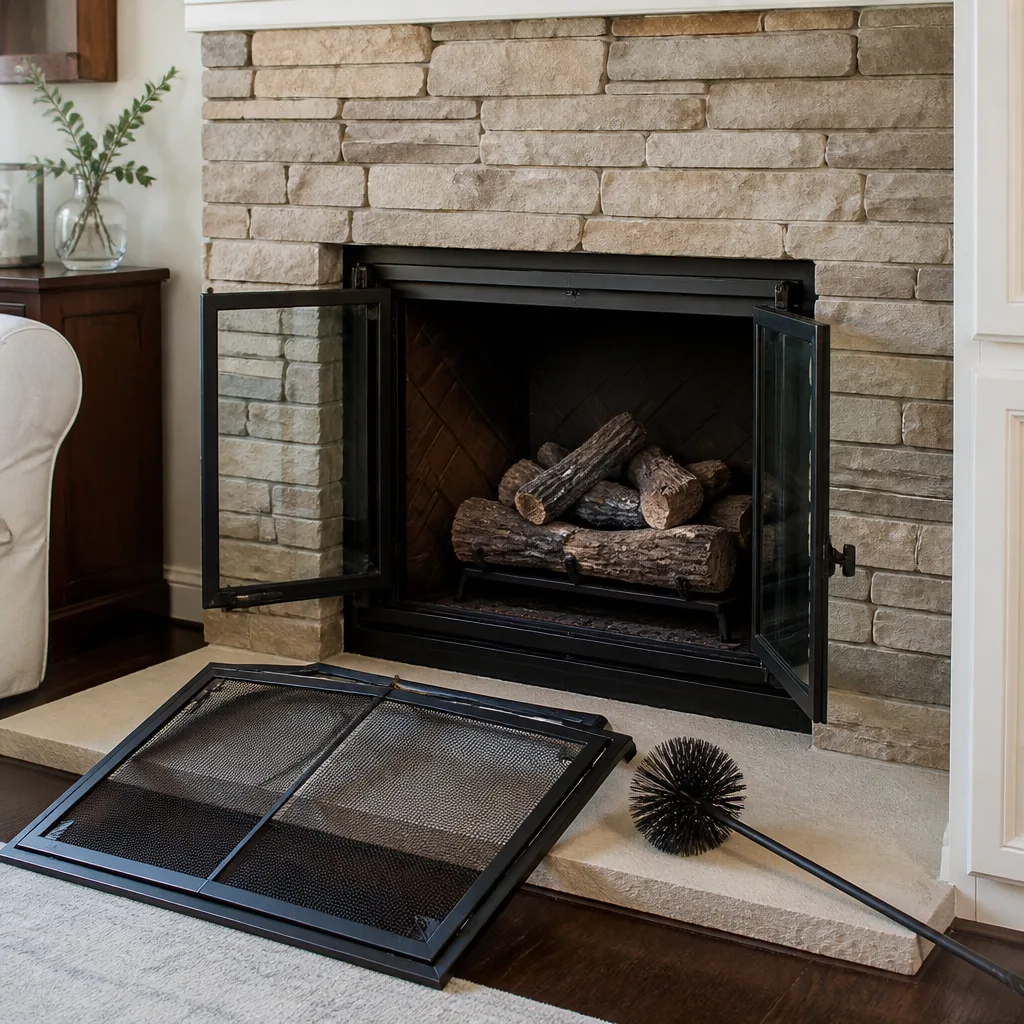
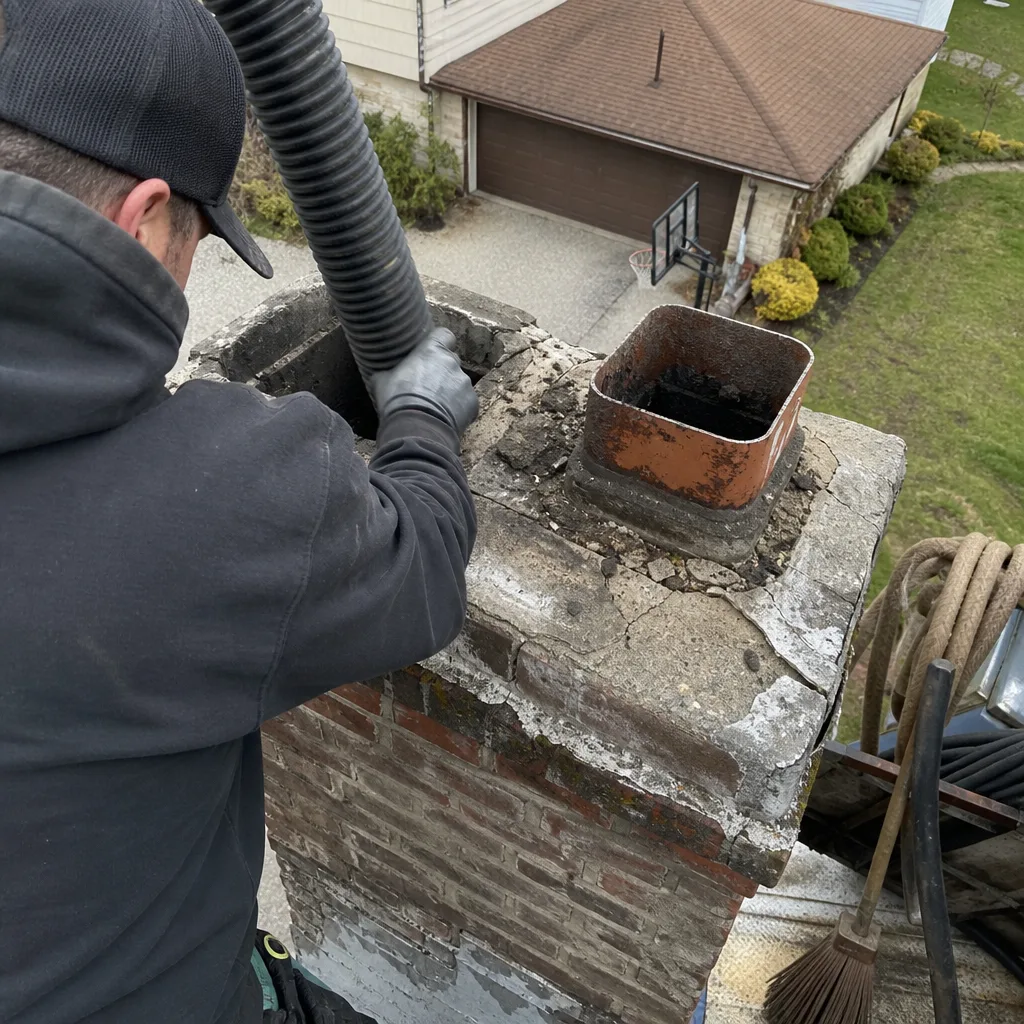 Before
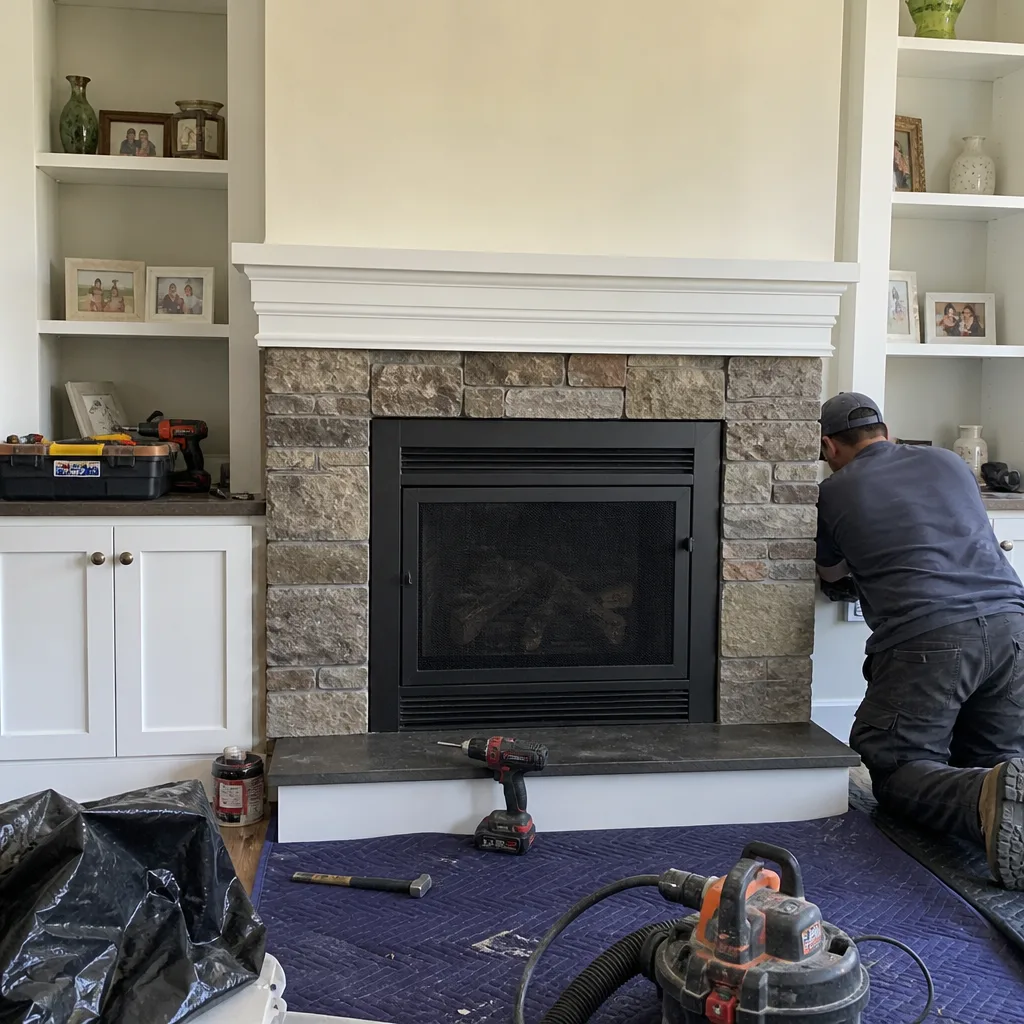 After
After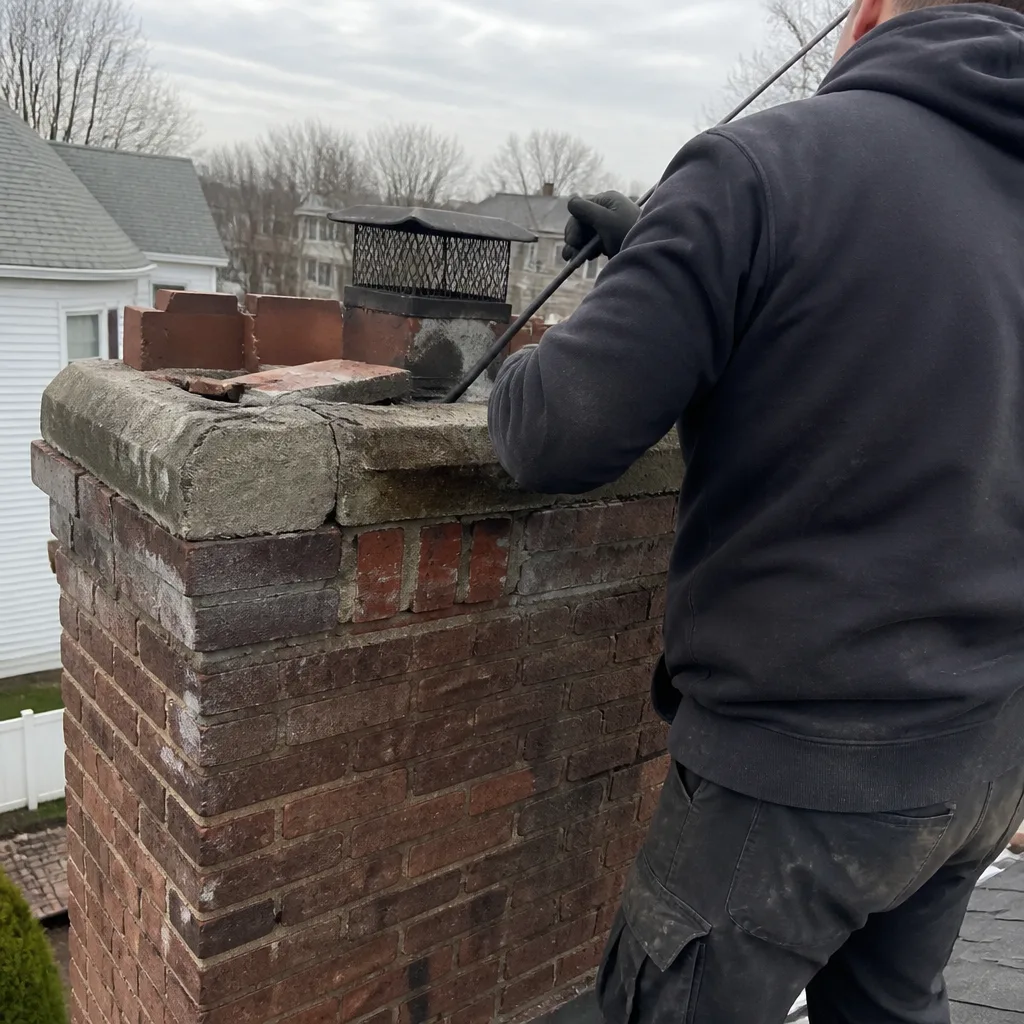 Before
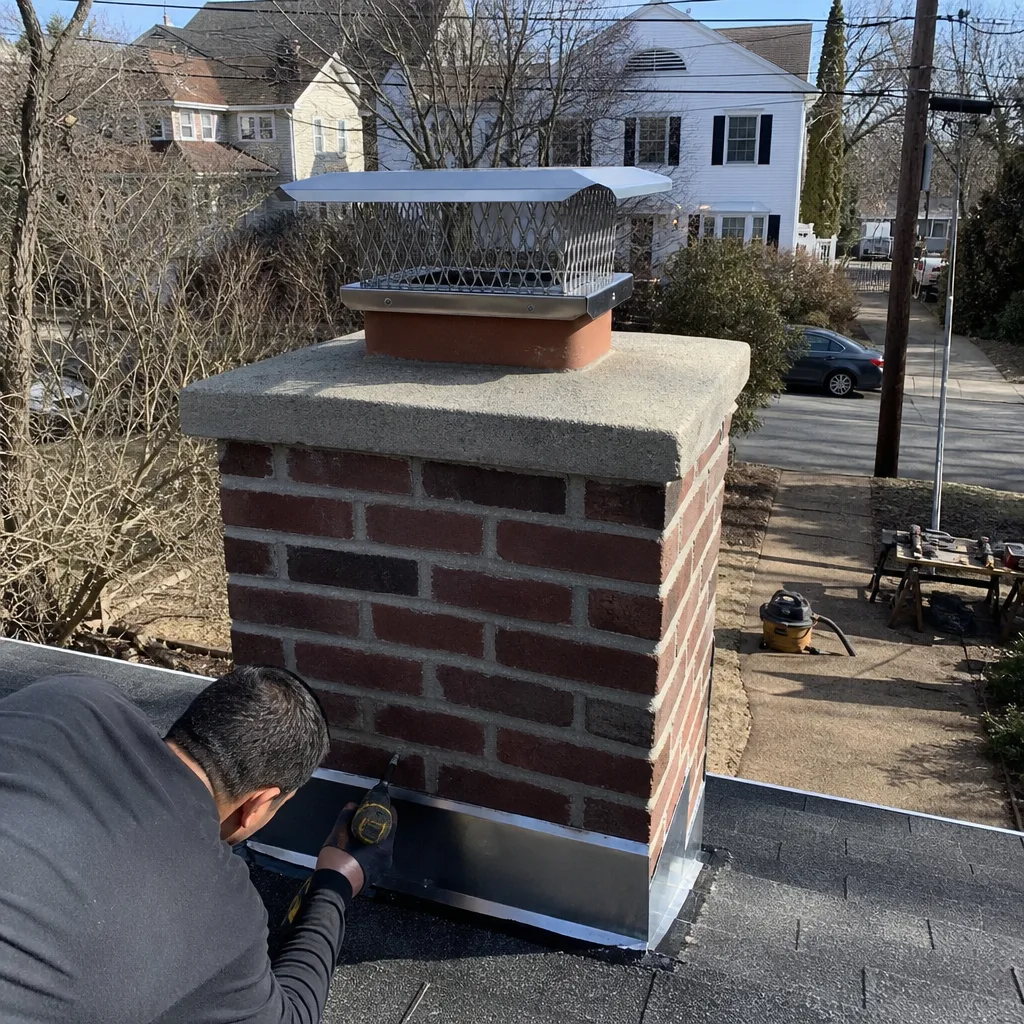 After
After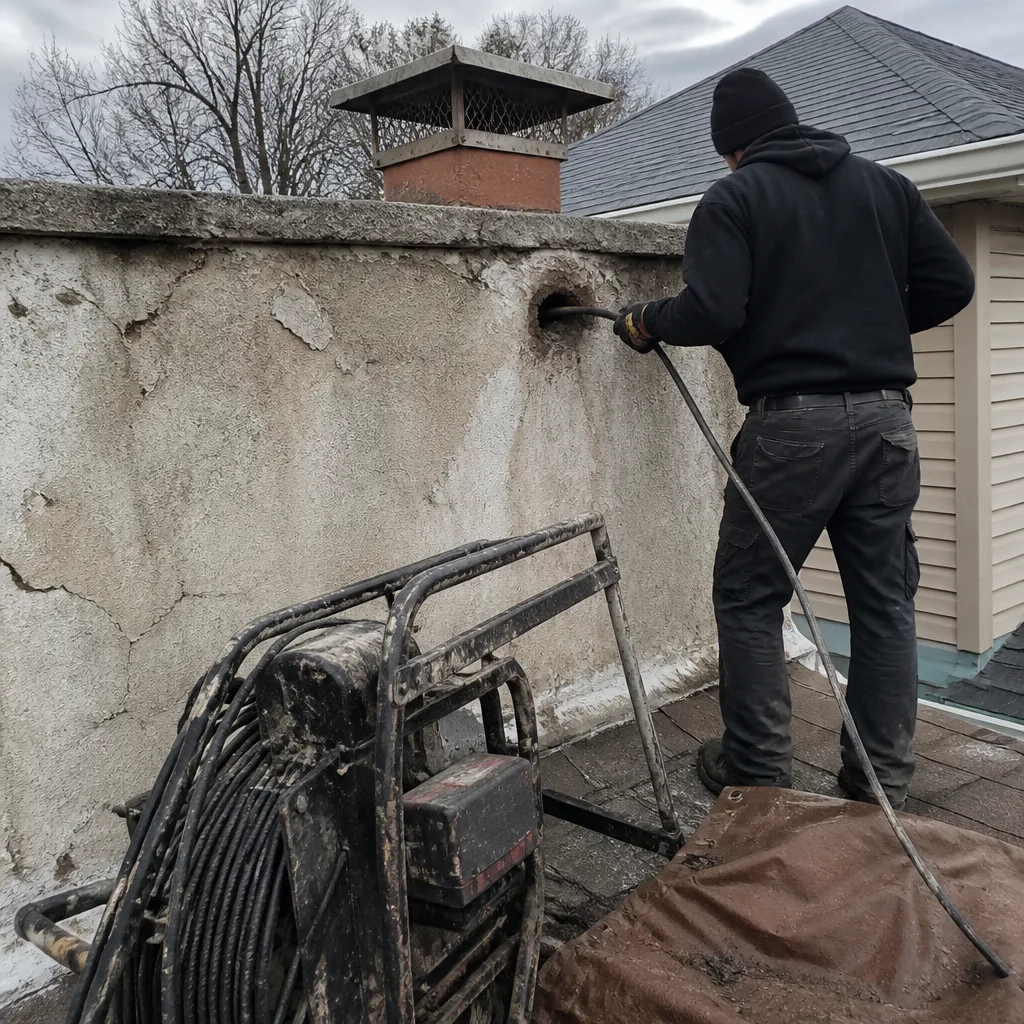 Before
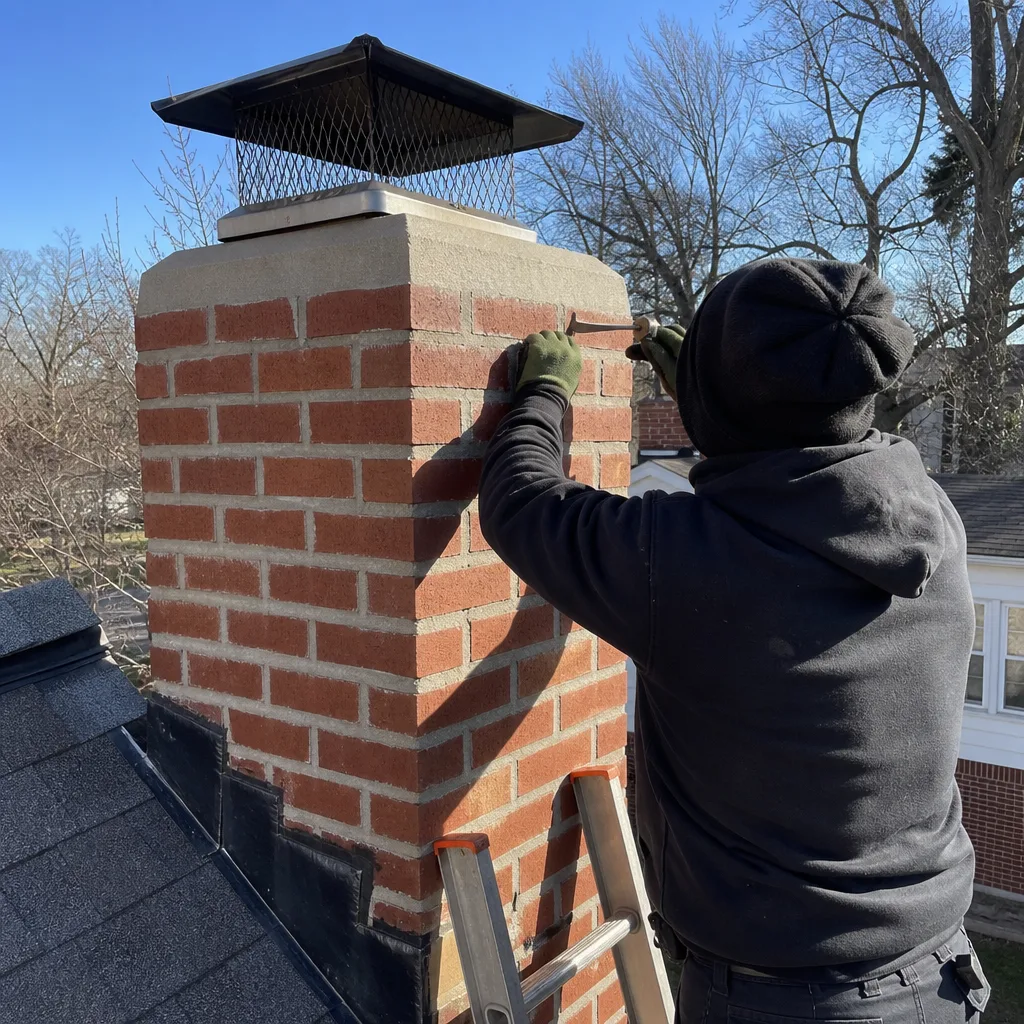 After
AfterSoot Removal in Clifton, NJ
How Much Does Chimney Cleaning & Sweep Cost? (2026 Price Guide) - Clifton, NJ: typically $149 to $349, depending on how much accumulation is present, how long it’s been since the last cleaning, and which parts of the system need attention. Most jobs are completed in a single visit, and every one starts with a written price before the brush touches the flue. If you’d rather talk it through first, call us at (551) 282-9640 – a live person picks up every time, around the clock.
Soot is the soft, powdery byproduct of incomplete combustion. It coats the inside of your flue liner, smoke chamber, and firebox walls after every fire. Unlike creosote – the tar-like Stage II and Stage III deposits that require chemical treatment or specialized equipment – soot is a Stage I byproduct and responds well to standard mechanical cleaning when it’s caught early. The problem is that “caught early” is relative. We’ve pulled the camera out of chimneys in older Clifton neighborhoods like Montclair Heights and Athenia and found soot accumulations thick enough to measurably narrow the flue opening, which restricts draft and pushes carbon monoxide back into the living space instead of up and out.
Level Two Chimney Clifton is built around a simple idea: show you what’s there before we name a price, and document what we did when we’re done. Our Chimney Cleaning & Sweep in Clifton service covers the full system, and soot removal sits at its core. Corrine Halstead has led this company since 2009, and in that time we’ve completed more than 38,000 chimney inspections and cleanings – every single one with a written price delivered before any work started.
When You Need Soot Removal
Soot doesn’t announce itself. Most homeowners in Clifton don’t notice it until there’s a visible problem or an odor they can’t trace. Here are the situations that tell us a soot removal visit is overdue:
- Black dust or smudge marks around the firebox opening. If soot is migrating out of the firebox and onto the surround, the damper isn’t sealing well or the flue is partially blocked – either way, the system is pushing material back into your living room instead of venting it out.
- A persistent smoky or stale smell, especially in humid weather. Clifton sits in Passaic County at a lower elevation than much of northern New Jersey, and summer humidity amplifies chimney odors dramatically. Damp soot produces a sharp, acrid smell that travels through the house even when the fireplace hasn’t been used in months.
- Reduced draft or smoke spillage during fires. If smoke rolls into the room at the start of a fire or lingers longer than a few seconds after the damper is fully open, soot accumulation may have narrowed the flue enough to impair airflow. This is particularly common in Clifton’s older Colonial and Tudor-style homes with original terra cotta liner systems.
- It’s been more than 12 months since the last professional cleaning. NFPA 211 – the standard our work is measured against – calls for annual inspection and cleaning of any chimney in regular use. In Clifton, where heating seasons run from mid-October through April, that’s six months of regular fire activity every year.
- You’ve just moved into a home built before 1990. Many of the brick chimneys in the Richfield and Botany Village sections of Clifton were constructed before modern liner standards existed. The previous owner’s cleaning history is often unknown, and an inspection camera frequently shows us what years of reports have missed.
- Your carbon monoxide detector has triggered without an obvious cause. Soot-narrowed flues reduce draft efficiency. Even a partial blockage can cause incomplete venting. A CO alarm in a home with an active fireplace or gas appliance venting through a shared flue should be treated as a chimney problem until proven otherwise.
Our Soot Removal Process
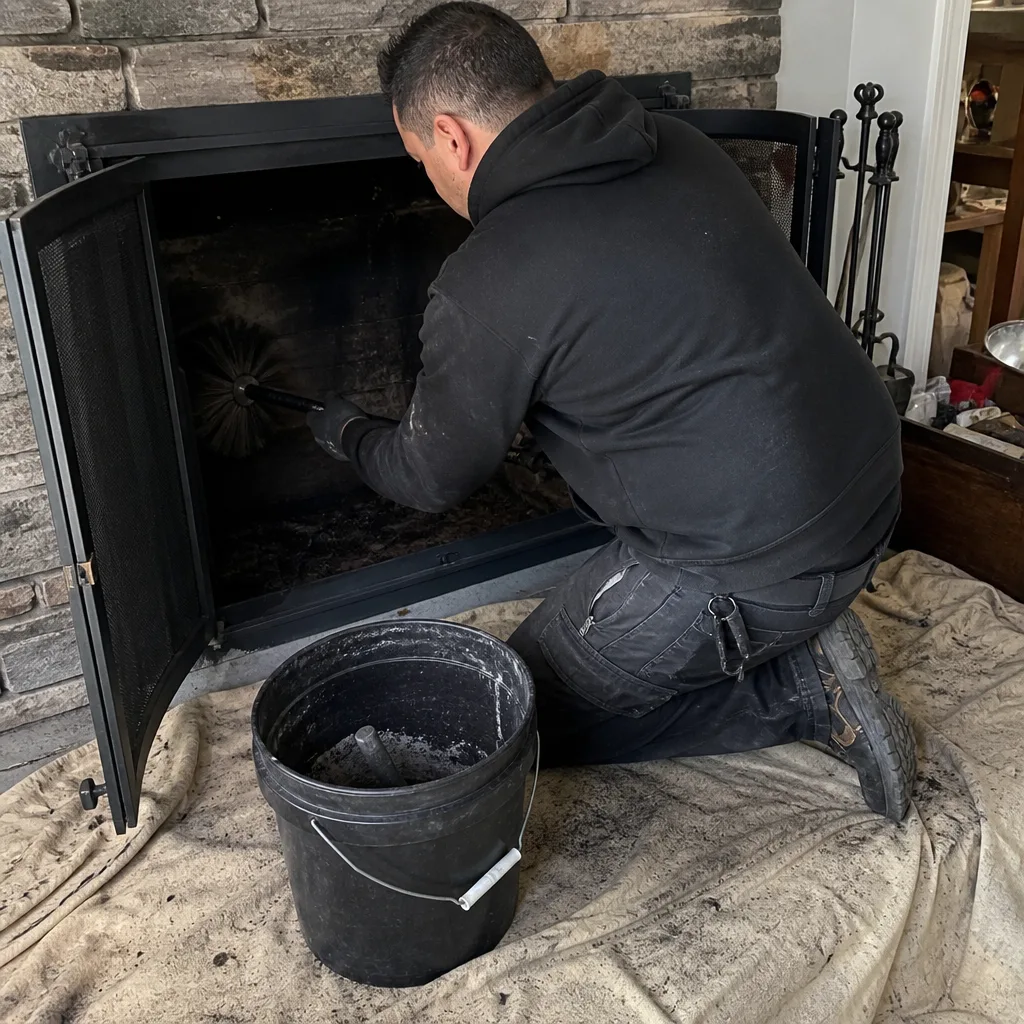
We don’t walk in with a brush and start sweeping. Every soot removal job follows the same documented sequence, because skipping steps is how things get missed.
- Written price before anything else. Haven Standard Clause 1 requires a written price, written scope, and written warranty before work begins – not after we’ve already set up equipment in your living room. You’ll have the quote in hand, and you can ask questions or decline before a single drop cloth hits the floor.
- Camera scan of the full flue system. We send the inspection camera down before the brushes go in. This tells us the current condition of the liner, the smoke chamber, and the smoke shelf – and it tells us whether what looks like simple soot accumulation is actually Stage II creosote in the making. In Clifton homes where the flue hasn’t been scanned in years, this step regularly surfaces issues that a flashlight inspection would miss entirely.
- Mechanical brushing from the top or bottom, based on your flue layout. We use rotary and hand brushes sized to your specific flue diameter. Soot responds to mechanical action without chemical treatment, so the process is clean, contained, and doesn’t leave residue inside the liner. Drop cloths and a HEPA-filtered vacuum system run simultaneously to keep the interior clean.
- Smoke chamber and smoke shelf cleaning. The smoke shelf – the horizontal surface just above the damper – collects soot and debris that falls during use. It’s a part of the system that gets skipped on faster jobs. We don’t skip it. Accumulated material on the smoke shelf is a fire source during a chimney fire and a source of odor year-round.
- Post-cleaning camera documentation. After the cleaning, the camera goes back in. Haven Standard Clause 4 requires a documented photo record on every visit – not as an optional add-on, but as the standard of care we’ve applied to every job since 2009. You receive the before-and-after documentation, and it becomes part of your chimney’s record.
- Written summary of findings. If the camera turned up anything beyond soot – spalling liner sections, a cracked crown, a missing cap – you get a written summary of what was found, what it means, and what the repair options are. No pressure call, no vague “you might want to think about getting that looked at.” Just a written record of what the camera showed.
BeforeAfterSoot Removal Pricing in Clifton
Soot removal in Clifton costs between $149 and $349 for a standard single-flue fireplace system. Here’s how that range breaks down:
| Scenario | Typical Price Range |
|---|---|
| Standard single-flue soot removal, moderate accumulation | $149 – $229 |
| Single flue with heavier buildup or extended time since last cleaning | $229 – $299 |
| Two-flue system or combined soot and smoke chamber cleaning | $279 – $349 |
| Soot removal as part of a full Level 2 camera inspection and sweep | $299 – $399 |
A few things affect where your job lands in that range. How long it’s been since the last professional cleaning is the biggest variable – a flue that was swept 10 months ago and used moderately through one Clifton winter takes less time than one that hasn’t been touched in four years. Flue height matters too; Clifton has a range of housing stock from ranch-style homes in the Lakeview area to three-story Colonials in the Delawanna section, and taller flues mean more linear footage to cover.
If Stage II or Stage III creosote is found during the camera scan, that’s a different service with different chemistry and different pricing – and we’ll tell you that in writing before we do anything about it. Soot removal alone won’t address glazed creosote, and any company that tells you otherwise is either guessing or selling you a cleaning that won’t fix the problem.
Every estimate is free. If you have a written quote from another company, bring it to us – we offer a free second opinion on any written estimate, and we’ll tell you plainly whether the scope and price are reasonable. Call (551) 282-9640 to schedule.
All pricing is documented in writing before work begins. Materials, when needed, are sourced through our supplier network – including Olympia Chimney and Copperfield – specifically to keep costs honest rather than marked up on the back end.
What “Documented Soot Removal” Actually Means
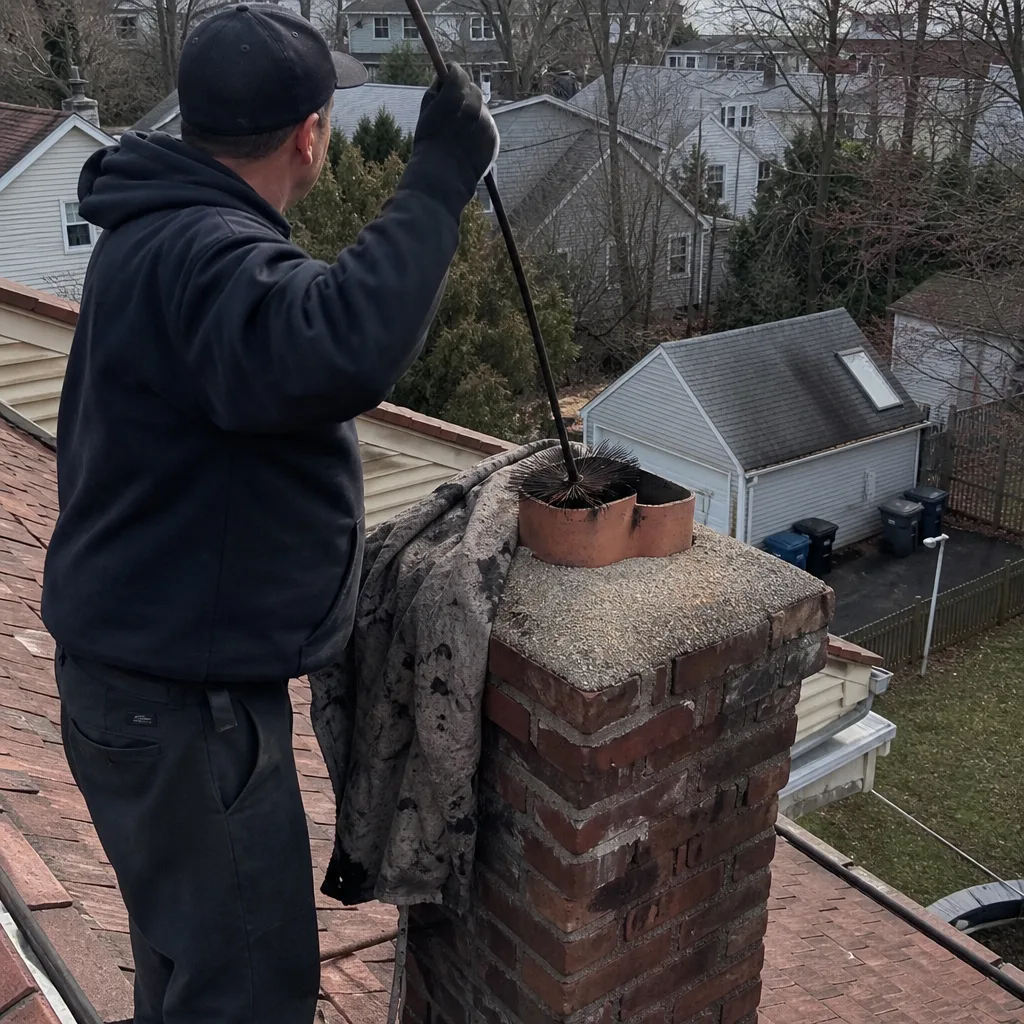
Most companies in the Clifton area sweep the flue, hand you a receipt, and leave. What you don’t get is any record of what the system looked like before or after. That matters more than most homeowners realize.
Insurance claims after a chimney fire often hinge on maintenance records. If your insurer asks whether the chimney was professionally cleaned and inspected, a generic receipt from a company that used a flashlight is a weak answer. A documented camera scan with timestamped photos is a real answer.
Haven Standard Clause 4 requires us to produce that record on every visit – not on request, not for an extra fee. It’s included. And it’s been included since 2009. When we leave your Clifton home, you have before-and-after photos, the technician’s written findings, and a record of the price you were quoted versus the price you paid. Those numbers are always the same, because the written quote is the price.
Corrine Halstead built the company’s documentation practice around one straightforward premise: a homeowner who can show exactly what was done to their chimney, on what date, at what cost, and in what condition it was left – that homeowner is protected in a way that a verbal assurance never provides.
Clifton-Specific Notes on Soot Accumulation
Clifton’s housing density and the age of its building stock create conditions we see consistently across the city. A few things worth knowing if you’re a Clifton homeowner:
The city’s grid includes a significant share of attached and semi-detached housing, particularly in the Allwood and Styertowne areas. Shared walls mean shared flue chases in older buildings. When one unit has a soot problem, the adjacent unit often has draft issues it hasn’t connected to the chimney yet. We’ve done same-street calls in these neighborhoods where the neighbors didn’t know each other’s chimneys were affecting each other’s draft performance.
Clifton also sits close to Route 3 and Route 46 – two of the heavier commercial corridors in Passaic County. Homes near those routes accumulate more airborne particulate generally, and while vehicle exhaust isn’t what fills your flue, it does mean outdoor air quality affects how your chimney draws. A flue that’s partially narrowed by soot will draft worse on a still, humid summer day in Clifton than it would in a less congested town.
Finally, many of Clifton’s brick chimneys were built in the 1940s through 1960s and were originally designed for coal or wood burning at a time when combustion standards didn’t exist. The terra cotta flue tiles in these systems age and can crack in ways that trap soot in the gaps between tile sections – material that a standard brush pass moves but doesn’t fully clear. The camera shows us whether that’s happening.
For the full picture of what our chimney cleaning process covers – from cap to firebox – see our Chimney Cleaning & Sweep in Clifton page, or visit our home to see the complete range of services we offer across the area.
FAQs – Soot Removal in Clifton, NJ
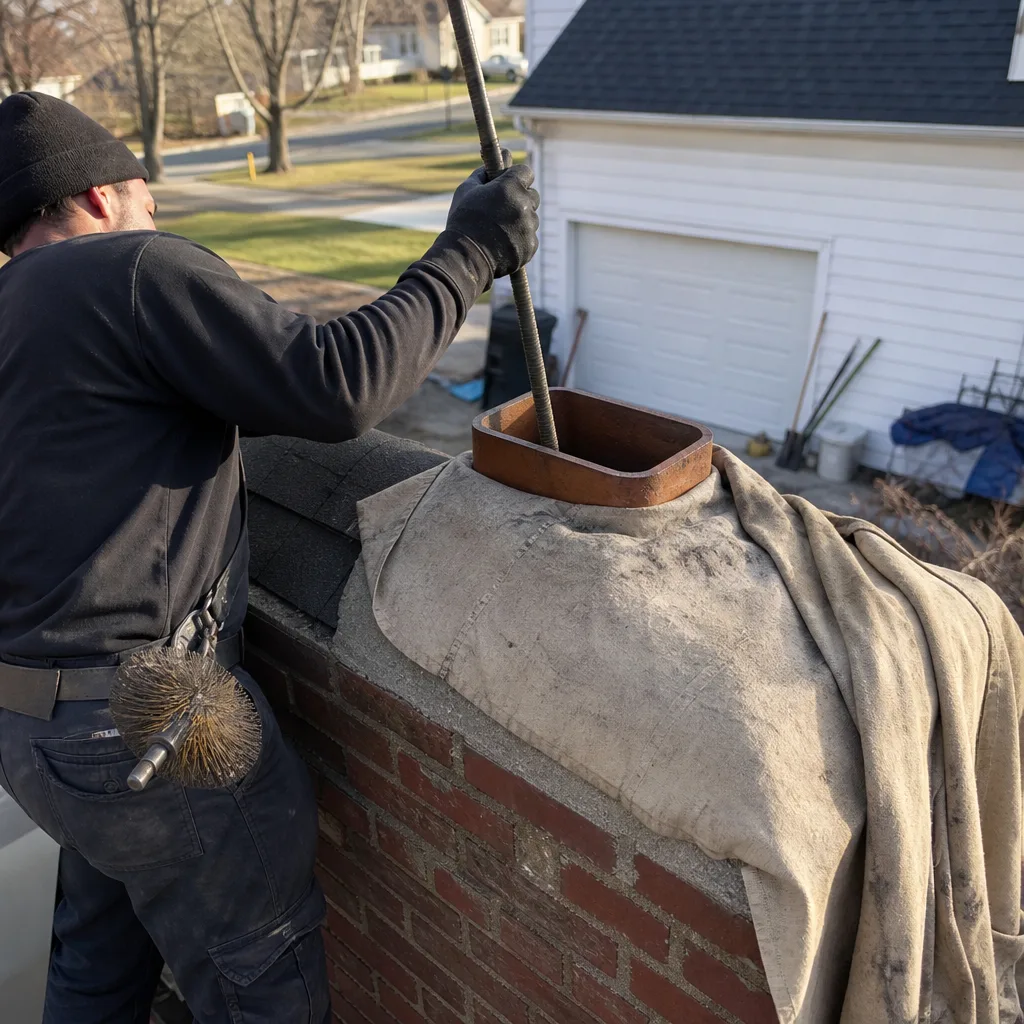
How much does soot removal cost in Clifton, NJ?
Searching for Chimney Cleaning & Sweep Near Me in Clifton, NJ? Soot removal runs $149 to $349 for most single-flue residential systems, with the price depending on accumulation level, flue height, and whether additional areas like the smoke chamber need attention. Every quote is written before work starts – never estimated verbally after the tech is already set up. Call (551) 282-9640 to get a specific number for your system; the estimate is free.
Is soot dangerous, and how quickly does it need to be removed?
Soot itself is a carbon-based particulate that becomes a fire risk when it accumulates thickly enough to ignite – and a health risk because the microscopic particles are harmful when breathed in over time. More immediately, soot buildup restricts flue airflow, which reduces draft efficiency and can push combustion gases, including carbon monoxide, back into the living space. NFPA 211 calls for an Annual Sweep in regularly used systems. If it’s been more than a year, or if you’re noticing smoke spillage or odor, the removal shouldn’t wait another season.
What’s the difference between soot and creosote, and does it affect the price?
Soot is the soft, dry Stage I deposit produced by normal combustion – it brushes out mechanically and is what most annual cleanings address. Creosote is a more condensed and flammable byproduct: Stage II looks like flaky or tar-like deposits, and Stage III is a hardened, glazed material that requires chemical treatment or rotary cleaning systems to address. If the camera scan on your Clifton home shows Stage II or Stage III creosote rather than simple soot, we’ll tell you that in writing and quote the correct service separately – the price and scope will be different, and you’ll have both in writing before we proceed.
Do you clean the smoke chamber and smoke shelf, or just the flue?
Our Chimney Cleaning & Sweep services cover the full system: flue liner, smoke chamber, smoke shelf, and firebox interior. The smoke shelf – the horizontal ledge directly above the damper – is a soot and debris trap that gets left behind on faster jobs. Skipping it means leaving material that produces odor in warm weather and can ignite during a flue fire. Our process covers it as standard, not as an add-on, and the camera documents the condition before and after.
Written by Corrine Halstead, Owner at Level Two Chimney Clifton, serving Clifton.